
Top 17 Living Room Design Ideas for a Beautiful & Functional Home

Overview
This article explores 17 top living room design ideas, covering a wide range of styles from modern to traditional. Perfect for homeowners and interior design enthusiasts, you will discover how to create a beautiful and functional space. Learn expert insights to transform your living room with confidence, enhancing both aesthetics and comfort in your home.
Key Takeaways
- Explore diverse living room styles, understanding their unique characteristics and ideal applications.
- Learn how to integrate key design elements like color, texture, and furniture to achieve a cohesive look.
- Gain practical advice on creating functional zones and enhancing natural light in your living area.
- Discover common design mistakes to avoid and expert tips for a successful living room transformation.
- Find inspiration for both aesthetic appeal and practical considerations, ensuring a truly inviting atmosphere.
Transforming your living room into a sanctuary of style and comfort is a rewarding endeavor, reflecting your personal aesthetic and enhancing daily life. This central space serves as the heart of many homes, hosting everything from quiet evenings to lively gatherings. From designing hundreds of spaces, I’ve observed that a thoughtfully planned living room significantly impacts a home’s overall feel and functionality, making it truly an inviting atmosphere.
In this comprehensive guide, you will discover 17 exceptional living room design ideas, each offering a distinct appeal and practical considerations. We will delve into various styles, materials, and layouts, providing expert insights and actionable advice to help you curate a space that is both beautiful and uniquely yours. Prepare to unlock the potential of your living room and embark on an exciting design journey, creating a space you will love for years to come.
1. Minimalist Retreat

This minimalist living room features a light gray sofa, a simple wooden coffee table, and abundant natural light, creating a serene space.
A minimalist living room embraces clean lines, a neutral palette, and an uncluttered aesthetic, focusing on essential pieces that serve both form and function. This style often features low profile furniture, monochromatic color schemes, and ample natural light, creating a serene and spacious feel. You will typically find simple, elegant materials like light wood, concrete, and subtle textiles, contributing to an overall sense of calm.
This design works wonderfully for those who appreciate simplicity and a tranquil environment, offering a true minimalist retreat from the chaos of daily life. It is ideal for smaller spaces where maximizing perceived openness is key, fostering an uncluttered and sophisticated ambiance. According to  Save
Save
This Scandinavian living room features a light wood sofa, white coffee table, and natural elements for a simple, cozy feel.
Scandinavian design champions functionality, simplicity, and a deep connection to nature, characterized by light wood tones, white or muted color palettes, and cozy textiles. This aesthetic often includes clean lined furniture, exposed natural materials, and an emphasis on warmth and hygge, making the space feel inviting. You will see natural light maximized, often with sheer curtains or no window treatments, paired with soft, comfortable furnishings.
This style is perfect for creating an inviting atmosphere that feels both modern and homey, appealing to those who value comfort and understated elegance. Its focus on natural light and materials promotes well being, making it a popular choice for families and individuals seeking a bright, airy, and practical living space. The blend of functionality and beauty offers effortless elegance.
3. Bohemian Chic

This bohemian chic living room showcases a velvet sofa, a Moroccan rug, and layered textiles, creating an eclectic, inviting space.
Bohemian chic living rooms are defined by a vibrant mix of patterns, textures, and global inspired decor, creating a free spirited and eclectic mix. This style often incorporates layered textiles like rugs, throws, and pillows, alongside natural materials such as rattan, macrame, and wood. Rich, earthy colors are frequently combined with pops of color, contributing to a warm and visually engaging space.
This design is ideal for those who love to express their personality through travel inspired finds and a relaxed, unconventional aesthetic. It encourages creativity and a sense of wanderlust, making it perfect for artists, free spirits, and anyone desiring a living space with a unique design narrative. The bohemian chic style is inherently comfortable and exudes a laid back charm.
4. Mid Century Modern

This mid century modern living room features a mustard yellow sofa, a walnut coffee table, and iconic furniture pieces.
Mid century modern design is characterized by its timeless appeal, featuring clean lines, organic shapes, and a blend of natural and man made materials. Iconic pieces often include tapered leg furniture, geometric patterns, and a careful balance between form and function. Warm wood tones like teak and walnut are prominent, alongside upholstery in bold or earthy colors, creating a sophisticated ambiance.
This style suits those who appreciate retro flair with a modern sensibility, offering a sophisticated and visually interesting space. Its enduring popularity stems from its ability to blend seamlessly with contemporary elements, providing a harmonious blend of old and new. Design experts at Architectural Digest often highlight its enduring relevance and adaptability.
5. Modern Farmhouse

This modern farmhouse living room showcases a cream sectional, distressed wooden coffee table, and a shiplap accent wall.
Modern farmhouse blends rustic charm with contemporary sophistication, featuring elements like shiplap walls, exposed wooden beams, and comfortable, oversized furniture. This style often uses a neutral palette of whites, grays, and creams, accented by natural wood finishes and black metal details. Barn doors, distressed finishes, and vintage inspired decor add to its authentic, yet refined, appeal.
This design is perfect for creating a cozy aesthetic that feels both relaxed and elegant, appealing to those who desire warmth without sacrificing modern amenities. It offers a fresh take on traditional farmhouse elements, providing a comfortable and family friendly environment. The combination of rustic textures and clean lines creates a unique and inviting atmosphere.
6. Industrial Loft

This industrial loft living room features exposed brick, a dark leather sofa, and a metal coffee table, highlighting raw materials.
Industrial loft design draws inspiration from old factories and warehouses, showcasing raw, unfinished materials like exposed brick, concrete, and metal. This style often features high ceilings, large windows, and open concept layouts, creating a spacious and urban contemporary feel. Dark, moody colors are common, contrasted with warm wood tones and vintage lighting fixtures.
This aesthetic is ideal for urban dwellers and those who appreciate a rugged, edgy, yet sophisticated ambiance. It celebrates the beauty of structural elements and utility, making it a great choice for lofts or homes with architectural details to highlight. The industrial loft provides a unique backdrop for a statement piece of furniture or art.
7. Coastal Calm

This coastal living room features a white slipcovered sofa, blue striped rug, and driftwood table, creating a calm, airy feel.
Coastal calm design evokes the serene feeling of a beach house, characterized by a light, airy palette of blues, greens, and sandy neutrals, alongside natural textures. This style often includes whitewashed wood, wicker, linen fabrics, and sea inspired decor, creating a relaxed and breezy atmosphere. Plenty of natural light is crucial, enhancing the sense of openness and tranquility.
This design is perfect for those seeking a peaceful and refreshing escape within their home, offering a constant reminder of seaside tranquility. It works well in homes near water but can bring a vacation vibe to any location, providing an effortless elegance. The emphasis on light colors and natural materials contributes to a truly inviting atmosphere.
8. Classic Traditional

This classic traditional living room features a burgundy velvet sofa, an antique wooden coffee table, and a grand fireplace.
Classic traditional living rooms exude timeless appeal with their elegant furnishings, rich wood tones, and sophisticated patterns. This style often features upholstered sofas with rolled arms, antique or reproduction pieces, and ornate architectural details. A balanced and symmetrical layout is common, emphasizing comfort and formal grandeur, creating a sophisticated ambiance.
This design is ideal for those who appreciate enduring beauty and a sense of heritage, offering a refined and formal space for entertaining or relaxation. It often incorporates rich fabrics like velvet and silk, alongside classic art and decorative accessories, providing an elevated feel. The emphasis on quality and craftsmanship ensures a space with lasting charm.
9. Transitional Design

This transitional living room combines a gray sofa with a glass and metal coffee table, blending classic and modern elements.
Transitional design expertly blends elements from both traditional and contemporary styles, creating a harmonious blend that is neither too formal nor too modern. This approach often uses a neutral palette with subtle pops of color, clean lined furniture with soft edges, and a mix of textures. It focuses on comfort and practicality, offering a timeless appeal that adapts well to changing tastes.
This style is incredibly versatile and suits a wide range of preferences, making it a popular choice for homeowners seeking a sophisticated yet approachable living space. It allows for curated elements from different eras to coexist beautifully, providing an effortless elegance. The balance between classic and contemporary ensures a flexible layout and enduring style.
10. Glamorous Art Deco

This Art Deco living room showcases an emerald velvet sofa, a brass and marble coffee table, and luxurious, geometric details.
Glamorous Art Deco living rooms are characterized by opulence, geometric patterns, and luxurious materials, reflecting the elegance of the 1920s and 30s. This style often features mirrored surfaces, polished metals like brass and chrome, and rich, jewel toned velvets or silks. Statement piece furniture with sleek, angular designs and intricate details are central to this dramatic aesthetic.
This design is perfect for those who desire a bold, sophisticated ambiance with a touch of vintage extravagance, creating a truly elevated feel. It works wonderfully for entertaining, offering a visually stunning and memorable space. The use of reflective surfaces and dramatic lighting enhances the overall luxurious and theatrical quality.
11. Eclectic Mix

This eclectic living room blends a vintage sofa, a Moroccan pouf, and various decor styles into a cohesive, unique space.
An eclectic mix living room celebrates individuality by blending various styles, periods, and cultural influences into a cohesive yet unique design narrative. This approach allows for freedom in combining antique finds with modern pieces, vibrant patterns with subtle textures, and diverse color palettes. The key lies in finding common threads through color, scale, or texture to create a balanced and interesting space.
This design is ideal for collectors, travelers, and those who want their living room to tell a story through their curated elements. It offers endless possibilities for personalization, resulting in a space that feels deeply personal and authentic. The eclectic mix allows for true self expression, making every corner a visual interest point.
12. Urban Contemporary

This urban contemporary living room features a sleek black leather sofa, a minimalist glass coffee table, and city views.
Urban contemporary living rooms are sleek, sophisticated, and often reflect city living with a focus on smart design and efficient use of space. This style incorporates modern furniture with clean lines, a sophisticated ambiance, and a palette of grays, blacks, and whites, often with bold accents. Materials like glass, chrome, and polished wood are frequently used, creating a refined and polished look.
This design is well suited for apartment dwellers and those who appreciate a metropolitan aesthetic, offering practical solutions for compact living without sacrificing style. It emphasizes strong architectural details and often incorporates multi functional pieces, providing a flexible layout. The urban contemporary style maintains a sharp, elevated feel.
13. Global Inspired

This global inspired living room showcases a patterned sofa, carved coffee table, and a rich collection of cultural artifacts.
Global inspired living rooms draw on diverse cultural aesthetics, incorporating patterns, textures, and artifacts from around the world to create a rich and layered environment. This style often features hand woven textiles, exotic wood furniture, and decorative items collected from various regions. Earthy tones are frequently combined with vibrant pops of color, creating a warm and inviting atmosphere.
This design is perfect for avid travelers and those who wish to infuse their home with stories and memories from different cultures, creating a unique design narrative. It encourages the display of personal treasures and offers a constant sense of discovery. The global inspired aesthetic is inherently cozy and deeply personal, fostering a sense of connection.
14. Maximalist Charm
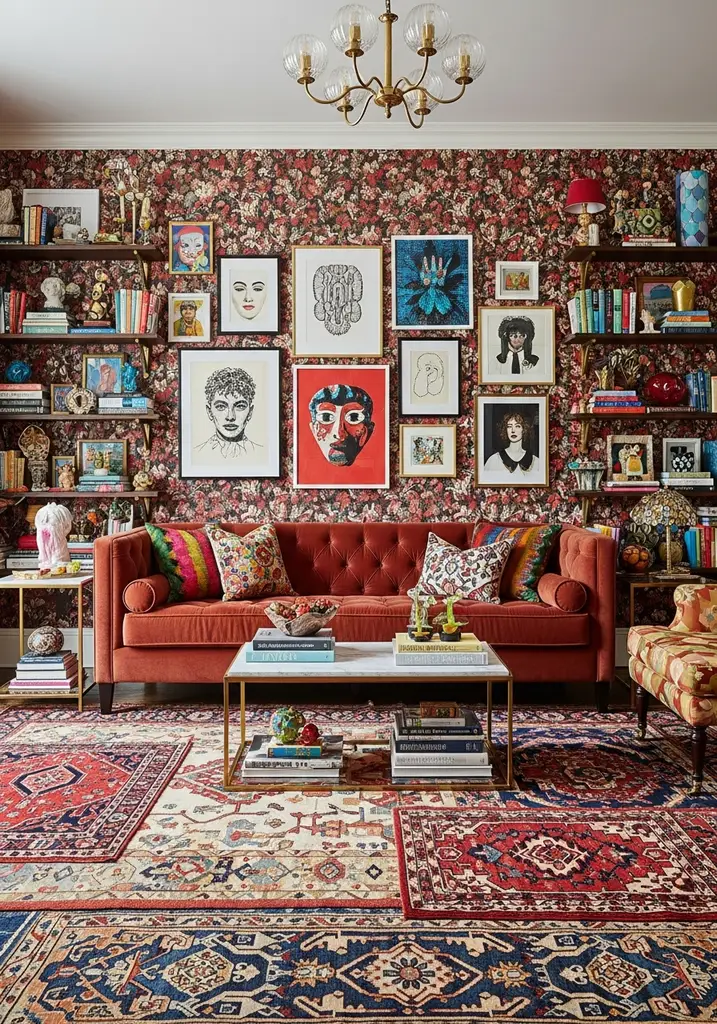
This maximalist living room features a plush velvet sofa, bold patterned wallpaper, and a rich display of curated elements.
Maximalist charm living rooms embrace a 'more is more' philosophy, characterized by bold colors, intricate patterns, and a rich layering of textures and objects. This style encourages the display of extensive collections, vibrant artwork, and luxurious fabrics, creating a visually stimulating and deeply personal space. There is often a playful mix of periods and styles, all contributing to a cohesive, abundant design narrative.
This design is ideal for those who love to express themselves without restraint, offering a living room that is full of personality and visual interest. It challenges conventional notions of minimalism, instead celebrating abundance and individuality, creating an elevated feel. Maximalism is about thoughtful curation of many elements, not just clutter.
15. Biophilic Design

This biophilic living room incorporates a green linen sofa, wooden table, and abundant plants to connect with nature.
Biophilic design integrates natural elements and processes into the built environment, creating a living room that fosters a deep connection to nature. This style prominently features abundant indoor plants, natural light, and materials like wood, stone, and water elements. Colors often mimic those found in nature: greens, browns, and blues, promoting a sense of calm and well being.
This design is perfect for those seeking to enhance their mental and physical health through their home environment, offering a tranquil and refreshing space. It works especially well in urban settings where access to nature is limited, providing a vital link to the outdoors. Biophilic design emphasizes sustainable materials and a harmonious blend with the natural world.
16. Smart Home Integration

This modern living room showcases smart home integration with a modular sofa, hidden speakers, and automated blinds.
A living room with smart home integration seamlessly blends technology into its design, offering enhanced convenience, comfort, and efficiency. This concept includes automated lighting, climate control, entertainment systems, and smart blinds, all controllable via voice or a central hub. The technology is often discreetly incorporated, maintaining a clean and modern aesthetic.
This design is ideal for tech savvy individuals and families who value convenience and a streamlined living experience, providing a truly flexible layout. It allows for personalized environments with ease, from setting the perfect mood lighting to optimizing energy usage, creating a sophisticated ambiance. Smart home integration ensures both a functional and future ready living space.
17. Open Concept Living

This open concept living room seamlessly connects a sectional sofa area with a dining space and kitchen island, promoting flow.
Open concept living rooms combine multiple functional zones, such as the living, dining, and kitchen areas, into one large, fluid space without traditional walls. This design emphasizes flow, natural light, and a sense of expansiveness, making smaller homes feel much larger. Defined areas are often created through furniture arrangement, area rugs, and strategic lighting, maintaining a harmonious blend.
This layout is highly sought after by modern families and those who enjoy entertaining, fostering greater interaction and connectivity. It promotes a flexible layout and allows natural light to penetrate deeply into the home, creating an inviting atmosphere. Careful consideration of functional zones and a cohesive design narrative are essential for success in open concept spaces.
Design Comparison: What to Expect
| Style/Type | Key Features | Best For |
|---|---|---|
| Minimalist Retreat | Clean lines, neutral palette, essential furnishings | Small spaces, tranquil seekers, modern aesthetics |
| Bohemian Chic | Layered textures, global inspired decor, vibrant patterns | Creative individuals, travelers, unique design narrative |
| Mid Century Modern | Organic shapes, tapered legs, warm woods, timeless appeal | Retro enthusiasts, sophisticated ambiance, enduring style |
| Modern Farmhouse | Shiplap, exposed wood, oversized comfort, neutral tones | Cozy aesthetic, family friendly, rustic charm with modern twist |
| Industrial Loft | Exposed brick/concrete, metal accents, raw materials | Urban dwellers, edgy appeal, highlighting architectural details |
How to Choose Your Perfect Living Room Design
Choosing the right living room design begins with understanding your lifestyle and daily needs. Consider how you primarily use the space, whether for entertaining, relaxing, or working from home, as this will dictate furniture choices and functional zones. A busy family might prioritize durable fabrics and a flexible layout, while a single professional might opt for a more sophisticated ambiance.
Next, evaluate your home's existing architectural details and overall aesthetic. A historic home might lend itself beautifully to classic traditional or glamorous Art Deco styles, whereas a newer build could embrace minimalist retreat or urban contemporary. Harmonizing with your home's inherent character creates a more cohesive and pleasing design narrative. This connection ensures your living room feels like a natural extension of your home.
Consider your personal preferences regarding color, texture, and visual interest. Do you prefer a neutral palette with subtle layered textures, or are you drawn to bold pops of color and an eclectic mix of patterns? Gathering inspiration from various sources like Pinterest or design magazines can help clarify your aesthetic leanings. Your living room should ultimately reflect your unique personality and tastes.
Finally, set a realistic budget and prioritize your design elements. Decide where you are willing to invest in a statement piece versus where you can save on more functional items. Planning ahead prevents overspending and helps ensure you achieve your desired look without compromising on quality or overall design goals.
Common Mistakes to Avoid When Designing Your Living Room
One common mistake is neglecting to plan the layout before purchasing furniture, leading to pieces that are either too large or too small for the space. Always measure your room and map out furniture placement to ensure proper flow and functional zones. This careful planning avoids a cramped or awkwardly arranged living area, ensuring an inviting atmosphere.
Another frequent error involves ignoring lighting, relying solely on overhead fixtures which can create a flat and uninviting ambiance. Incorporate a mix of ambient, task, and accent lighting to add depth and visual interest, making the room feel warmer and more layered. Proper lighting enhances both the aesthetics and functionality of your living room.
Many homeowners also make the mistake of buying all matching furniture sets, which can result in a bland and uninspired look lacking a unique design narrative. Instead, mix and match curated elements from different styles and periods to create an eclectic mix that feels personal and dynamic. This approach adds character and depth to your living space.
Lastly, failing to consider scale and proportion can throw off the entire room's balance, making it feel either overwhelming or sparse. Ensure that your furniture, artwork, and decorative items are appropriately sized relative to each other and the room's dimensions. A balanced room feels more comfortable and visually appealing, offering an elevated feel.
Frequently Asked Questions
What is the best way to choose a focal point in a living room?
The best way to choose a focal point is to identify an existing architectural detail like a fireplace or a large window. If no such feature exists, you can create one with a large piece of art, a uniquely designed media console, or a statement piece of furniture. This focal point will draw the eye and anchor your entire design narrative, providing visual interest.
How can I make a small living room feel larger?
To make a small living room feel larger, embrace a neutral palette for walls and larger furniture, which creates an open and airy feel. Utilize multi functional furniture, maximize natural light with sheer curtains or none at all, and incorporate mirrors to reflect light and expand the perception of space. Opt for furniture with exposed legs to allow light to flow underneath, enhancing the sense of openness.
What is the importance of layered textures in living room design?
Layered textures are crucial for adding depth, warmth, and visual interest to a living room, preventing it from feeling flat or sterile. Combining different materials like soft velvet, chunky knits, smooth wood, and rough stone creates a rich sensory experience. This technique enhances the cozy aesthetic and makes the space feel more inviting and comfortable.
How do I incorporate pops of color into a neutral living room?
To incorporate pops of color into a neutral living room, use smaller, easily changeable accessories such as throw pillows, blankets, decorative vases, or artwork. This approach allows you to introduce vibrancy without a major commitment, and you can easily update the colors with the seasons or your changing preferences. Choose colors that complement your neutral palette to maintain a harmonious blend.
Conclusion
Embarking on the journey of living room design is an exciting opportunity to craft a space that truly resonates with your lifestyle and aesthetic preferences. Whether you are drawn to the serene simplicity of Scandinavian design or the vibrant layers of bohemian chic, these 17 ideas offer a wealth of inspiration. By considering your personal needs, understanding design principles, and avoiding common pitfalls, you can create a living room that is not only beautiful but also deeply functional and inviting. Let your living room be a true reflection of your unique design narrative, a place where comfort and style effortlessly converge.


