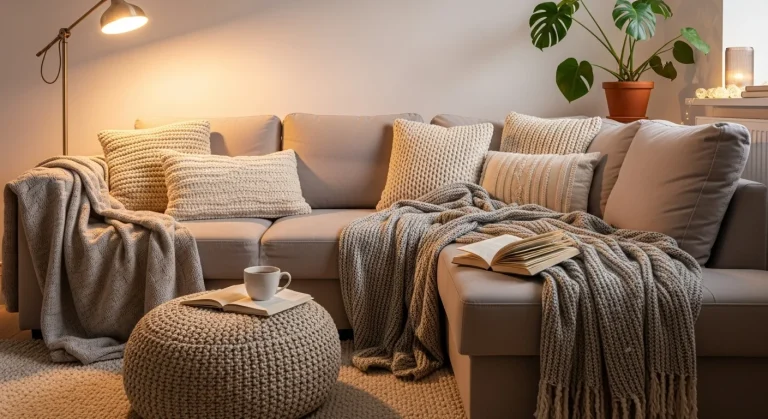
Unroll Style: Top 17 Living Room Rug Placement Tips for a Pinterest-Perfect Home

A living room rug is far more than just a floor covering; it’s the anchor of your decor, a crucial element that defines zones, adds warmth, injects personality, and ties together all your furniture and accessories. However, the magic truly happens when you get its placement just right. An improperly sized or poorly positioned rug can make a room feel disjointed or smaller, while a well-chosen and strategically placed one can transform a space, making it feel larger, more luxurious, and undeniably inviting.
Mastering rug placement is an art form, but with these expert tips, you’ll be able to confidently select and position your rugs like a seasoned interior designer. Whether you’re furnishing a new home, refreshing an existing space, or simply looking to add that perfect finishing touch, understanding these principles will empower you to create a living room that’s not only visually stunning but also incredibly comfortable and functional. Get ready to unroll style and elevate your home with these game-changing insights!
1. The ‘All Legs On’ Approach
For a grand, cohesive, and luxurious feel, place a large rug that allows all four legs of your main furniture pieces – sofas, armchairs, and even side tables – to rest entirely on it. This creates a visually expansive and grounded look, making the room feel larger and more unified. It’s an ideal choice for open-concept living areas where you want to clearly delineate the lounging zone and prevent furniture from looking like it’s floating without an anchor.
This method is particularly effective in larger living rooms, as it ensures that the entire seating arrangement is encompassed, fostering a sense of intimacy and connection within the conversation area. Make sure there’s still a bit of floor visible around the rug’s edges to prevent it from looking like wall-to-wall carpeting. The rug should extend approximately 6-12 inches beyond the furniture on all sides to maintain a balanced and intentional appearance.

Embrace the ‘All Legs On’ rule for a truly grand and cohesive living room, unifying all your main furniture pieces on one luxurious foundation.
2. The ‘Front Legs On’ Strategy
If an ‘all legs on’ rug isn’t feasible due to size constraints or budget, the ‘front legs on’ approach is an excellent alternative that still achieves a polished and anchored look. This method involves placing the rug so that the front two legs of your main seating furniture – such as sofas and armchairs – rest on the rug, while the back legs remain on the bare floor. This creates a visual connection between the furniture and the rug, pulling the arrangement together without requiring an enormous rug.
This strategy is highly versatile and works well in most living room sizes, particularly in medium-sized spaces where you want to define a seating area without overwhelming the room. It ensures that the primary seating pieces are anchored, providing a sense of stability and design intention. Aim for the rug to extend at least 6-12 inches beyond the width of your sofa on each side to create a balanced and substantial appearance.

The ‘Front Legs On’ method offers a smart and stylish solution to anchor your living room furniture when a full-sized rug isn’t an option.
3. The ‘Floating Rug’ Accent
For smaller living rooms or when you want to highlight a specific feature like a coffee table, a ‘floating rug’ placement can be quite effective. This involves using a smaller rug that sits entirely within the perimeter of your main furniture grouping, with all furniture legs off the rug. The rug typically centers under the coffee table, acting as a focal point and adding a layer of texture and color without trying to encompass the entire seating area.
This placement works best when the rug is purely an accent piece, drawing attention to a central element and adding a splash of personality. It’s crucial that the rug is large enough for the coffee table to sit comfortably on it, with some breathing room around the table’s edges. Avoid using a rug that is too small, as it can make the room feel disjointed; the rug should ideally be at least as wide as your sofa cushions or more, ensuring it doesn’t look like an afterthought.

A ‘Floating Rug’ centered under a coffee table can be a striking accent, perfect for smaller spaces or highlighting a statement piece.
4. Defining Zones in Open Concepts
In open-concept living spaces, rugs are incredibly powerful tools for defining distinct functional zones without the need for physical walls. By strategically placing different rugs, you can visually separate a living area from a dining space or an entryway, creating a sense of order and purpose within a large, undivided room. Each rug acts as a visual boundary, signaling a new area and its specific function.
When using rugs to define zones, ensure that each rug is appropriately sized for its designated area, allowing the primary furniture pieces within that zone to be properly anchored (e.g., all legs on or front legs on). The rugs should be distinct enough in style, color, or texture to clearly mark the boundaries, yet complementary enough to maintain overall aesthetic harmony throughout the larger space. This technique brings structure and intimacy to vast open layouts.

Utilize rugs to masterfully define separate functional zones within an open-concept living space, bringing order and style.
5. Layering Rugs for Texture and Depth
Layering rugs is a fantastic way to add immense texture, warmth, and a unique bohemian or eclectic charm to your living room. This technique involves placing a smaller, often more decorative rug on top of a larger, more neutral base rug. It’s an excellent way to introduce patterns, colors, or luxurious materials like sheepskin or jute without committing to a single, dominant rug style.
When layering, ensure the base rug is large enough to adequately define the living area, following one of the anchoring rules (all legs on or front legs on). The top rug should be significantly smaller and positioned to highlight a specific area, such as under the coffee table or in front of the sofa. Consider contrasting textures – perhaps a sisal base with a plush wool or faux fur on top – to maximize visual interest and create a truly inviting, multi-dimensional aesthetic.

Layering rugs adds unparalleled texture, depth, and a touch of bohemian elegance to any living room setting.
6. The Small Space Illusion: Go Big
It might seem counterintuitive, but in a small living room, a large rug can actually make the space feel bigger and more cohesive, rather than cramped. A generously sized rug that extends under most, if not all, of your main furniture pieces creates an expansive foundation, preventing the room from looking visually chopped up. When furniture legs are all on the rug, it creates a unified zone that feels intentional and more spacious.
Conversely, a tiny rug in a small room can make the space feel even smaller, as it visually breaks up the floor plan and emphasizes the limited area. By opting for a rug that fills most of the floor, leaving only a small border of bare floor around the edges, you draw the eye across the entire room, making it appear wider and more open. This trick works wonders in apartments or compact homes seeking a sense of grandeur.

In small spaces, a large rug is your secret weapon for creating an illusion of grandeur and making the room feel more expansive.
7. The Large Space Anchor
In vast living rooms or open-plan areas, a large rug is absolutely essential to ground your furniture and prevent it from appearing lost or scattered. Without a rug to anchor it, furniture can float aimlessly, making the room feel disconnected and less inviting. A substantial rug acts as a visual island, clearly defining the main seating area and giving it a sense of purpose and intimacy within the larger expanse.
Choose a rug that is large enough to accommodate at least the front legs of all your main seating pieces, or ideally, all legs. This ensures that the entire conversation area is unified and feels cohesive. The rug should extend significantly beyond the edges of your sofa and chairs, creating a generous border that visually pulls the elements together. This technique is key to making large rooms feel more cozy and functionally zoned.

In expansive living rooms, a large rug acts as a critical anchor, grounding furniture and defining the primary seating area with grace.
8. The Diagonal Placement for Drama
Breaking away from traditional straight lines, placing a rug diagonally can introduce a surprising element of dynamism and visual interest into your living room. This unconventional approach works particularly well with square or rectangular rugs in square rooms, or to highlight a unique architectural feature. It instantly adds a modern, artistic flair and can make a room feel less rigid.
When opting for diagonal placement, ensure the rug is large enough that it doesn’t look like an accidental misalignment. It should still relate to your furniture, ideally anchoring at least the front legs of key pieces, even if they are also angled. This technique can be especially effective in rooms where you want to draw the eye to a specific corner or to create a sense of movement. Be mindful of traffic flow to ensure the corners don’t become tripping hazards.

Inject drama and contemporary flair into your living room by strategically placing a rug on the diagonal.
9. Under a Coffee Table Only
For a minimalist approach or when your main living room rug serves a different purpose (like a runner in a long space), placing a small, accent rug exclusively under the coffee table can be a stylish choice. This is distinct from the ‘floating rug’ in that it’s often a much smaller rug, specifically chosen to highlight the coffee table itself or add a small pop of color/texture in the very center of the room.
This placement works best when the rug’s primary function is decorative rather than to anchor furniture. It’s perfect for showcasing a beautiful, intricate rug design or a unique texture without it competing with larger elements. Ensure the rug is sufficiently sized to comfortably fit under the coffee table, extending a few inches beyond its perimeter if possible, so it doesn’t look like a doormat. This creates a cozy island effect and draws attention to the central gathering point.

A small rug placed solely under the coffee table serves as a chic focal point, adding texture and interest to the room’s center.
10. Pathway Rugs and Runners
In long, narrow living rooms or open-concept spaces that lead into other areas, runners or pathway rugs can be incredibly effective. Instead of trying to fit a square or rectangular rug that might cut off the flow, a runner can accentuate the length of the room, guiding the eye and facilitating movement. They can also connect distinct zones while maintaining an open, airy feel.
When using pathway rugs, ensure they are wide enough to feel substantial, but leave enough bare floor on either side to avoid looking like wall-to-wall carpeting. They are particularly useful in hallways or transitional spaces within a larger living area, providing comfort underfoot and visual interest without disrupting the overall layout. Consider their material and durability, as these rugs often endure high traffic.

Pathway rugs and runners beautifully accentuate long living rooms, guiding movement and adding visual interest without obstruction.
11. The Rug as an Art Piece
Sometimes, the rug itself is the star of the show, a true work of art that deserves to be highlighted as the room’s focal point. This is especially true for unique, hand-knotted, vintage, or strikingly patterned rugs. In such cases, the placement should prioritize showcasing the rug’s beauty, even if it means deviating slightly from traditional furniture anchoring rules.
When using a rug as an art piece, ensure it has enough visual breathing room to be appreciated. You might opt for a ‘floating rug’ style where furniture sits completely off it, allowing the entire design to be seen. Alternatively, if it’s large, make sure its most intricate patterns or colors are not obscured by heavy furniture. Position it centrally in the main viewing area, allowing its unique character to captivate and inspire the rest of your decor choices.

Elevate your living room by treating your rug as a captivating art piece, allowing its unique design to take center stage.
12. The Sofa-Sized Rule: Extend Beyond
A crucial guideline for creating a balanced and well-proportioned living room is ensuring your rug extends beyond the width of your sofa on both sides. As a general rule, aim for the rug to extend at least 6-12 inches past the edge of your sofa or main seating arrangement on each side. This creates a generous and intentional feel, preventing the rug from looking too small or like an afterthought.
This extension helps to properly anchor the entire seating area, making it feel more integrated and luxurious. When the rug is narrower than the sofa, it can make the sofa look awkwardly large and the rug appear undersized, disrupting the room’s visual harmony. Always measure your sofa’s width before purchasing a rug to ensure it meets this important design principle, contributing to a more expansive and thoughtful layout.

Always ensure your rug extends beyond your sofa’s width on both sides for a balanced, intentional, and luxurious living room feel.
13. Room Symmetry & Centering
For a classic, formal, and harmonious aesthetic, centering your rug within the room’s architectural parameters or the main focal point (like a fireplace or large window) is key. This placement creates a strong sense of symmetry and balance, making the room feel organized and serene. It’s especially effective in traditionally designed spaces or when you want to emphasize a symmetrical furniture arrangement.
When centering, ensure there’s an even amount of bare floor space on all four sides of the rug, or at least along the primary sightlines. This visual balance contributes significantly to the room’s overall sense of order and calm. If you have a dominant architectural feature, such as a grand fireplace, align the rug’s center with that feature to reinforce the room’s focal point and achieve a perfectly composed living area.

Achieve perfect harmony and a sense of order by centering your rug with the room’s architecture or main focal point.
14. Highlighting the Fireplace
If your living room features a beautiful fireplace, positioning your rug to highlight it can dramatically enhance the room’s focal point. The rug can act as a frame, drawing the eye towards the hearth and creating a cozy, inviting zone around it. This is particularly effective if the fireplace is a prominent architectural feature you wish to emphasize.
Place the rug so that it begins a few inches in front of the fireplace hearth and extends into the room, encompassing the main seating area. This ensures the fireplace feels integrated into the overall design, rather than separate. The color or pattern of the rug can also complement the fireplace material, further enhancing this central feature and making it the undisputed heart of your living space.

Amplify your living room’s warmth and focus by strategically placing your rug to highlight a beautiful fireplace.
15. Area Rug vs. Wall-to-Wall Philosophy
Understanding the fundamental difference in philosophy between an area rug and wall-to-wall carpeting is crucial for proper placement. An area rug is designed to define a specific zone, add texture, or serve as a decorative element, leaving a border of bare floor around its edges. Wall-to-wall carpeting, conversely, covers the entire floor, aiming for seamless comfort and sound absorption.
When placing an area rug, always aim to leave at least 12-18 inches of bare floor between the rug’s edges and the walls in a typical living room. This gap is essential for creating the defined ‘area’ effect and preventing the rug from looking like an ill-fitting carpet. In smaller rooms, this gap can be slightly less, but never have the rug touch the walls. This clear distinction ensures your rug serves its purpose of enhancing, rather than overwhelming, the room’s design.
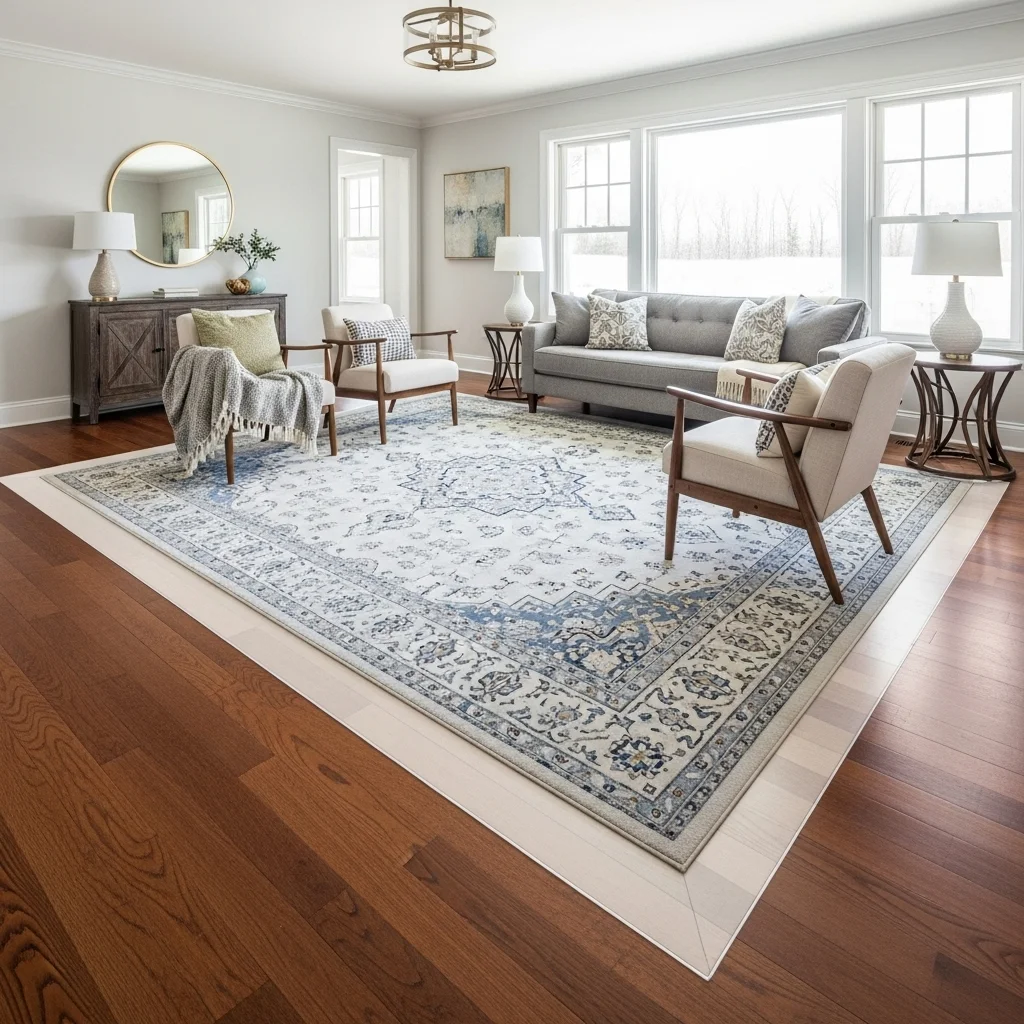
Distinguish your area rug from wall-to-wall carpeting by leaving generous bare floor borders, enhancing its defined purpose.
16. Color & Pattern Coordination
The placement of your rug is not just about physical dimensions; it’s also profoundly influenced by its color and pattern. A bold, highly patterned rug placed centrally can be the star, while a neutral, textured rug might serve as a subtle foundation for more vibrant furniture. Consider how the rug’s design interacts with your existing decor and the overall mood you want to create.
If your rug has a strong pattern or a very dominant color, position it where its design can be fully appreciated without being overly obscured by furniture. Conversely, if your furniture is the main attraction, a more subdued rug can provide a calm backdrop, allowing other elements to shine. Ensure the rug’s colors complement or provide a thoughtful contrast to your existing palette, tying the room together visually and reinforcing your chosen aesthetic.

Thoughtfully coordinate your rug’s color and pattern with its placement to amplify your living room’s overall aesthetic and mood.
17. Mind the Traffic Flow
While aesthetics are paramount, practicality must also be a key consideration in rug placement, especially regarding traffic flow. The rug should enhance movement through the room, not impede it. Avoid placing rugs in narrow pathways where they might curl up or become a tripping hazard, or where their edges are constantly being scuffed by foot traffic.
Ensure that the rug’s edges are not directly in the main pathways where people frequently walk. If a rug is necessary in a high-traffic zone, opt for a low-pile, durable material that can withstand constant movement and choose a size that allows ample walking space around its perimeter. A well-placed rug should guide, not hinder, the natural movement patterns within your living room, contributing to both comfort and safety.

Prioritize seamless movement by minding traffic flow, ensuring your rug enhances, rather than impedes, the natural pathways in your living room.
Conclusion
Mastering the art of living room rug placement is a transformative skill that can profoundly impact the comfort, style, and functionality of your home. From grand ‘all legs on’ layouts to strategic layering and defining zones in open concepts, each of these 17 tips offers a unique approach to elevating your space. Remember that the right rug, positioned with intention, not only grounds your furniture and adds warmth but also acts as a powerful design element, tying together your entire aesthetic.
Experiment with these guidelines, consider the size and layout of your room, and most importantly, let your personal style shine through. A well-placed rug is more than just decor; it’s an invitation to relax, connect, and enjoy a beautifully curated living environment. So go ahead, unroll that perfect rug, and watch your living room transform into the Pinterest-worthy oasis you’ve always dreamed of!