Top 13 White Walls Dark Trim Ideas for a Stunning Home Transformation

Overview
This article explores the transformative power of white walls and dark trim in interior design, offering 13 distinct ideas to inspire your next home project. Perfect for homeowners, designers, and DIY enthusiasts, you will discover how to create high contrast, add architectural detail, and achieve a sophisticated aesthetic. Learn practical tips and avoid common mistakes to confidently enhance your living spaces with timeless appeal and visual impact.
Key Takeaways
- White walls with dark trim create a powerful high contrast aesthetic, highlighting architectural details.
- This design choice offers versatility, fitting styles from modern farmhouse to classic elegance and contemporary design.
- Careful consideration of trim width, color saturation, and wall texture is crucial for a balanced and sophisticated look.
- Proper lighting and strategic decor enhance the visual impact, defining spaces with crisp lines and a bold statement.
- Avoiding common mistakes like overwhelming dark trim or neglecting color undertones ensures a cohesive and appealing result.
The combination of white walls and dark trim has emerged as a truly captivating and versatile design trend, offering a striking visual impact that can redefine any interior space. This high contrast pairing instantly draws the eye, emphasizing architectural detail and infusing rooms with a sophisticated aesthetic. It is a powerful way to create depth and character, moving beyond plain white interiors to something far more dynamic.
In this comprehensive guide, we will explore 13 innovative ideas for incorporating white walls and dark trim into your home, from classic elegance to contemporary design. You will discover how this timeless appeal can make a bold statement in various settings, providing practical advice and expert insights to help you achieve a truly stunning home transformation. Design experts at Architectural Digest often highlight how contrasting elements can elevate a home’s perceived value and aesthetic appeal.
1. Bold Entryway Statement

This entryway makes a bold statement with white walls contrasted by glossy black trim, framing double doors and tall baseboards.
Imagine a grand entryway featuring pristine white walls juxtaposed with substantial, glossy black trim around doors and baseboards. This creates an immediate and dramatic first impression, clearly defining the space and guiding visitors’ eyes through the home. The crisp lines of the dark trim against the luminous white walls provide an elegant frame for the entrance.
This approach works beautifully for homes seeking a classic elegance with a modern edge, immediately signaling a thoughtful design aesthetic. It is particularly effective in larger entryways or hallways where the high contrast can truly shine without overwhelming the space, offering a sophisticated welcome.
2. Modern Farmhouse Charm

A modern farmhouse living room features soft off white walls and charcoal gray window trim, creating a cozy and refined atmosphere.
Embrace the warmth of modern farmhouse style by pairing soft, off white walls with charcoal gray window frames and door casings. This combination provides a slightly softer high contrast, maintaining a cozy yet refined feel that is characteristic of the aesthetic. Natural wood elements and rustic textures beautifully complement this palette.
This look is ideal for creating a comfortable and inviting atmosphere, perfect for family homes or those who appreciate a blend of rustic and contemporary design. It offers a timeless appeal that feels both current and enduring, especially when paired with natural materials and thoughtful decor.
3. Contemporary Living Room Definition
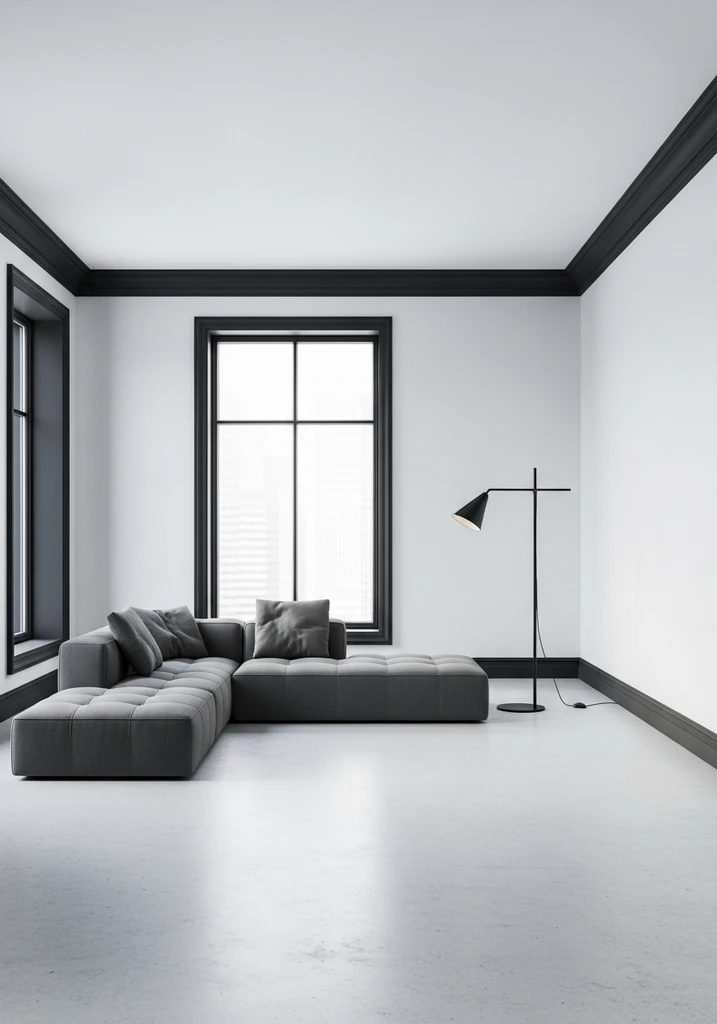
This contemporary living room showcases pure white walls and deep matte black trim, defining the space with crisp, sleek lines.
In a contemporary living room, consider using a deep, matte black for window trim, crown molding, and baseboards against a bright, pure white wall. This combination provides sharp, crisp lines that define the architectural detail of the space, creating a sleek and sophisticated aesthetic. The uniform dark trim acts as a graphic element.
This design choice is excellent for minimalist or urban interiors, where clean lines and a strong visual impact are desired. It allows furniture and artwork to stand out against a thoughtfully structured backdrop, making a bold statement without needing excessive ornamentation.
4. Elegant Bedroom Sanctuary

An elegant bedroom features warm white walls and rich dark brown wooden trim, creating a luxurious and tranquil sanctuary.
Create an elegant bedroom sanctuary with warm white walls and rich, dark brown trim, perhaps a deep espresso or walnut stain on wooden elements. This pairing offers a softer contrast than black, lending a sense of warmth and luxury to the sleeping space. The dark wood trim can be applied to door frames, window casings, and even a unique accent wall.
This style is perfect for those seeking a tranquil yet luxurious retreat, providing a sophisticated aesthetic that promotes relaxation. The natural warmth of the dark brown trim complements various bedding and furniture styles, adding a timeless appeal to the room.
5. Dramatic Hallway Archways

This hallway features bright white walls with dramatic dark indigo trim on its archways, drawing attention to architectural detail.
Highlight architectural features like archways or cased openings in a hallway by painting them a deep, saturated dark color against bright white walls. This technique draws attention to the unique structure of your home, turning a simple passage into a visual focal point. The dark trim frames these transitions beautifully.
This dramatic effect is ideal for adding character to otherwise overlooked areas, creating visual impact and a sense of journey through your home. It works exceptionally well in older homes with existing architectural charm, enhancing their inherent beauty with a contemporary twist.
6. Industrial Chic Loft

An industrial chic loft features crisp white walls and matte charcoal gray trim, complemented by exposed dark metal elements.
For an industrial chic loft, combine crisp white walls with raw, exposed dark metal trim, or paint existing trim a matte charcoal gray to mimic metal. This look celebrates utilitarian design, providing a stark, honest aesthetic that emphasizes structural elements. The high contrast feels authentic to the industrial vibe.
This style suits urban dwellings and spaces with exposed brick or concrete, offering a contemporary design with an edge. It creates a bold statement that is both functional and visually compelling, celebrating the raw beauty of materials.
7. Classic Bathroom Refinement

This classic bathroom combines pristine white subway tile walls with dark gray trim around the mirror and window, creating a refined look.
Achieve classic elegance in a bathroom by pairing pristine white subway tile walls with dark gray or black trim around mirrors, shower enclosures, and window frames. This creates a clean, sophisticated aesthetic that is both timeless and refreshing. The dark trim grounds the bright white, preventing it from feeling sterile.
This refined look is perfect for smaller bathrooms where a strong visual impact is desired without overwhelming the space. It provides a spa like feel that is both functional and beautiful, offering a sophisticated backdrop for personal care.
8. Scandinavian Inspired Minimalism

A Scandinavian minimalist living room features pure white walls and very thin dark gray trim, maintaining an airy and uncluttered feel.
For a Scandinavian inspired minimalist space, use pure white walls with very thin, dark gray or black trim. The trim should be subtle, almost disappearing, yet still providing that crisp line and definition without being overly bold. This maintains an airy, uncluttered feel while adding architectural detail.
This approach is ideal for those who love simplicity and functionality, focusing on light and open spaces. It offers a sophisticated aesthetic that is calming and understated, allowing natural light and texture to be the stars of the room.
9. Coastal Chic with a Twist

This coastal chic dining room combines crisp white walls with deep navy blue trim, offering a fresh and sophisticated nautical vibe.
Infuse coastal chic with a modern twist by using crisp white walls and deep navy blue trim. This unexpected dark trim color evokes the ocean while providing a sophisticated aesthetic that feels fresh and inviting. The navy adds a depth not found with traditional black.
This unique combination is perfect for beach houses or homes that want to capture a serene yet stylish nautical vibe. It offers a timeless appeal that is both refreshing and elegant, making a subtle yet bold statement.
10. Office Productivity Zone

A modern home office features bright white walls and sleek dark bronze trim, creating a professional and inviting productivity zone.
Design an inspiring office productivity zone with bright white walls and sleek, dark bronze trim. This metallic dark trim adds a touch of modern sophistication without being as stark as black, creating an environment that feels both professional and inviting. The bronze can pick up on other metallic accents.
This setup is excellent for home offices where focus and a polished look are paramount, defining spaces with a contemporary design edge. It provides a sophisticated aesthetic that encourages productivity, making a subtle yet impactful statement.
11. Playful Children’s Room

This playful children’s room features pure white walls and deep forest green trim, offering a sophisticated yet whimsical aesthetic.
Even a children’s room can benefit from white walls and dark trim, using a playful approach with a colored dark trim like forest green or deep teal. This provides a grounding effect and a sophisticated aesthetic that can grow with the child, moving beyond typical pastel palettes. The dark trim adds structure to a whimsical space.
This design choice is perfect for creating a fun yet stylish environment that avoids being overly childish, offering a versatile backdrop for toys and decor. It makes a bold statement while maintaining a sense of youthful energy and creativity.
12. Expansive Open Concept

This expansive open concept space uses white walls and dark gray trim to visually define the kitchen island and dining area.
In an expansive open concept living space, white walls with dark trim can be strategically used to define different zones without physical barriers. For instance, dark trim around a kitchen island or a transition point to a dining area creates a visual separation and architectural detail. This helps to break up large areas.
This method is superb for adding structure and visual interest to large, flowing interiors, providing a sense of purpose to each area. It offers a contemporary design solution that enhances functionality and aesthetic appeal, making a bold statement in an open layout.
13. Architectural Detailing Highlight

This living room features white walls and dark espresso trim, specifically highlighting built in shelving and intricate crown molding.
Use dark trim to specifically highlight unique architectural features such as built in shelving, intricate molding, or ceiling beams against white walls. This draws immediate attention to these elements, turning them into artistic focal points within the room. The high contrast truly makes these details pop.
This technique is ideal for homes with bespoke features that deserve emphasis, enhancing their inherent beauty and craftsmanship. It offers a sophisticated aesthetic that celebrates the structure of your home, creating visual impact and a timeless appeal.
Design Comparison: What to Expect
| Style/Type | Key Features | Best For |
|---|---|---|
| Classic Elegance | Glossy black or deep brown trim, substantial width, pure white walls | Formal living areas, entryways, traditional homes |
| Modern Farmhouse | Matte charcoal or dark gray trim, off white or warm white walls, natural wood accents | Cozy family homes, rustic inspired interiors |
| Contemporary Minimalist | Thin, sleek matte black or dark gray trim, pure white walls, clean lines | Urban lofts, minimalist spaces, modern apartments |
| Coastal Sophistication | Deep navy blue or dark teal trim, crisp white walls, light wood elements | Beach homes, serene bedrooms, unique dining areas |
| Industrial Edge | Matte charcoal or dark bronze trim, exposed structural elements, crisp white walls | Loft apartments, commercial spaces, modern urban homes |
How to Choose Your Perfect White Walls Dark Trim Combination
Consider the overall architectural style of your home when selecting the ideal white walls dark trim combination. A traditional home might benefit from a more substantial, classic dark wood trim, while a modern space could shine with sleek, thin black or charcoal lines. Matching the trim style to your home’s inherent character creates a cohesive and appealing design.
Think about the amount of natural light each room receives before finalizing your choices. Rooms with abundant light can handle bolder, darker trim colors without feeling oppressive, whereas dimly lit spaces might prefer a slightly softer dark trim to maintain brightness. The interplay of light and shadow is crucial for visual impact.
Determine the specific mood you wish to create in each area, as this will influence your trim color and sheen. A high gloss dark trim offers a dramatic, formal look, while a matte finish provides a more understated, contemporary feel. The sheen affects how the light reflects, influencing the room’s overall atmosphere and sophisticated aesthetic.
Finally, always test paint swatches on your walls and trim in different lighting conditions before committing to a color. What looks perfect in a store might appear different in your home, and seeing the white and dark trim together is essential for assessing the high contrast effect. This crucial step helps prevent costly mistakes and ensures satisfaction with your chosen palette.
Common Mistakes to Avoid When Designing with White Walls and Dark Trim
One common mistake is choosing a dark trim color that is too overwhelming for the size of the room or the height of the ceilings. Very thick, dark trim in a small room can make the space feel cramped and visually shrink it, diminishing the desired architectural detail. Always balance the trim’s scale with the room’s proportions.
Another pitfall is neglecting the undertones of both your white wall paint and your dark trim color. A cool white paired with a warm dark brown trim can clash, creating an unharmonious look rather than a sophisticated aesthetic. Ensure that both colors share similar undertones, whether warm or cool, for a cohesive design.
Failing to consider the surrounding elements like flooring, furniture, and existing decor can also lead to a disjointed appearance. The white walls dark trim combination should complement these elements, not compete with them, to achieve a balanced and well integrated interior. Think of the entire room as a complete picture, where every piece plays a role.
Lastly, applying dark trim to every single architectural feature without discretion can sometimes dilute its visual impact. Select key features to highlight, such as windows, doors, or a specific molding, allowing those elements to truly stand out as bold statements. Overuse can make the design feel heavy rather than elegant.
Frequently Asked Questions
What kind of dark trim colors work best with white walls?
The best dark trim colors depend on your desired aesthetic and the undertones of your white paint. Classic choices include glossy black for a dramatic, formal look, or matte charcoal gray for a contemporary design. For warmer interiors, consider deep espresso brown or even a rich navy blue for a unique, sophisticated aesthetic that offers a subtle high contrast.
Should all trim in a house be the same color when using white walls and dark trim?
While consistency often creates a cohesive feel, it is not a strict rule that all trim must be the same color. You can vary trim colors slightly to define different zones or to highlight specific architectural detail in certain rooms. However, ensure the variations are intentional and complement the overall design for a harmonious flow throughout your home.
Does dark trim make a room look smaller?
Dark trim can make a room feel smaller if it is overly wide or if the room lacks sufficient natural light, as it visually frames the space. However, when used thoughtfully with appropriate proportions and bright white walls, dark trim can actually define spaces and add depth, creating a sophisticated aesthetic without significantly reducing perceived size. It emphasizes the architectural detail.
What types of architectural features are best highlighted with dark trim?
Dark trim is excellent for highlighting various architectural features, transforming them into focal points. This includes window and door frames, baseboards, crown molding, built in shelving, and even unique archways. The high contrast against white walls draws attention to these elements, enhancing their form and adding visual impact to the room’s design.
Conclusion
Embracing white walls with dark trim offers a powerful and versatile approach to interior design, capable of transforming any space with its striking high contrast and sophisticated aesthetic. From creating a classic elegance to defining a contemporary design, this timeless appeal provides endless possibilities for adding architectural detail and visual impact. By carefully considering your choices and avoiding common pitfalls, you can achieve a truly stunning and personalized home that makes a bold statement. Let these ideas inspire you to confidently redefine your interiors with crisp lines and enduring style.