
Top 15 Basement Paint Colors to Brighten and Transform Your Space

Overview
This article explores the top 15 basement paint colors, offering expert insights and practical advice to help you choose the perfect shade. Designed for homeowners seeking to brighten and transform their lower levels, you will discover how different hues can create inviting, functional spaces. Learn to select colors that enhance natural light and define your basement’s unique ambiance with confidence and style.
Key Takeaways
- Light, cool tones can make basements feel more expansive and airy.
- Warm neutrals add coziness and an inviting ambiance to subterranean spaces.
- Consider your basement’s natural light and intended use when selecting colors.
- Darker, saturated colors can create sophisticated, moody, and intimate settings.
- Always test paint samples on your walls before making a final decision.
Transforming a basement from a dark, utilitarian space into a vibrant, functional extension of your home begins with the right paint color. The unique lighting challenges and inherent coziness of subterranean levels demand thoughtful consideration when choosing a palette that truly elevates the environment. From designing hundreds of spaces, I have observed how color can dramatically impact a room’s perceived size and mood, making it feel either expansive and airy or warm and inviting.
In this comprehensive guide, you will discover 15 top basement paint colors, each with expert insights, practical advice, and real world applications. Whether you envision a bright home office, a cozy family room, or a sophisticated entertainment area, these selections will help you understand the transformative power of color. We will explore how different hues interact with limited light, create visual interest, and contribute to the overall ambiance, guiding you to make informed decisions for your unique space. For additional inspiration on creating functional lower levels, explore resources like Houzz’s basement design ideas and Architectural Digest’s insights on color trends.
1. Soft White (Benjamin Moore Chantilly Lace)

A bright, empty basement living room showcasing walls painted in a soft white, enhancing the natural light from a large window.
A crisp, clean soft white like Benjamin Moore’s Chantilly Lace is a perennially popular choice for basements, offering maximum light reflectance value and a feeling of freshness. Its minimal undertones ensure it reads as a true, bright white, making it an excellent base for any design style and an ideal choice for low light environments.
This color works exceptionally well in basements intended for workspaces, playrooms, or laundry areas where brightness is paramount. Expert tip: Pair with warm lighting to prevent a sterile feel, creating an inviting and expansive ambiance. It truly helps to visually expand the space.
2. Pale Greige (Sherwin-Williams Agreeable Gray)

A cozy basement family room featuring walls painted in a pale greige, complemented by a sectional sofa and warm wooden furniture.
Sherwin-Williams Agreeable Gray is a highly versatile pale greige that strikes a perfect balance between warm beige and cool gray, adapting beautifully to various lighting conditions. Its subtle warmth prevents the space from feeling cold, while its gray undertone keeps it sophisticated and modern, providing a perfect neutral backdrop.
This color is ideal for basements that serve multiple functions, such as a family room combined with a guest suite, due to its adaptable nature. It creates a cozy yet expansive feel, making it an inviting choice for those seeking a universally appealing neutral that offers significant visual interest.
3. Light Blue-Gray (Benjamin Moore Palladian Blue)

A serene basement bedroom featuring walls painted in a light blue-gray, creating a calming atmosphere with white bedding and wooden furniture.
Benjamin Moore’s Palladian Blue is a serene light blue-gray with subtle green undertones that evokes a sense of calm and openness, making it an excellent choice for subterranean spaces. This color brings a refreshing, airy quality to basements, mimicking the expansive feel of the sky and creating a tranquil ambiance.
It is particularly well suited for basements designed as home gyms, meditation rooms, or guest bedrooms where a soothing atmosphere is desired. The cool tones help to visually push back walls, making smaller spaces feel larger and more inviting, while providing a delicate visual interest.
4. Warm Beige (Sherwin-Williams Accessible Beige)
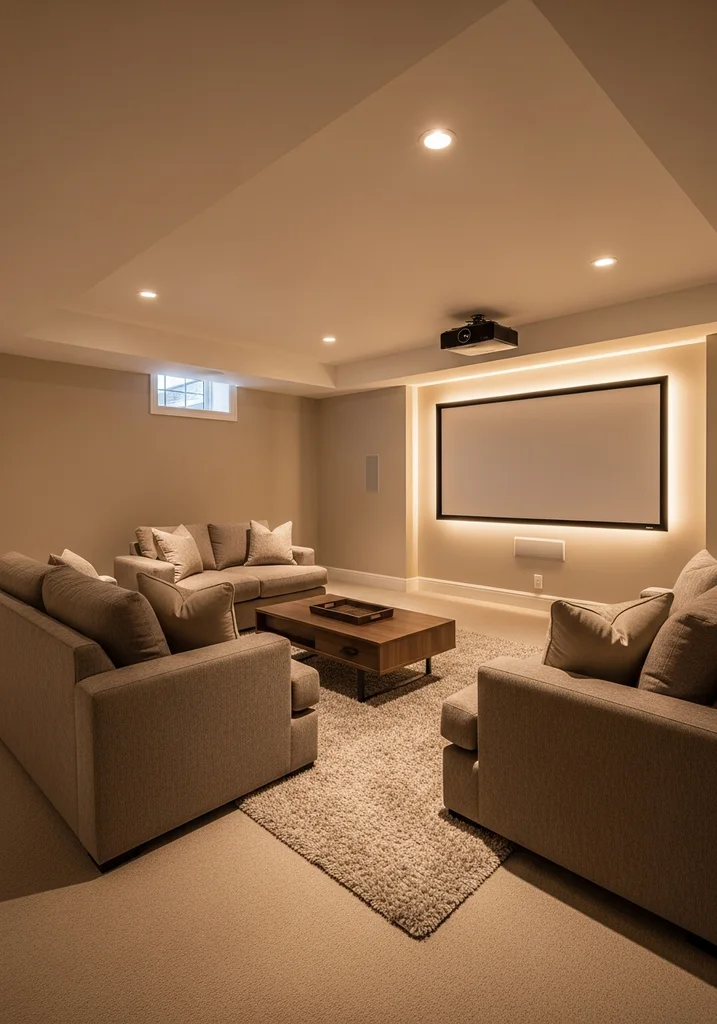
An inviting basement media room showcasing walls painted in a warm beige, complete with plush seating and subtle lighting.
Sherwin-Williams Accessible Beige is a popular warm neutral that offers a rich, inviting feel without being too dark or overwhelming in a basement setting. Its subtle gray undertones keep it from leaning too yellow, providing a sophisticated backdrop that pairs well with a variety of decor styles.
This color is perfect for basements envisioned as cozy media rooms, inviting guest suites, or comfortable play areas where warmth is key. It creates a welcoming ambiance, making the often cooler basement environment feel more like an extension of the main living spaces and adding significant visual interest.
5. Deep Navy (Benjamin Moore Hale Navy)

A sophisticated basement home bar featuring walls painted in a deep navy, complemented by dark wood cabinetry and brass details.
Benjamin Moore’s Hale Navy is a sophisticated and highly saturated deep navy that can create a dramatic, moody, and incredibly cozy basement space. While seemingly counterintuitive for low light areas, a rich dark color like this can embrace the lack of natural light, transforming it into a luxurious retreat.
This transformative color is excellent for basements intended as home theaters, sophisticated bars, or intimate libraries, where a sense of depth and enclosure is desired. The key is to balance it with ample artificial lighting and lighter accents to prevent it from feeling too heavy, ensuring a sophisticated and inviting ambiance.
6. Sage Green (Sherwin-Williams Sea Salt)

A relaxing basement spa bathroom showcasing walls painted in a muted sage green, featuring white subway tile and wooden shelving.
Sherwin-Williams Sea Salt is a beautiful, muted sage green with prominent gray and blue undertones that brings a tranquil, organic feel to any basement. This color is known for its chameleon like quality, shifting subtly with the light to provide continuous visual interest and a serene ambiance.
It is an excellent choice for basements dedicated to relaxation, such as a spa like bathroom, a yoga studio, or a craft room. The natural, earthy tones help to connect the subterranean space with the outdoors, making it feel less enclosed and more inviting and expansive.
7. Charcoal Gray (Benjamin Moore Kendall Charcoal)
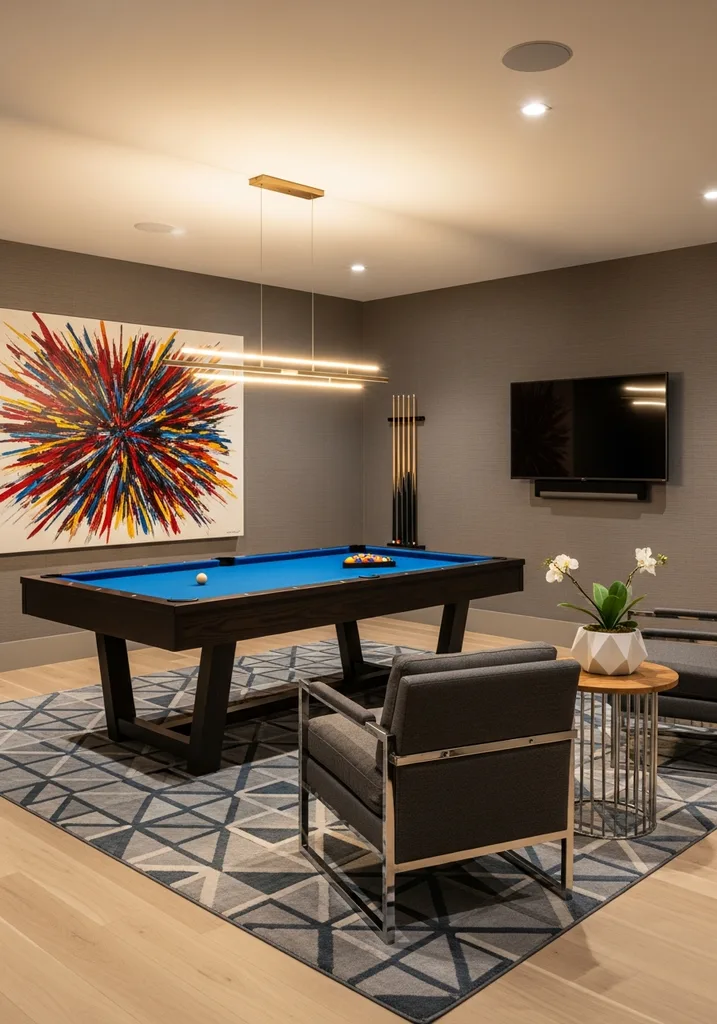
A modern basement game room featuring walls painted in a warm charcoal gray, complete with a sleek pool table and contemporary lighting.
Benjamin Moore’s Kendall Charcoal is a rich, warm charcoal gray that offers a strong, grounding presence in a basement, creating a modern and sophisticated mood. Unlike cooler grays, its slight green undertone prevents it from feeling stark, ensuring a cozy yet contemporary feel.
This versatile color is well suited for basements designed as game rooms, sophisticated man caves, or even as an accent wall in a larger, lighter space. It provides excellent visual interest and can make art and decor pop, contributing to a refined and inviting ambiance.
8. Creamy Off-White (Benjamin Moore Swiss Coffee)

A cozy basement reading nook showcasing walls painted in a creamy off-white, featuring a comfortable armchair and built-in bookshelves.
Benjamin Moore Swiss Coffee is a soft, creamy off-white that introduces a subtle warmth and richness without sacrificing brightness, making it ideal for basements. Its delicate yellow undertones create an inviting glow, making the space feel less stark than a pure white.
This color is perfect for basements where you want a bright yet cozy feel, such as a guest bedroom or a comfortable reading nook. It provides a versatile backdrop that can be easily accessorized with various textures and colors, enhancing the overall ambiance and offering a welcoming, expansive feel.
9. Muted Teal (Sherwin-Williams Riverway)

A creative basement studio featuring walls painted in a muted teal, equipped with an artist’s easel and a large work table.
Sherwin-Williams Riverway is a beautiful, muted teal that brings a sense of depth and sophisticated color to a basement without overwhelming the space. This rich hue combines the calming qualities of blue with the refreshing aspects of green, creating a distinctive and inviting ambiance.
It is an excellent choice for basements designed as creative studios, unique entertainment areas, or even a bold home office. The color offers significant visual interest and can make a strong design statement, transforming a typical basement into a personalized and inspiring retreat.
10. Light Greige (Benjamin Moore Pale Oak)

An elegant basement living area showcasing walls painted in a light greige, furnished with comfortable neutral pieces and soft lighting.
Benjamin Moore’s Pale Oak is an exquisitely subtle light greige that offers a touch more warmth than a cool gray, making it exceptionally inviting for basement spaces. Its delicate balance of beige and gray undertones allows it to appear airy and sophisticated without feeling cold or sterile.
This versatile shade is perfect for basements that aim for an elegant and understated aesthetic, such as a refined living area or a bright home office. It provides a neutral backdrop that enhances natural light where available, creating a sense of expansiveness and a welcoming ambiance, suitable for various decor styles.
11. Warm Taupe (Farrow and Ball Elephant’s Breath)

A sophisticated basement lounge featuring walls painted in a warm taupe, complemented by velvet seating and a modern fireplace.
Farrow and Ball’s Elephant’s Breath is a warm, mid-toned taupe with a hint of magenta that creates a wonderfully cozy and sophisticated atmosphere in a basement. This unique color brings depth and softness, making a subterranean space feel incredibly inviting and luxurious.
It is particularly effective in basements designed as sophisticated lounges, intimate dining areas, or elegant guest suites. The warmth of the taupe helps to counteract the often cooler basement environment, creating a rich ambiance and significant visual interest that feels both personal and expansive.
12. Dusty Lavender (Benjamin Moore Wet Concrete)

A chic basement guest bathroom showcasing walls painted in a dusty lavender gray, featuring white subway tile and a modern vanity.
Benjamin Moore’s Wet Concrete, despite its name, is a beautiful dusty lavender gray that can introduce an unexpected yet sophisticated pop of color and warmth to a basement. This muted hue offers a subtle color without being overwhelming, creating a soft and unique ambiance.
This transformative color is ideal for basements aiming for a distinctive, modern look, such as a creative hobby room or a chic guest bath. It provides visual interest and a touch of personality, making the space feel less like a basement and more like a thoughtfully designed part of the home, offering a unique and inviting feel.
13. Mushroom Gray (Sherwin-Williams Colonnade Gray)

A comfortable basement family room featuring walls painted in a mushroom gray, furnished with a large modular sofa and wooden furniture.
Sherwin-Williams Colonnade Gray is a warm, earthy mushroom gray that offers a grounding and sophisticated neutral for basement spaces. Its subtle brown and green undertones give it an organic feel, preventing it from appearing cold or stark in lower light conditions.
This versatile shade is excellent for basements intended as comfortable family rooms, home offices, or even a serene bedroom, where a natural and inviting ambiance is desired. It pairs beautifully with natural wood tones and provides a calm backdrop that allows furnishings and decor to shine, creating both visual interest and a cozy atmosphere.
14. Soft Yellow (Benjamin Moore Barely Yellow)

A bright basement play area showcasing walls painted in a soft, pale yellow, filled with colorful toys and child-friendly furniture.
Benjamin Moore’s Barely Yellow is a pale, ethereal yellow that can imbue a basement with a subtle, cheerful glow, mimicking the warmth of natural sunlight. This extremely light hue is far from overpowering, offering just enough color to brighten and uplift the space.
It is an excellent choice for basements that lack significant natural light, transforming them into more inviting and energetic areas, such as a children’s play area or a bright craft room. The soft yellow adds a gentle visual interest and an expansive feel, making the basement feel less like a subterranean space and more like an extension of the sunnier upper floors.
15. Greige with Green Undertone (Sherwin-Williams Edgecomb Gray)

An open concept basement living area featuring walls painted in a greige with green undertones, furnished with a comfortable sofa and minimalist coffee table.
Sherwin-Williams Edgecomb Gray is a beautiful greige that leans slightly more beige with a notable green undertone, offering a sophisticated and organic neutral for basements. This color is incredibly versatile, providing warmth and depth without feeling heavy or dark.
It is perfect for basements that require a color that can transition seamlessly between different zones, such as an open concept living area or a combination office and guest room. The green undertone adds a subtle visual interest and a natural feel, creating a sophisticated and inviting ambiance that makes the space feel both cozy and expansive.
Design Comparison: What to Expect
| Style/Type | Key Features | Best For |
|---|---|---|
| Bright & Airy | Light, cool tones, high light reflectance value | Workspaces, playrooms, small basements |
| Cozy & Inviting | Warm neutrals, soft beiges, muted tones | Family rooms, guest suites, media rooms |
| Sophisticated & Moody | Deep blues, charcoal grays, rich greens | Home theaters, bars, libraries, intimate lounges |
| Earthy & Organic | Sage greens, mushroom grays, natural taupes | Spa bathrooms, yoga studios, craft rooms |
| Unique & Playful | Dusty lavenders, soft yellows, muted teals | Creative studios, children’s play areas, distinctive guest spaces |
How to Choose Your Perfect Basement Paint Color
Begin by assessing your basement’s natural light, as this is the most critical factor in color selection for subterranean spaces. If your basement has minimal or no windows, prioritize colors with a high light reflectance value to maximize any available light and create an expansive feel. For basements with some natural light, you have more flexibility to explore both lighter and slightly darker shades.
Next, consider the intended use and desired mood of your basement space, as this will heavily influence your color choice. A home gym might benefit from energizing brights or calming blues, while a media room could embrace a deep, cozy navy or charcoal to enhance the cinematic experience. Think about the ambiance you want to create, whether it is inviting, sophisticated, or playful.
Always test paint samples on your basement walls, observing them at different times of day and under various lighting conditions. Colors can appear drastically different in a basement compared to a sunlit room upstairs due to the unique quality of subterranean light. This crucial step prevents costly mistakes and ensures you are happy with the final transformative result before committing to gallons of paint.
Finally, factor in your existing decor and fixed elements, such as flooring, trim, and any exposed pipes or ductwork. Choose colors that harmonize with these elements to create a cohesive and polished look throughout your basement. A well chosen color will tie everything together, adding visual interest and making the space feel intentionally designed and inviting.
Common Mistakes to Avoid When Choosing Basement Paint Colors
One common mistake is choosing a paint color based solely on how it looks in a well lit showroom or on a small paint chip. Basement lighting conditions are vastly different from those above ground, often making colors appear darker, duller, or with unexpected undertones. Always purchase sample pots and paint large swatches directly onto your basement walls to see how the color truly behaves throughout the day and with artificial lighting.
Another pitfall is neglecting the impact of artificial lighting on your chosen paint color, which is crucial for basement spaces. Using cool fluorescent lights with warm toned paint, or vice versa, can create an inconsistent and unappealing ambiance. Plan your lighting scheme in conjunction with your paint selection, opting for warmer LED bulbs to complement most colors and create a more inviting feel.
Many homeowners also make the error of trying to make a dark basement feel bright by using only stark, cool whites. While light colors are beneficial, an overly cool white can feel sterile and uninviting in a basement with limited natural light. Instead, consider soft whites with warm undertones, pale greiges, or even embracing a moody, sophisticated dark color to create a cozy and intentional atmosphere.
Finally, failing to consider the existing fixed elements, like concrete floors, exposed ceilings, or dark wood trim, can lead to a disjointed look. Your paint color should complement these elements, not clash with them, to create a cohesive and professional finish. Think about the overall scheme and how the paint color contributes to the entire basement’s visual interest and ambiance.
Frequently Asked Questions
What is the best type of paint finish for a basement?
For basements, an eggshell or satin finish is generally recommended because it offers durability and is easy to clean, which is beneficial in high traffic areas or spaces prone to moisture. These finishes also have a slight sheen that helps to reflect light, making the space feel brighter and more expansive. Matte finishes can absorb light and be harder to clean, while high gloss can highlight imperfections on walls.
Should I use the same color throughout my entire basement?
Using the same color throughout an open concept basement can create a cohesive and expansive feel, making the space appear larger and more unified. However, you can also use different complementary colors to define distinct zones, such as a media area versus a play space, or an office nook. If you opt for multiple colors, ensure they have similar undertones to maintain a harmonious flow and prevent a disjointed look.
How do I make a basement feel less like a basement?
To make a basement feel less subterranean, focus on maximizing light, both natural and artificial, and choosing colors that promote an expansive and inviting ambiance. Opt for light, warm neutrals or soft, cool tones on the walls, and ensure adequate layered lighting including overhead, task, and accent lights. Incorporating natural textures, comfortable furnishings, and thoughtful decor can also significantly elevate the space and make it feel like a true extension of your home.
Can I use dark colors in a basement with no windows?
Yes, you can absolutely use dark colors in a windowless basement, and it can be a highly effective design choice to create a sophisticated and cozy mood. Instead of fighting the lack of light, embrace it by creating an intimate, dramatic space, such as a home theater or a luxurious lounge. The key is to balance the dark walls with ample, well planned artificial lighting and lighter accents to prevent the space from feeling cave like or overwhelming, ensuring an inviting and transformative result.
Conclusion
Choosing the perfect paint color for your basement is a transformative decision that can dramatically impact its functionality and overall appeal. By considering factors like natural light, intended use, and desired ambiance, you can select a hue that truly elevates your subterranean space. Whether you opt for a bright, expansive white or a moody, sophisticated navy, the right color will create an inviting environment that feels like a natural extension of your home. Embrace these expert insights and practical tips to turn your basement into a cherished and highly utilized area, adding significant visual interest and value.


