
Top 17 Mosaic Wood Floor Designs to Elevate Your Home
Overview
This article explores 17 exquisite mosaic wood floor designs, offering a comprehensive guide for homeowners and designers alike. You will discover diverse styles, material considerations, and practical applications to help select the ideal flooring. This resource provides expert insights to inspire and inform your next interior design project, enhancing any space with timeless elegance and durability.
Key Takeaways
- heading
- takeaways
- section_type
Mosaic wood floors represent a pinnacle of craftsmanship and design, transforming ordinary spaces into extraordinary showcases of natural beauty. The intricate patterns and varied wood tones create a depth and character that no other flooring material can quite replicate. From designing hundreds of spaces, I have observed that these floors are not merely a surface but a foundational element that defines the entire aesthetic of a room.
Exploring the diverse world of mosaic wood floors reveals a spectrum of possibilities, from historical reproductions to cutting edge contemporary art. In this guide, you will discover 17 distinct mosaic wood floor designs, each offering unique visual appeal and practical considerations for your home. We will delve into specific materials, suitable applications, and expert tips to help you make an informed decision for your next project.
1. Classic Herringbone Parquetry
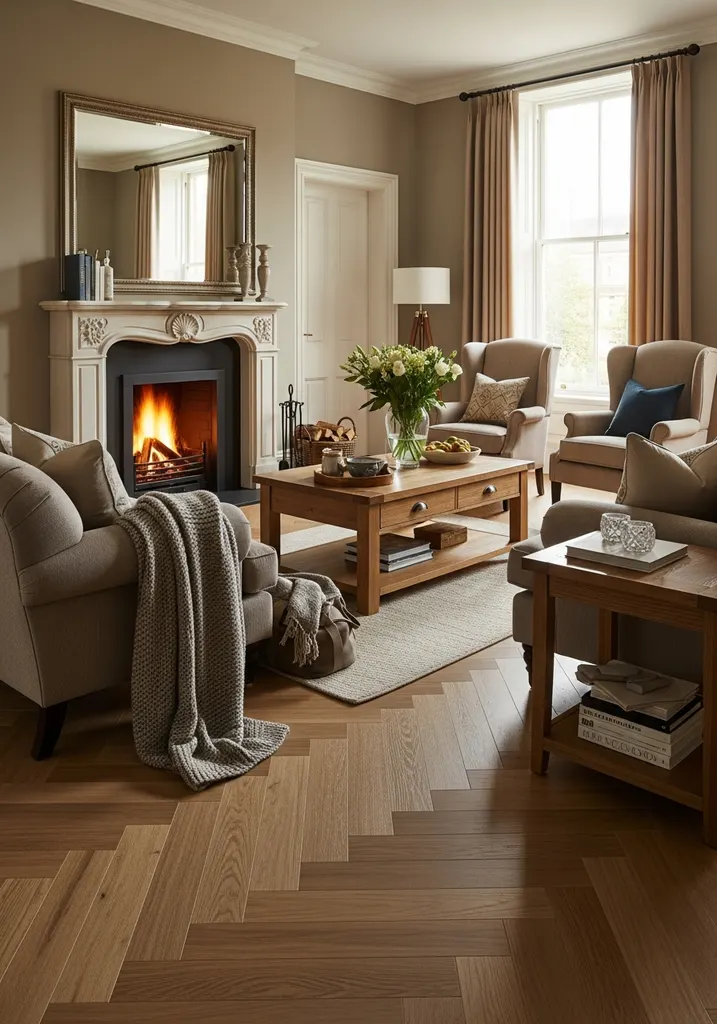
A classic living room showcases a herringbone mosaic wood floor crafted from medium oak, providing timeless elegance.
The classic herringbone mosaic wood floor features rectangular wood blocks cut at a 90 degree angle and installed in a staggered zigzag pattern. This timeless design creates a sophisticated visual rhythm, often utilizing rich oak or walnut for its distinct grain and color variations. The individual pieces are precisely milled, allowing for a tight, elegant fit that defines its enduring appeal.
This pattern is ideal for formal living areas, grand entryways, or even elegant bedrooms, adding a touch of European charm and historical depth. Design experts at Houzz note that its enduring popularity is due to its versatility, complementing both traditional and transitional interiors with ease. An expert tip is to choose a larger block size for expansive rooms to prevent the pattern from appearing too busy.
2. Elegant Chevron Pattern
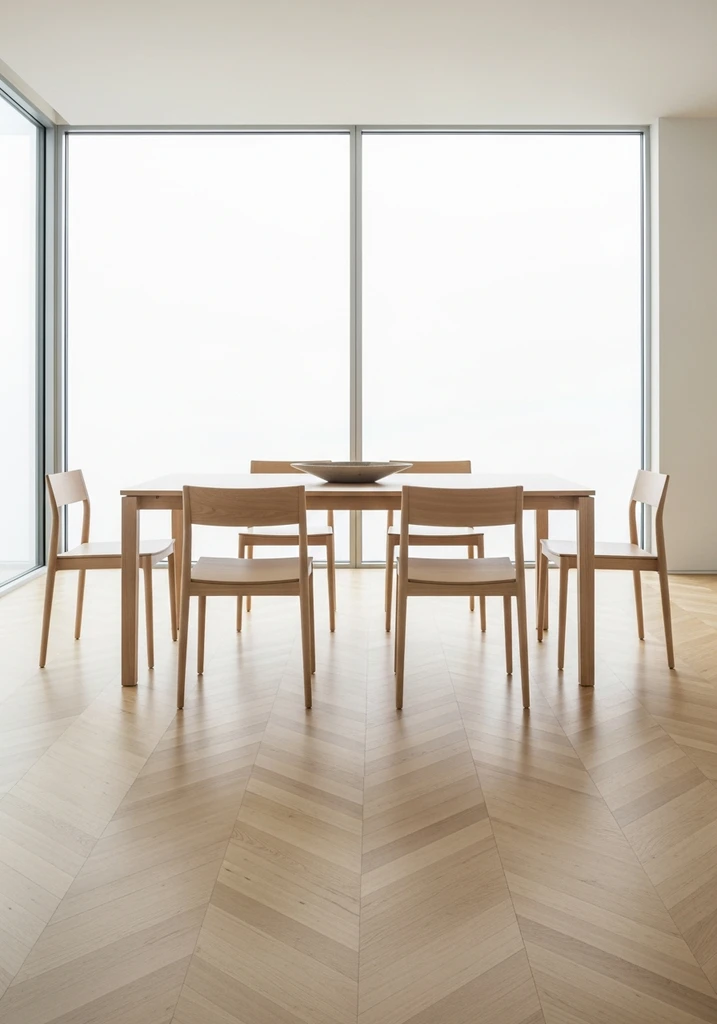
A modern dining room features a light maple chevron mosaic wood floor, enhancing the minimalist aesthetic.
The chevron mosaic wood floor is similar to herringbone but features planks cut at a 45 degree or 60 degree angle, meeting at a perfect point to form a continuous V shape. This creates a sharper, more defined arrow like pattern that directs the eye and adds a sense of movement to the space. Often crafted from lighter woods like maple or ash, it provides a clean, contemporary feel.
This pattern is particularly well suited for modern or minimalist interiors where clean lines and geometric precision are desired. It can make a room feel longer or wider depending on the direction of installation, offering a clever spatial illusion. For a truly cohesive look, consider extending the chevron pattern into adjacent hallways to create flow.
3. Intricate Basketweave Design
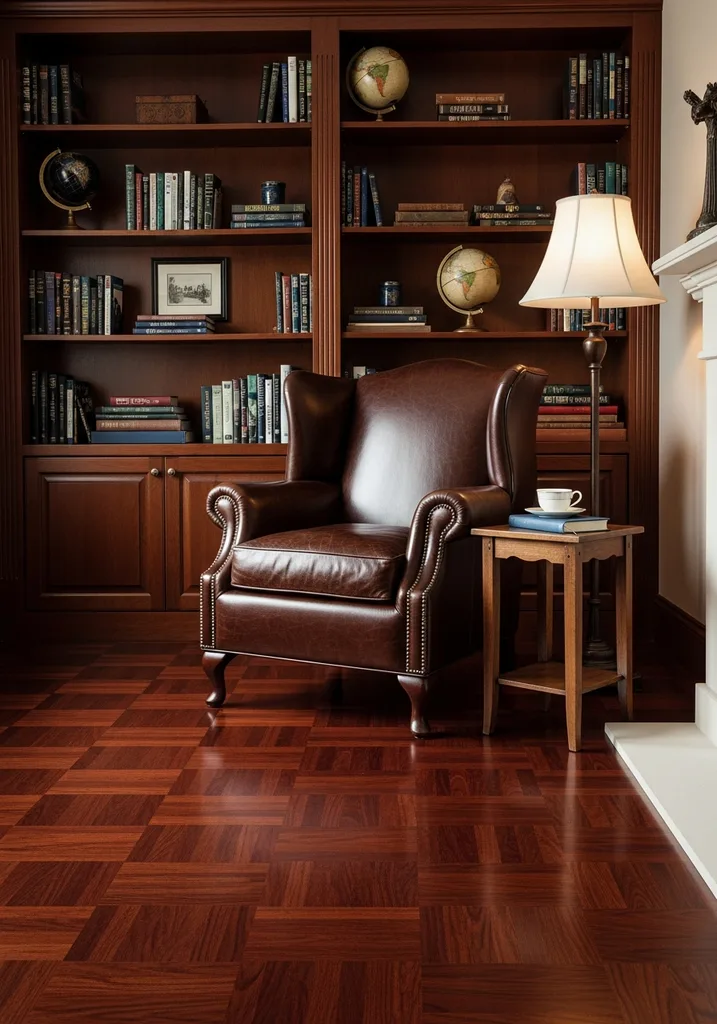
This cozy study boasts a rich cherry basketweave mosaic wood floor, complementing the traditional bookshelves.
A basketweave mosaic wood floor creates the illusion of woven strips of wood, with small blocks arranged in squares that alternate direction. This pattern often incorporates two different length blocks within each square, giving it a rich, textural appearance. Common wood choices include cherry or walnut, which offer beautiful color depth to highlight the woven effect.
This pattern is excellent for adding visual interest and a touch of rustic sophistication to studies, libraries, or cozy family rooms. Its intricate nature makes it a focal point, so it pairs well with simpler furniture and decor. To maintain its detailed look, choose a finish that highlights the natural wood tones without overwhelming the pattern.
4. Grand Versailles Panel
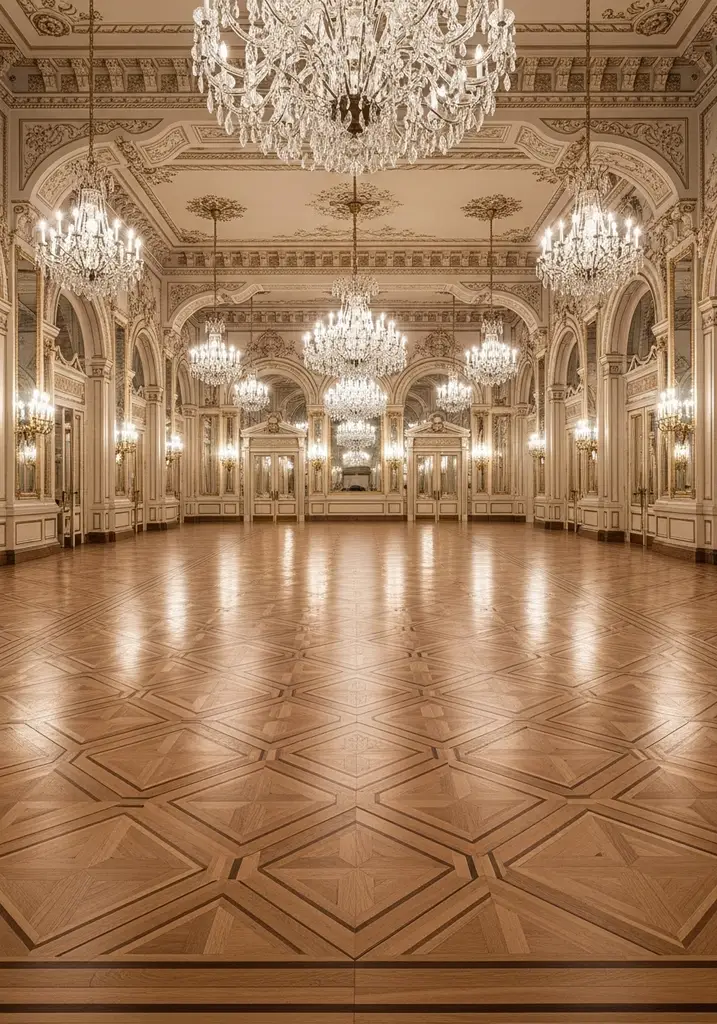
An elegant ballroom features a grand oak Versailles panel mosaic wood floor, adding historical luxury.
The Versailles panel mosaic wood floor is a large, square panel featuring an intricate geometric pattern of interwoven diagonal and straight wood pieces. Originating from French palaces, this design exudes opulence and historical grandeur, often crafted from fine European oak. The panels are preassembled, ensuring precision and a stately appearance.
This majestic flooring is perfect for expansive living rooms, formal ballrooms, or high end commercial spaces where a statement of luxury is desired. Its scale demands a spacious environment to be fully appreciated, creating a truly magnificent foundation. According to Wood Floor Business, these historic patterns are seeing a resurgence for their artisanal appeal.
5. Distinctive Marie Antoinette Panel
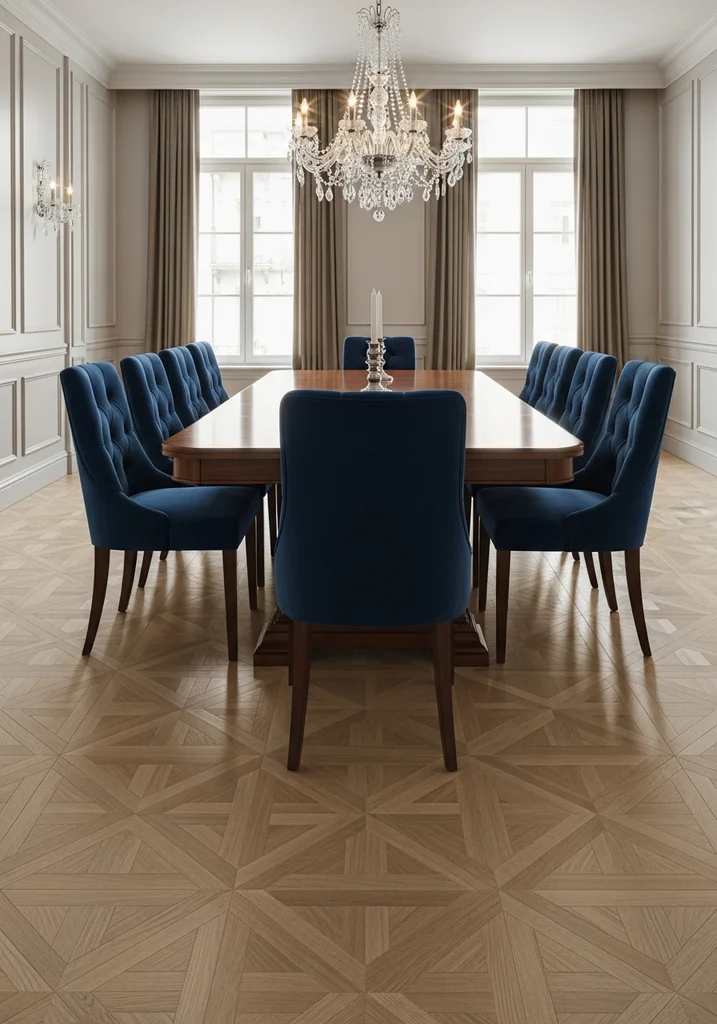
A formal dining room showcases a bleached oak Marie Antoinette panel mosaic wood floor, exuding refined elegance.
The Marie Antoinette panel mosaic wood floor is another regal design, often characterized by its slightly more curvilinear or softer edges compared to the sharper lines of Versailles. It typically features a central square or diamond shape surrounded by interlocking smaller pieces, creating a refined and elegant flow. These panels are frequently made from light to medium toned woods, such as bleached oak or birch.
This panel is an excellent choice for spaces aiming for sophisticated French Provincial or Neoclassical aesthetics, like formal dining rooms or master bedrooms. Its delicate complexity offers a softer grandeur, providing a luxurious backdrop without being overly imposing. Consider pairing this floor with antique furniture and soft, flowing textiles for a truly harmonious environment.
6. Geometric Cube Pattern
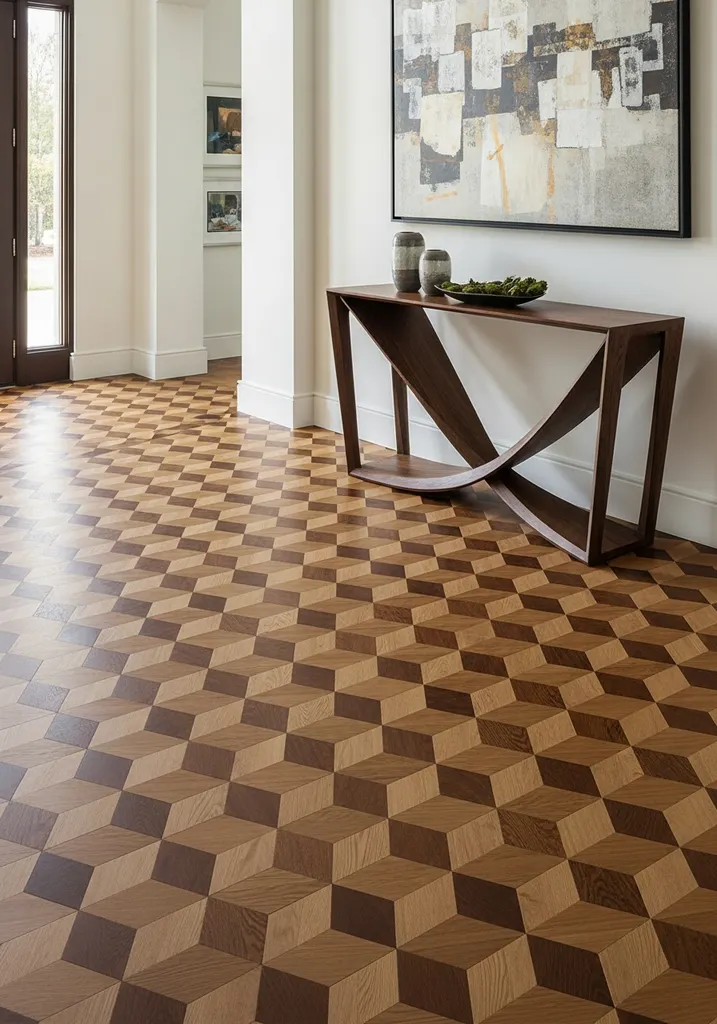
A contemporary entryway features a geometric cube mosaic wood floor, creating a dynamic three dimensional effect.
The geometric cube mosaic wood floor creates an impressive three dimensional optical illusion using trapezoidal or parallelogram shaped wood pieces. These pieces are arranged to suggest stacked cubes, offering a dynamic and playful visual effect. This design often utilizes three different wood tones or stains to enhance the depth and make the cubes truly pop from the surface.
This striking pattern is perfect for adding a contemporary and artistic flair to modern homes, particularly in entryways, game rooms, or creative studios. It works best in spaces where you want the floor to be a bold statement piece, rather than just a background element. An expert tip is to keep wall colors and furniture relatively simple to let the floor pattern be the star of the show.
7. Octagon and Dot Design
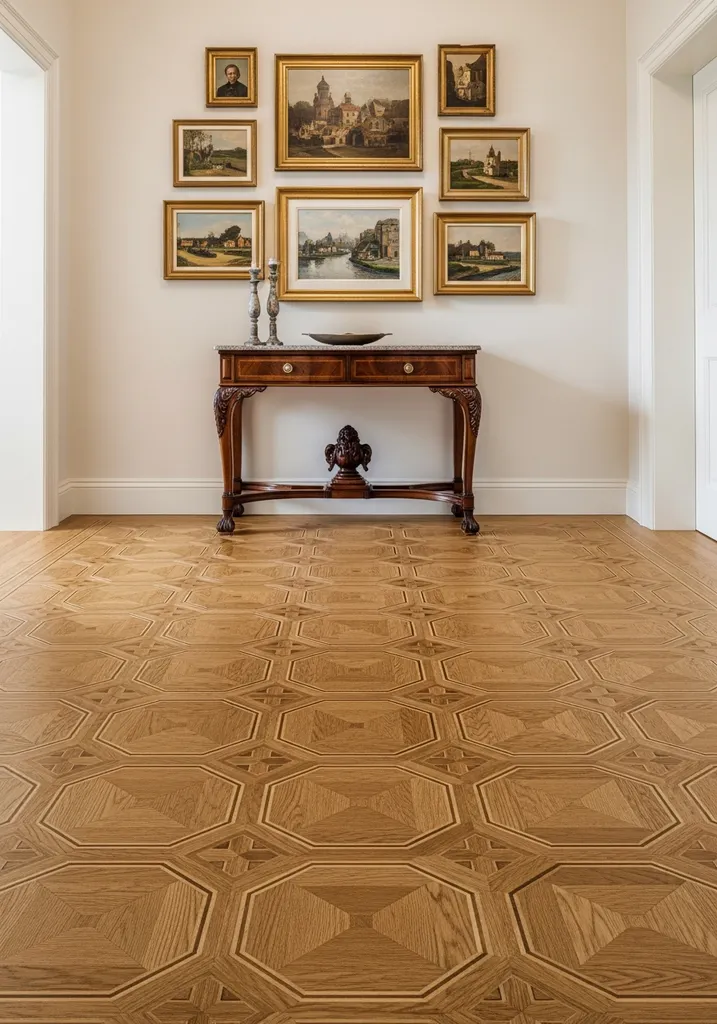
A traditional hallway showcases an oak octagon and dot mosaic wood floor, adding a refined historical touch.
The octagon and dot mosaic wood floor features larger octagonal wood pieces interspersed with smaller square ‘dots’ at their intersections. This classic pattern provides a balanced and symmetrical appearance, offering a sense of order and traditional charm. Often, the ‘dot’ pieces are made from a contrasting wood species to create visual separation and highlight the pattern.
This design is well suited for traditional homes, grand hallways, or even bathrooms seeking a refined, historical feel. It offers a subtle intricacy that can elevate a space without overwhelming it with too much detail. To enhance the contrast, consider using a dark wood like wenge for the dots against a lighter oak octagon.
8. Custom Inlay Medallion
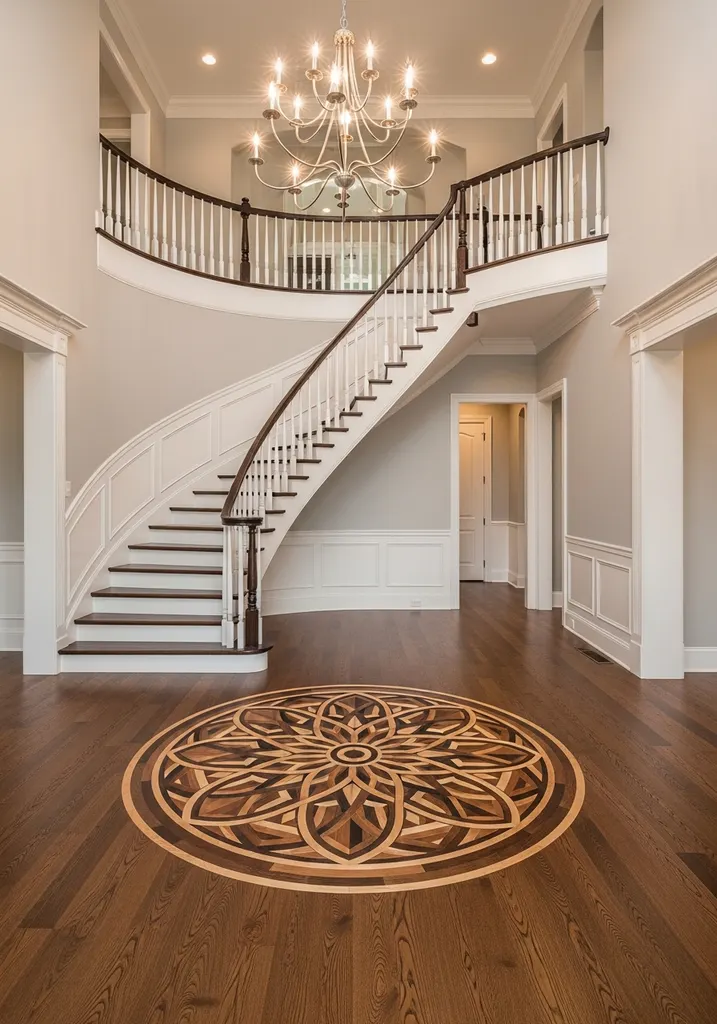
A grand entryway features a custom circular inlay medallion mosaic wood floor, creating a stunning focal point.
A custom inlay medallion mosaic wood floor involves an intricate, often circular or oval, design embedded directly into a larger wood floor. These medallions can depict crests, compass roses, floral motifs, or abstract patterns, utilizing multiple wood species for varying colors and grains. They serve as a powerful focal point, showcasing exceptional craftsmanship and personalization.
This option is perfect for grand entryways, formal dining rooms, or even as a central feature in a large living area, making a strong personal statement. It is ideal for homeowners who desire a truly unique and bespoke element in their interior design. When commissioning a medallion, ensure the design complements the overall architectural style and scale of the room.
9. Decorative Border Inlay
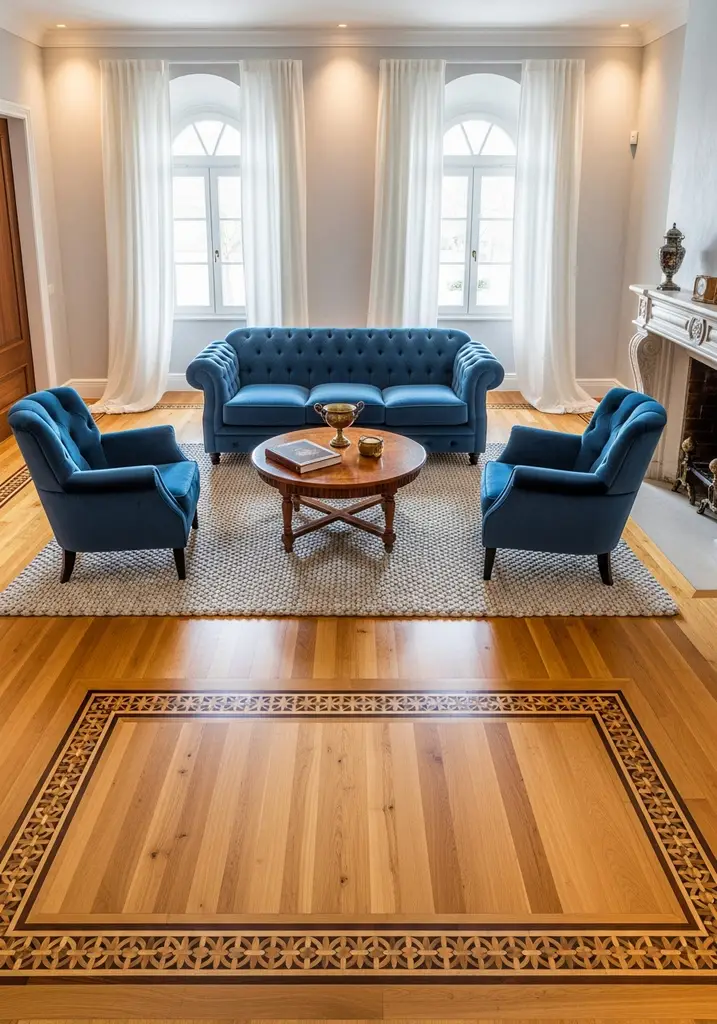
An elegant living room features a decorative border inlay mosaic wood floor framing a central plank area.
A decorative border inlay mosaic wood floor features a distinct pattern or contrasting wood species running along the perimeter of a room, framing a simpler central floor area. This technique adds elegance and definition to a space, drawing attention to its architectural lines. Borders can range from simple contrasting stripes to complex geometric or curvilinear designs.
This design is excellent for defining areas within an open concept space, such as a dining area within a large living room, or for enhancing the grandeur of a hallway. It provides a sophisticated finishing touch without the expense or visual complexity of a full mosaic floor. An expert tip is to select a border width that is proportionate to the room’s size, avoiding overly wide borders in smaller spaces.
10. Mixed Species Mosaic
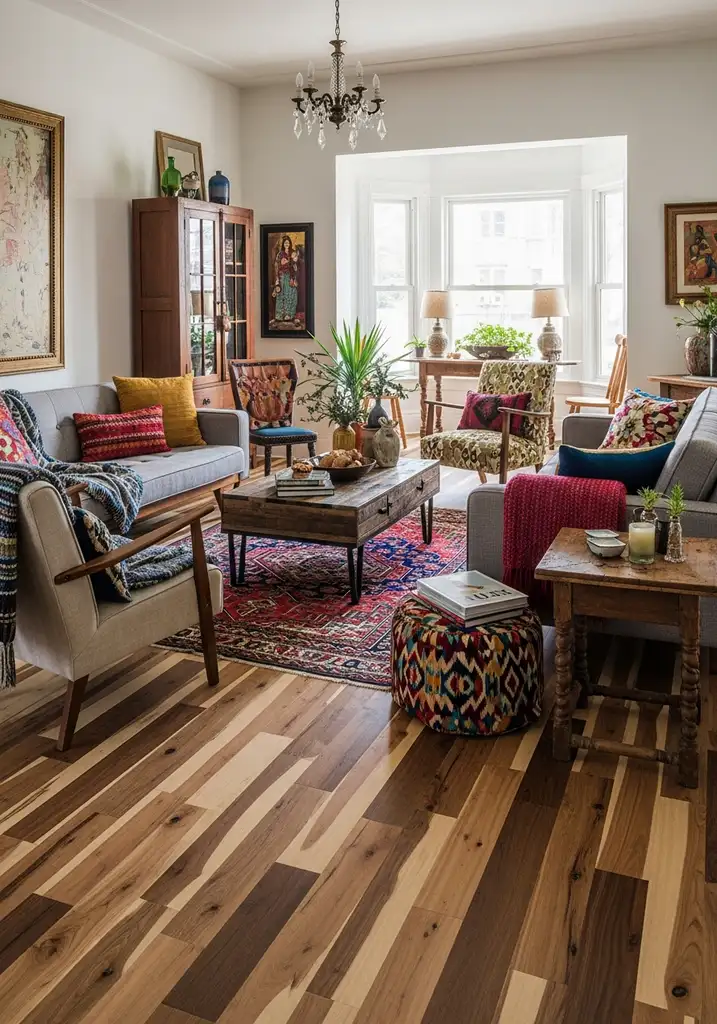
An eclectic living room showcases a mixed species mosaic wood floor, adding vibrant character with varied wood tones.
A mixed species mosaic wood floor utilizes a combination of different wood types, each with its unique color, grain, and texture, to create dynamic patterns. This approach allows for incredible artistic expression, from subtle contrasts to bold, vibrant designs. Common pairings include light maple with dark walnut, or red oak with white ash, offering a rich palette of natural hues.
This style is perfect for homeowners who want to inject personality and unique character into their space, suitable for eclectic, bohemian, or contemporary interiors. It can be particularly effective in areas where you want the floor itself to be a significant design element. Consider the hardness and stability of each wood species when combining them to ensure consistent performance over time.
11. End Grain Mosaic
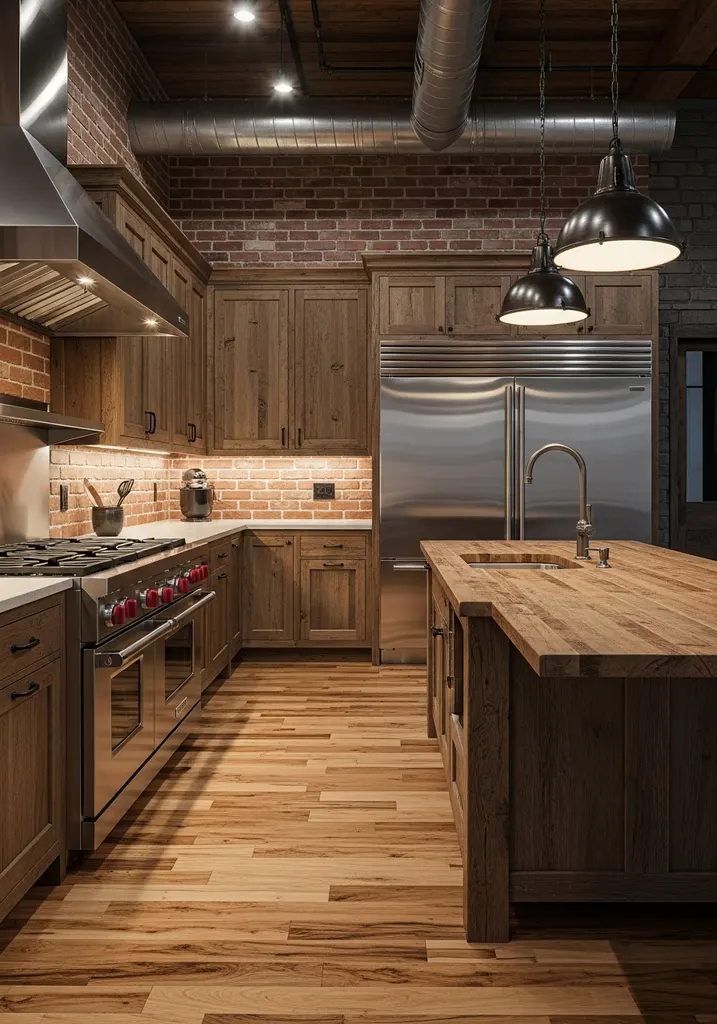
A rustic industrial kitchen features an end grain mosaic wood floor, offering exceptional durability and unique texture.
An end grain mosaic wood floor is crafted from small blocks of wood cut across the grain, exposing the circular growth rings and unique cellular structure. This technique creates a remarkably durable surface with a distinctive, textural appearance, often resembling cobblestones or tree stumps. The end grain can absorb and release moisture more readily, which contributes to its unique look and feel.
This robust and visually captivating floor is ideal for high traffic areas like commercial spaces, kitchens, or workshops where durability is paramount. Its rustic yet refined aesthetic also suits industrial chic or farmhouse style homes. Proper sealing and maintenance are crucial for end grain floors due to their absorbent nature, ensuring longevity and resistance to spills.
12. Random Plank Mosaic
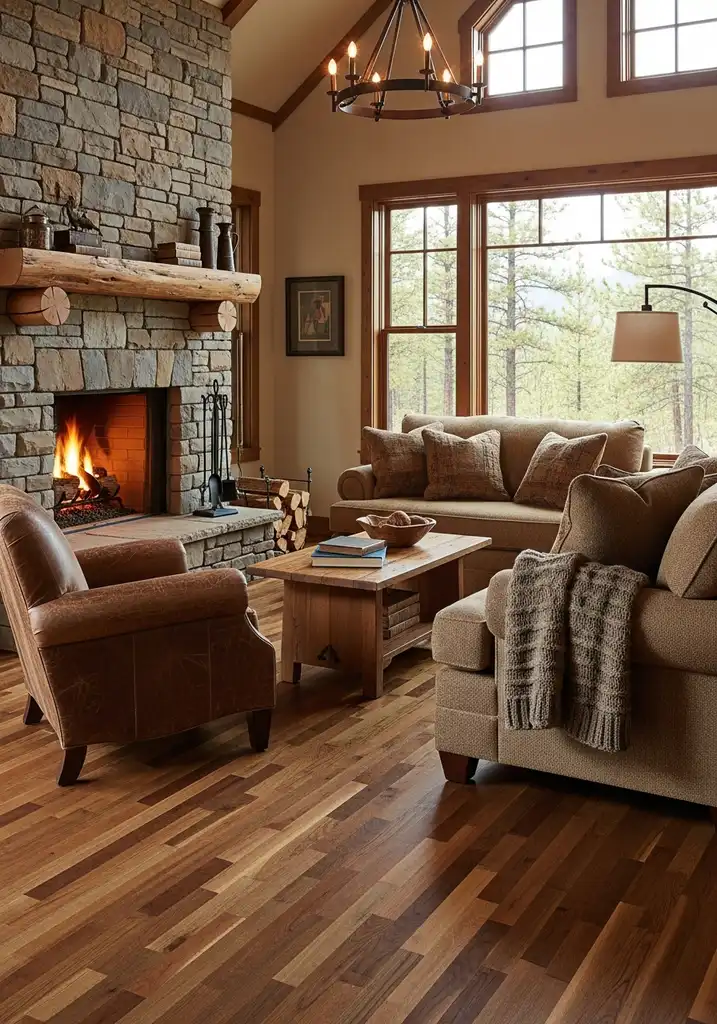
A rustic cabin living room features a random plank mosaic wood floor, emphasizing natural wood beauty.
The random plank mosaic wood floor utilizes wood pieces of varying lengths and widths, arranged in an unpredictable yet harmonious pattern. This design emphasizes the natural beauty of the wood, creating an organic and less formal aesthetic compared to traditional parquetry. It often incorporates different wood species or stains to enhance the visual diversity.
This style is excellent for creating a relaxed, natural, and inviting atmosphere in casual living spaces, cabins, or rustic themed homes. It celebrates imperfections and organic flow, making it a wonderful choice for those who appreciate a less structured look. When installing, ensure a good distribution of varying plank sizes to maintain a balanced visual without creating awkward clusters.
13. Ladder Pattern
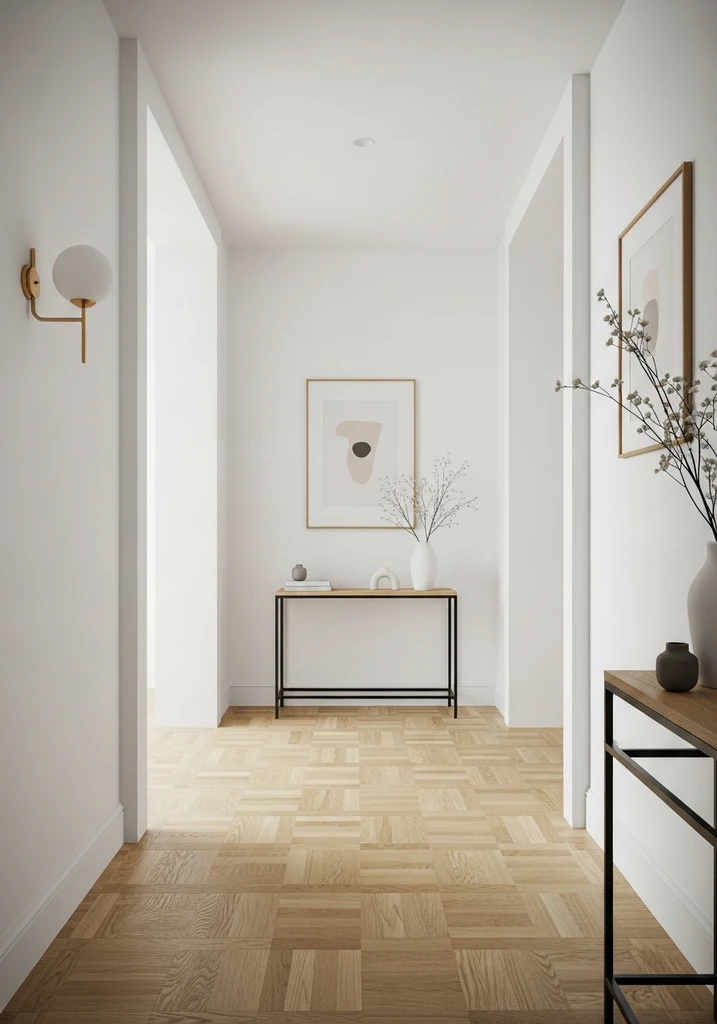
A minimalist hallway features a light oak ladder pattern mosaic wood floor, providing a clean, structured look.
The ladder pattern mosaic wood floor uses rectangular wood blocks arranged in alternating directions to create a series of parallel lines, resembling a ladder. This straightforward yet effective design offers a clean and structured look, providing a sense of direction and order within a space. It often utilizes a single wood species like oak or beech for a cohesive appearance.
This pattern is well suited for hallways, corridors, or minimalist interiors where a subtle geometric interest is desired without overwhelming the space. It can subtly guide the eye through a room, enhancing spatial perception. For a more pronounced effect, consider using slightly contrasting wood tones for the alternating sections of the ladder.
14. Diamond Pattern
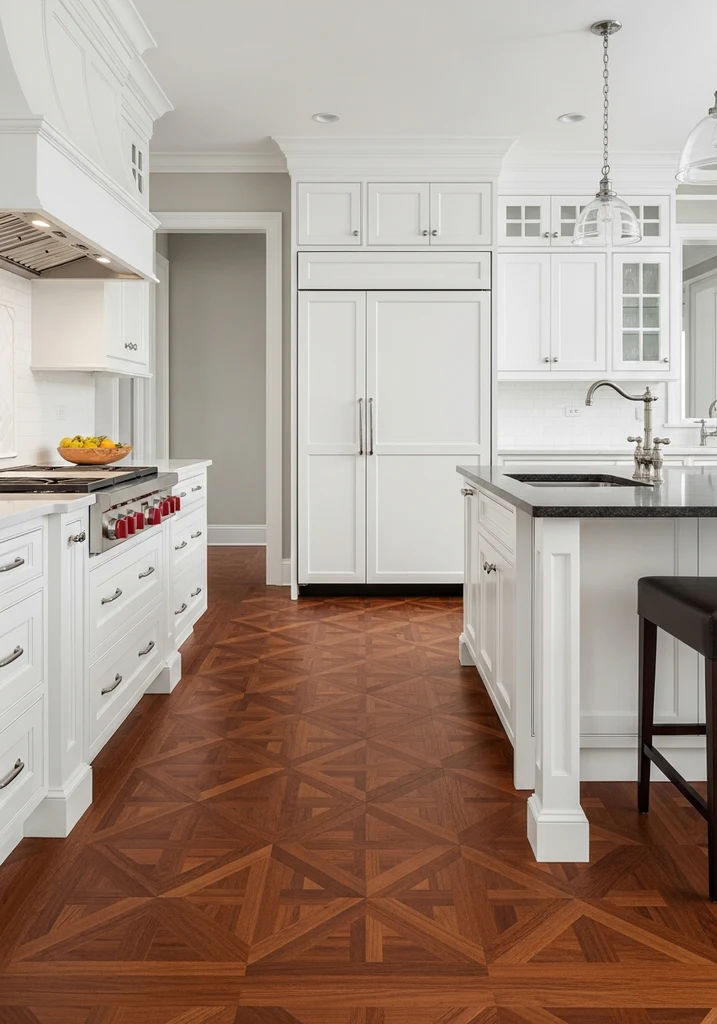
A transitional kitchen features a cherry wood diamond pattern mosaic floor, adding dynamic visual interest.
A diamond pattern mosaic wood floor features square wood blocks installed on a diagonal, creating a repeating series of diamond shapes across the surface. This classic pattern adds a dynamic visual interest and can make a room feel more expansive by drawing the eye along the diagonal lines. It is often executed in a single wood species, such as cherry or maple, for a consistent finish.
This versatile pattern works beautifully in a variety of settings, from traditional to transitional homes, and is particularly effective in entryways or kitchens. It offers a subtle twist on standard square tiles, bringing warmth and elegance. To further enhance the diamond effect, consider using a contrasting grout or filler between the wood blocks, if applicable to the installation method.
15. Star Pattern Inlay
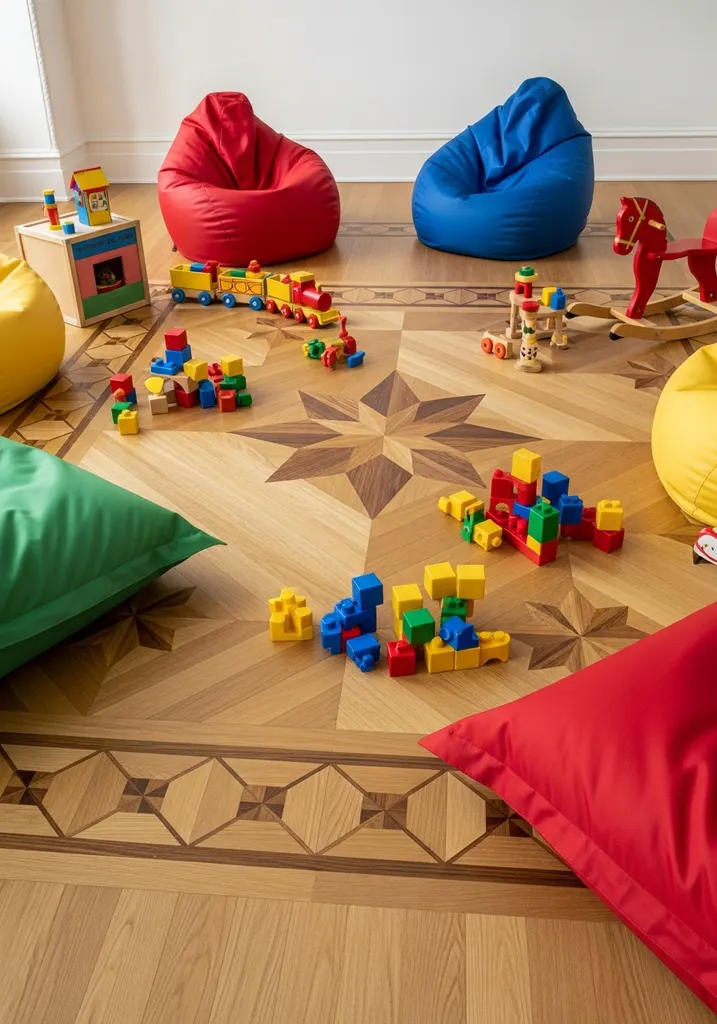
A children’s play room features a light wood star pattern inlay mosaic floor, adding a whimsical touch.
The star pattern inlay mosaic wood floor features intricate star shaped designs, often created by interlocking squares or diamonds, embedded into a larger flooring expanse. These stars can be singular focal points or repeated across a section of the floor, using contrasting wood species to define the star’s points. This design brings a whimsical yet sophisticated element to any room.
This pattern is excellent for children’s rooms, creative spaces, or areas where a playful yet elegant touch is desired. It can also be used in larger halls or living areas as a unique design accent. When selecting wood species for a star pattern, choose woods with distinct color differences to make the star truly stand out.
16. Parquet de Chantilly
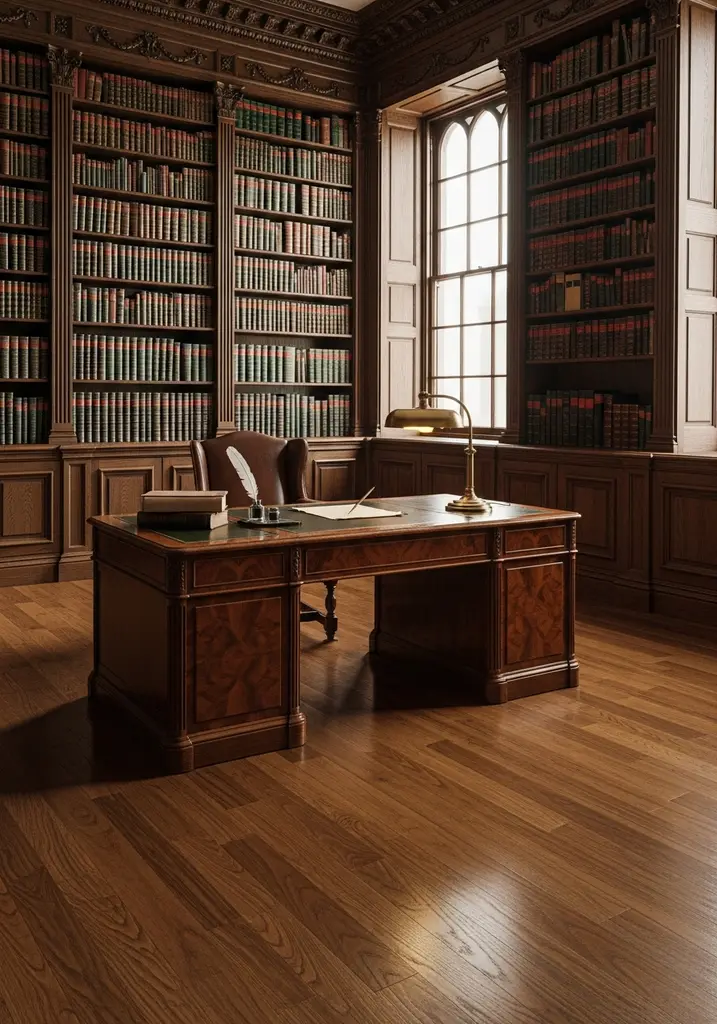
A formal library showcases a dark oak Parquet de Chantilly mosaic wood floor, exuding historical grandeur.
Parquet de Chantilly is a sophisticated panel mosaic wood floor that typically features an octagonal or diamond central motif surrounded by intricate geometric arrangements. This pattern is known for its detailed craftsmanship and often incorporates a variety of wood grains and colors within each panel. It draws inspiration from historic French chateaus, exuding refined elegance and luxury.
This flooring is ideally suited for formal studies, elegant libraries, or master suites where a sense of historical grandeur and bespoke design is valued. Its complex visual texture creates a rich foundation for traditional or transitional decor. To highlight its intricate details, consider a satin or semi gloss finish that enhances the wood’s natural luster without being overly reflective.
17. Modern Linear Mosaic
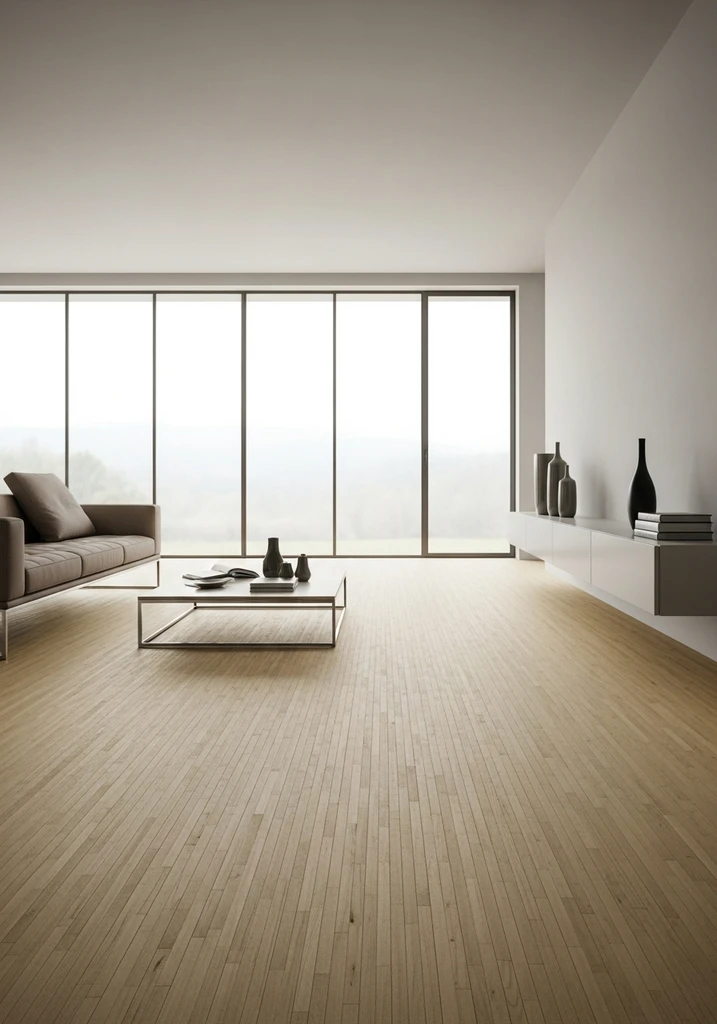
A modern open plan living space features a light birch modern linear mosaic wood floor, enhancing its sleek aesthetic.
The modern linear mosaic wood floor utilizes long, thin strips of wood arranged in parallel or staggered lines, creating a sleek and contemporary aesthetic. This design often plays with varying strip widths or subtle shifts in direction to add visual interest without resorting to complex geometric patterns. Light colored woods like birch or ash are frequently used to maintain a bright, open feel.
This minimalist pattern is perfect for contemporary apartments, open plan living spaces, or Scandinavian inspired homes, where clean lines and understated elegance are prioritized. It contributes to a sense of spaciousness and modern sophistication, allowing other design elements to shine. An expert tip is to run the linear pattern parallel to the longest wall in a room to enhance its perceived length.
Design Comparison: What to Expect
| Style/Type | Key Features | Best For |
|---|---|---|
| Classic Parquetry (Herringbone, Chevron) | Geometric patterns, precise angles, traditional elegance, timeless appeal | Formal living rooms, dining areas, grand entryways, traditional to transitional homes |
| Panel Parquetry (Versailles, Marie Antoinette) | Large, intricate preassembled squares, historical grandeur, opulent detail | Expansive rooms, formal ballrooms, master suites, French Provincial or Neoclassical interiors |
| Artistic Mosaics (Cube, Octagon & Dot, Star) | Optical illusions, contrasting woods, unique shapes, distinct focal points | Contemporary spaces, creative studios, children’s rooms, areas needing a bold statement |
| Textural Mosaics (Basketweave, End Grain) | Woven appearance, exposed wood grain, exceptional durability, rustic charm | Cozy studies, high traffic commercial areas, industrial chic kitchens, farmhouse styles |
| Modern & Custom (Linear, Random Plank, Inlay) | Sleek lines, varied sizes, personalized designs, subtle or bold contrasts | Minimalist homes, open concept living, eclectic interiors, bespoke luxury projects |
How to Choose Your Perfect Mosaic Wood Floor
Selecting the ideal mosaic wood floor involves considering your home’s architectural style and your personal aesthetic preferences. A traditional home might benefit from the historical elegance of Versailles panels, while a modern space could shine with a sleek chevron or linear pattern. Think about how the pattern will integrate with existing furnishings and overall room decor.
Durability and traffic levels in the chosen area are also critical factors in your decision process. High traffic zones like entryways or kitchens benefit from harder wood species and more robust patterns like end grain mosaics that can withstand constant use. For bedrooms or less frequented areas, you might prioritize visual appeal over extreme durability.
Consider the wood species and finish, as these dramatically impact both the look and maintenance of your floor. Lighter woods such as maple can brighten a room, while darker woods like walnut add warmth and sophistication. The finish, whether matte, satin, or gloss, will affect how light reflects off the floor and how easily it shows imperfections, so choose wisely.
Finally, think about your budget and the complexity of installation, as intricate patterns or custom inlays often require specialized craftsmanship and can increase costs. Preassembled panels can sometimes offer a more streamlined installation process compared to laying individual small mosaic pieces. Always obtain multiple quotes and review portfolios of experienced installers.
Common Mistakes to Avoid When Choosing Mosaic Wood Floors
One common mistake is underestimating the visual impact of a complex mosaic pattern in a smaller room. An overly intricate design in a confined space can make the room feel cluttered and visually overwhelming, rather than elegant. Always consider the scale of the pattern in relation to the room’s dimensions to ensure harmony.
Another frequent error is neglecting proper subfloor preparation, which is absolutely crucial for any mosaic wood floor installation. An uneven or unstable subfloor can lead to gaps, squeaks, and eventual damage to the delicate pattern over time. Investing in professional subfloor leveling and moisture control is a non negotiable step for longevity.
Choosing a wood species or finish that is unsuitable for the room’s function is also a common pitfall. For example, installing a softer wood or a high gloss finish in a high traffic area with pets or children can quickly lead to visible scratches and wear. Match the floor’s resilience to the demands of its environment to ensure satisfaction.
Lastly, failing to consider the long term maintenance requirements of specific mosaic patterns can lead to frustration. Some intricate designs with many small pieces might require more meticulous cleaning or specialized repair techniques compared to standard plank flooring. Understand the commitment involved before making your final selection.
Frequently Asked Questions
Are mosaic wood floors durable?
Yes, mosaic wood floors can be very durable, especially when made from hard wood species like oak, maple, or walnut. The small, interlocking pieces often distribute stress effectively, contributing to their resilience. Proper installation and regular maintenance are key to maximizing their lifespan and enduring beauty.
Can mosaic wood floors be installed over radiant heating?
Yes, many mosaic wood floors can be installed over radiant heating systems, but it requires careful consideration of wood species and installation methods. It is crucial to use engineered wood products or specific solid wood types that are stable under fluctuating temperatures. Always consult with the flooring manufacturer and a radiant heat specialist to ensure compatibility and prevent warping or gapping.
How do I clean and maintain a mosaic wood floor?
Cleaning a mosaic wood floor involves regular sweeping or vacuuming with a soft brush attachment to remove dust and debris. For deeper cleaning, use a damp mop with a pH neutral wood floor cleaner, avoiding excessive water which can damage the wood. Promptly wipe up spills and use felt pads under furniture to prevent scratches, ensuring its pristine condition for years to come.
Is mosaic wood flooring suitable for bathrooms or kitchens?
While wood floors can be used in kitchens, they are generally not recommended for full bathrooms due to high moisture levels. For kitchens, choosing a highly durable wood species and a water resistant finish is essential. For bathrooms, it is generally safer to opt for materials specifically designed for wet environments, or consider engineered wood with extreme caution and excellent ventilation.
Conclusion
The world of mosaic wood floors offers an unparalleled blend of artistry, history, and natural beauty, providing a truly distinctive foundation for any interior. From the timeless elegance of classic parquetry to the bold statements of modern geometric designs, there is a pattern to suit every taste and architectural style. By carefully considering factors like wood species, pattern scale, and maintenance, you can select a floor that not only enhances your home’s aesthetic but also stands the test of time. Embrace the rich character and sophisticated charm that only a meticulously crafted mosaic wood floor can deliver, transforming your space into a work of art.


