Top 17 Dusty Rose Kitchen Modern Ideas for a Soft, Stylish Kitchen
Dusty rose is having a serious moment in modern kitchens, and it is easy to see why. This soft, muted pink — somewhere between blush and mauve, with a whisper of gray — brings warmth to sleek modern lines without turning the room sweet or sugary. It photographs beautifully, pairs with almost every neutral, and feels calm rather than loud, which is exactly what a hardworking kitchen needs.
In this guide you will find 17 dusty rose kitchen modern ideas you can mix, match, and layer, from full rose cabinetry to one small blush accent that changes the whole room. Every idea includes the materials to look for, realistic price ranges, and the styling moves that keep the look grown-up and modern instead of precious. You will finish knowing exactly where to put the color, what to pair it with, and what to skip.
Save this list before your next kitchen refresh. Most of these ideas work in a weekend — paint, hardware, textiles, and styling — and they build on each other, so start with one statement change and let the rest follow.
Overview
A dusty rose kitchen modern look sits where soft color meets clean, contemporary design. Traditional pink kitchens lean vintage and cottage; the modern dusty rose version swaps frills for flat-front cabinets, slim hardware, matte finishes, and open, uncluttered surfaces. The rose itself does the softening, so everything else in the room can stay sharp and simple — think handleless doors, white quartz counters, and one warm metal repeated throughout.
The good news is that dusty rose is a forgiving color to live with. It hides cooking splashes better than white, warms up gray light in north-facing kitchens, and flatters wood, marble, brass, and black in equal measure. Because the tone is muted rather than bright, it reads as a sophisticated neutral from a distance and only reveals its blush up close. Work in one clear rose statement plus a few small echoes, keep the palette tight, and let texture and light do the rest.
Key Takeaways
- Start with one rose statement: cabinets, an island, or a backsplash in dusty rose, then echo the color in small doses so the room feels intentional.
- Matte beats glossy: flat, soft-matte finishes keep dusty rose modern and grown-up instead of candy-like.
- Warm metals are the best partner: brushed brass, copper, and rose gold make dusty rose glow; matte black adds the contrast that keeps it from feeling flat.
- Balance with white and wood: crisp white counters and warm walnut or oak stop the pink from taking over the room.
- Layer texture, not color: linen, stone, ribbed glass, and veined marble add depth while the palette stays calm.
- Test the shade in your light: dusty rose shifts with daylight, so paint large swatches and live with them for a full day before committing.
1. Dusty Rose Cabinets with Matte Finishes
Full dusty rose cabinets are the boldest move on this list, and in a matte finish they look quietly luxurious rather than loud. Choose flat-front, slab-style doors — the modern profile that lets the color be the star — in a muted rose with gray undertones, and keep the finish dead matte or soft satin so light falls evenly across the fronts. A professional cabinet repaint runs about $3,000–$6,000 for an average kitchen; new slab-front doors in a custom rose lacquer start around $8,000 and climb with kitchen size.
Keep everything else in the room calm so the cabinets can carry the color: white or pale stone counters, a simple backsplash, and slim brass or black hardware. If a full rose kitchen feels like a lot, paint only the lower cabinets rose and leave the uppers white — you get the same warmth at eye level with a much lighter feel overhead. Live with a painted sample door for a week before the crew arrives; rose looks different under your kitchen’s actual bulbs than it does in the paint store.
2. Two-Tone Cabinets: Rose Uppers, White Lowers
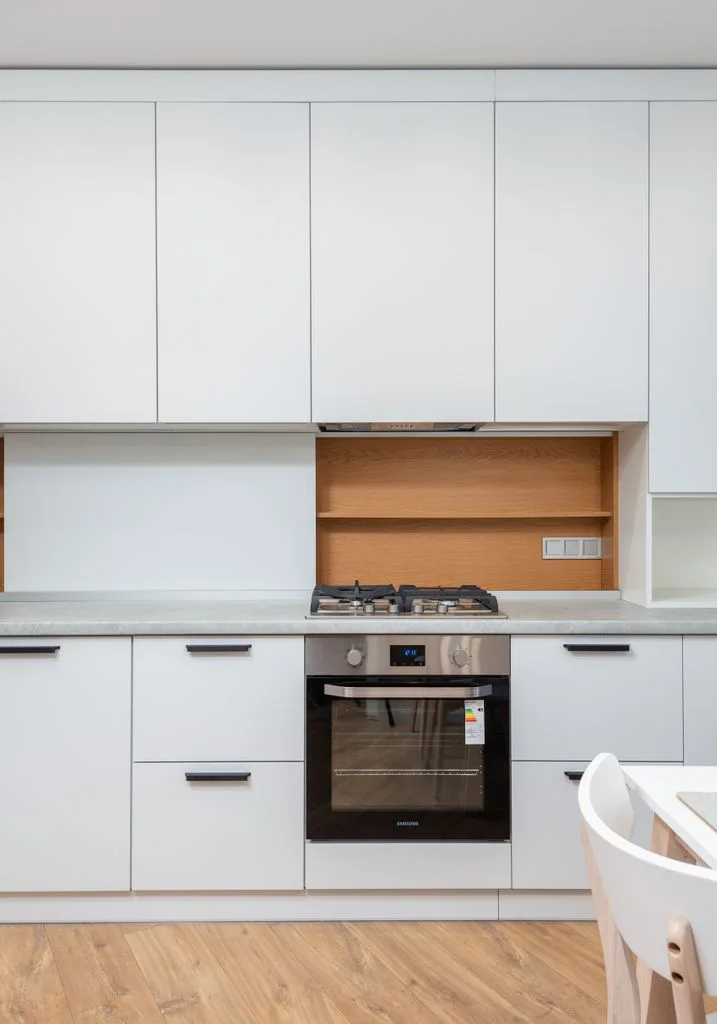
Two-tone cabinetry is the easiest way to wear dusty rose without committing the whole kitchen to it. Dusty rose upper cabinets with crisp white lowers (or the reverse) give you the blush where your eyes land and a clean, bright base where the mess happens. The contrast also makes small kitchens feel taller, because the lighter lower half grounds the room while the rose uppers draw the eye upward. A two-tone repaint costs roughly the same as a single-color job, $3,000–$6,000, since the labor is the work, not the number of colors.
Keep the split crisp and deliberate: one horizontal line, no third color competing for attention. White quartz or butcher-block counters bridge the two tones, and a single hardware finish — brushed brass is the classic — ties both cabinet colors together. This pairing is also a smart resale move, because a buyer who dislikes pink only has to repaint one run of cabinets instead of the whole kitchen.
3. Rose-Toned Backsplash Tiles
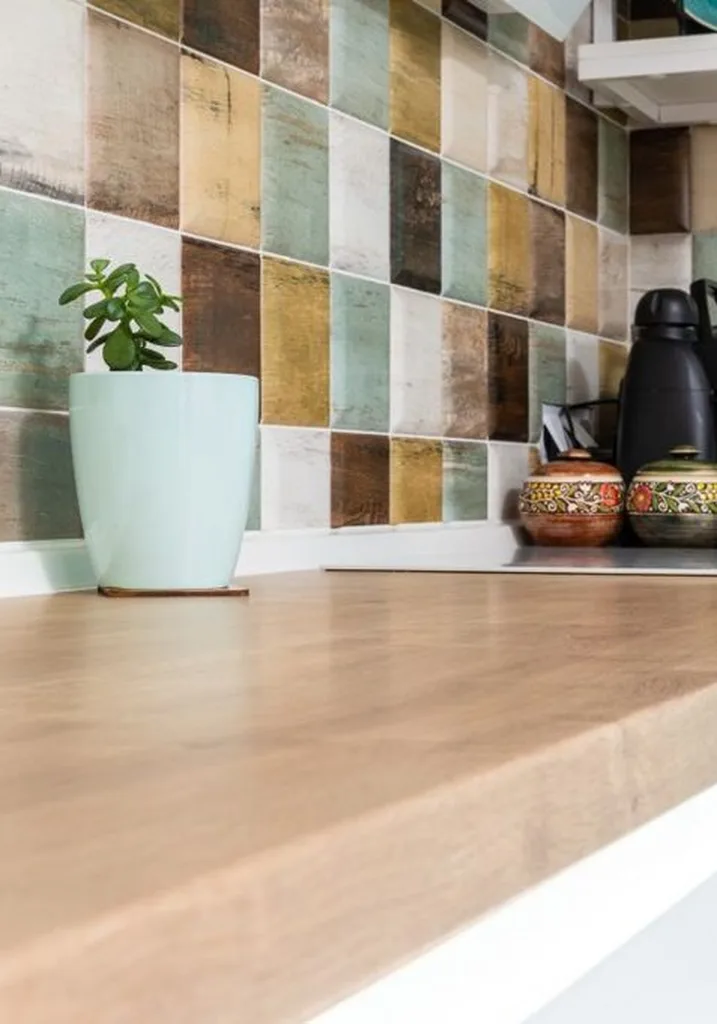
A dusty rose backsplash is the low-commitment way into this color story, and tile is where the shade looks its most sophisticated. Glossy zellige-style tiles in a dusty rose catch the light and show subtle variation from tile to tile, while matte subway tiles in the same tone read calmer and more modern. A standard 30-square-foot backsplash in ceramic or zellige runs $400–$1,200 installed, depending on tile price and pattern complexity.
Pair rose tile with white or pale gray grout for a clean grid, or with a slightly deeper rose grout for a seamless wash of color. Keep the counters quiet — white quartz, pale marble, or light wood — so the backsplash stays the feature. For more pink kitchen inspiration, browse Apartment Therapy’s pink kitchen ideas and notice how often one rose surface, used with restraint, outperforms a whole pink room. If you rent, peel-and-stick rose tiles give you the same look for $60–$120 and come off without a trace.
📌 Related Articles:
4. Marble Countertops with Rose Veining
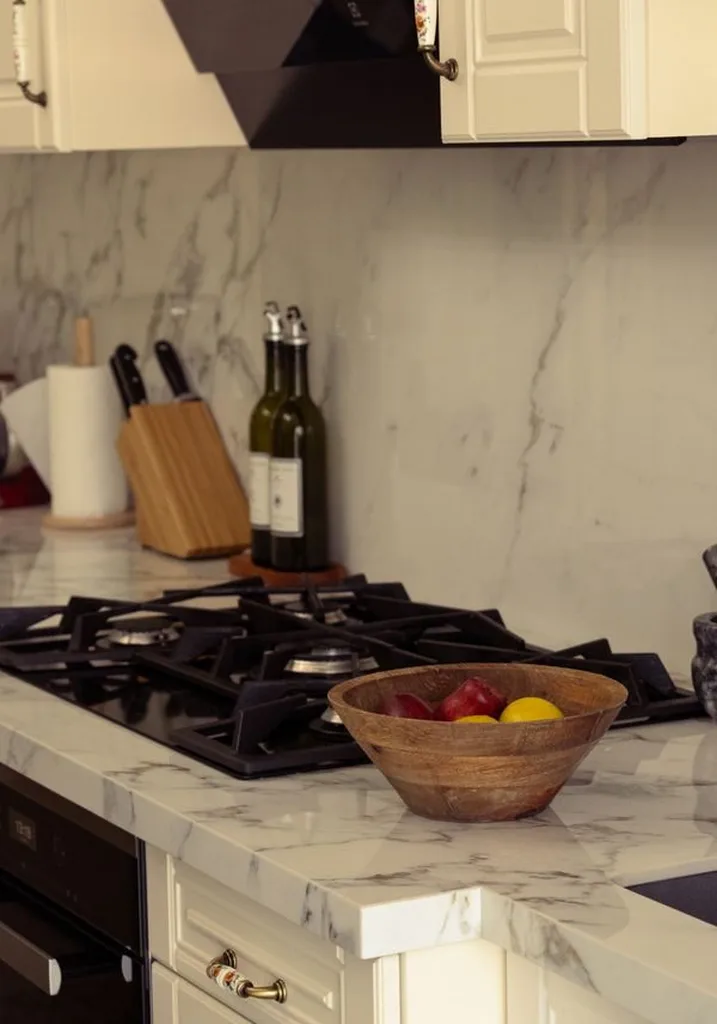
White marble with soft rose and gray veining is dusty rose at its most subtle — color that reveals itself slowly instead of announcing itself. Look for slabs like Calacatta Rosa, Rosa Aurora, or a blush-toned quartz with rose veining; quartz versions give you the look with far less sealing and staining worry. Marble runs $60–$120 per square foot installed, while rose-veined quartz typically lands at $70–$110 per square foot and needs almost no maintenance.
This is the right rose move if you love the color but want the kitchen to stay mostly neutral. The veining echoes beautifully against dusty rose bar stools, a blush runner, or a rose pendant, so the countertop quietly connects every other pink touch in the room. Seal natural marble twice a year and wipe spills quickly; quartz needs nothing more than soap and water. Either way, the counters become the jewelry of the kitchen without a single pink cabinet in sight.
5. Brushed Brass Hardware and Fixtures
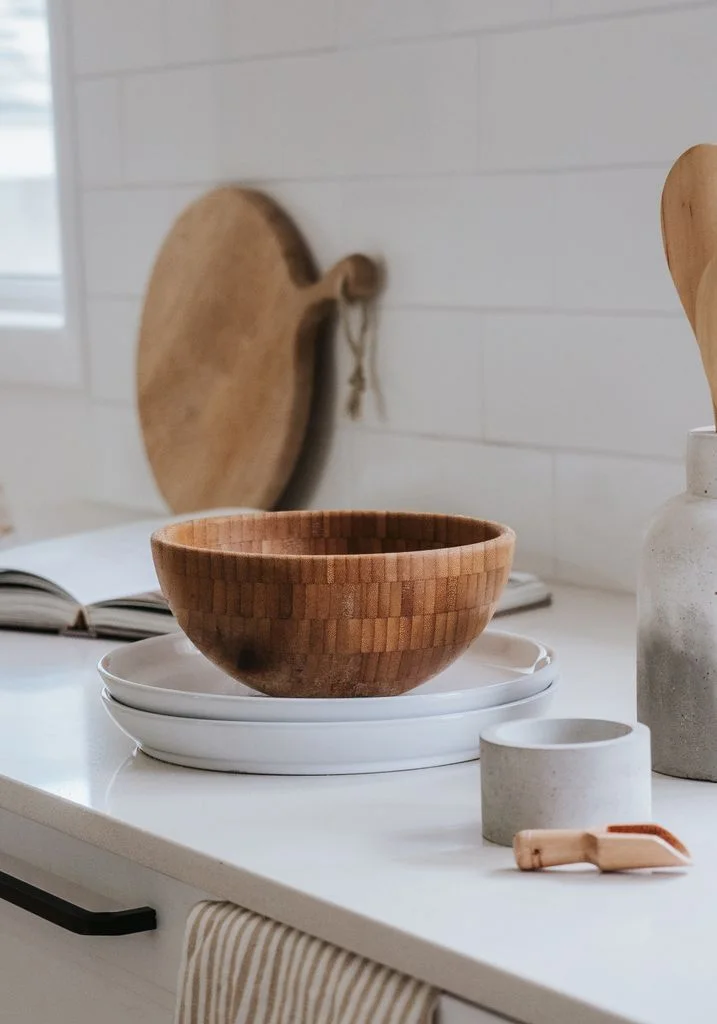
Brushed brass is dusty rose’s best friend. The warm gold tone picks up the warmth in the rose and makes the whole kitchen glow, especially in the evening when the lights come on. Swap cabinet pulls, knobs, the faucet, and even the pot filler for matching brushed brass, and suddenly a pale rose kitchen reads expensive. Cabinet hardware runs $5–$15 per piece, a quality brass faucet $200–$600, and the swap is a one-afternoon DIY job with a drill and a screwdriver.
Keep the brass finish consistent — brushed with brushed, not polished mixed with matte — and repeat it at least three times in the room so it looks planned rather than accidental. In a dusty rose kitchen, brass does the work that chrome cannot: it warms the pink instead of cooling it. If brass feels too traditional, try champagne bronze or unlacquered brass, which ages into a soft patina that suits the muted rose even better over time.
6. Open Shelving in Dusty Rose
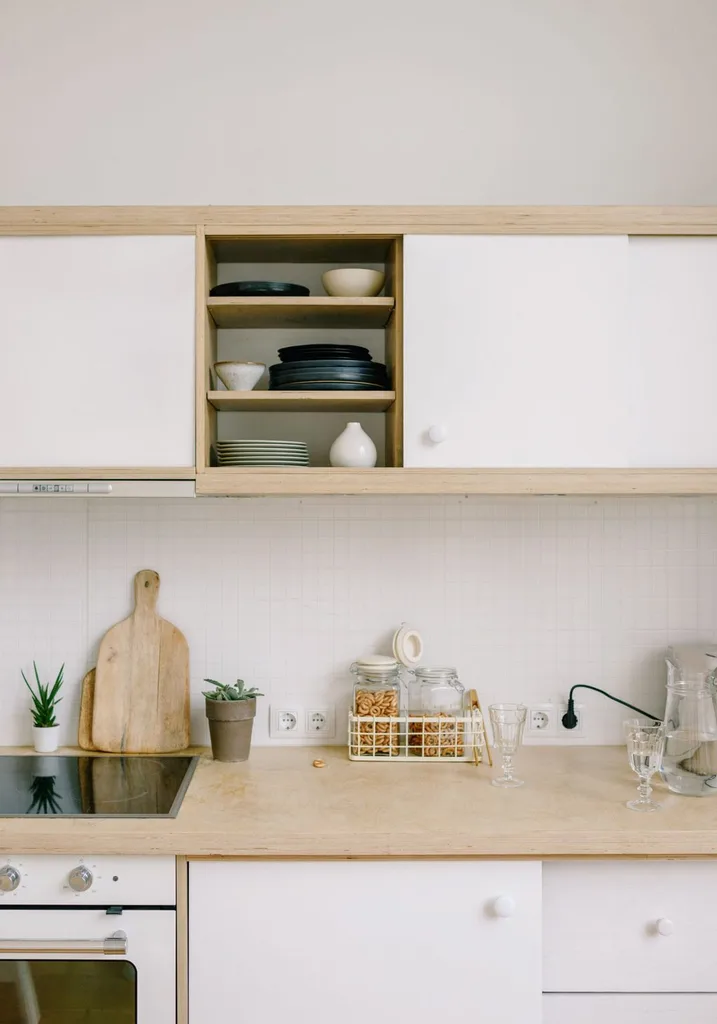
Open shelves painted dusty rose are a small dose of color with an outsized effect. Two or three floating shelves in a muted rose against a white wall turn everyday dishes into a display, and the color frames whatever sits on them — white stoneware, clear glass, a trailing plant — like a picture frame. Painted wood shelves cost $80–$200 each finished, or you can repaint existing shelves for the price of a quart of paint and an afternoon.
Style shelves slowly and leave breathing room: stacks of white bowls, a row of glass jars, one small plant, a leaning framed print. Fill only about two-thirds of each shelf and group objects in threes at different heights. For layout and styling ideas, browse the kitchen ideas on Houzz and notice how the best open shelves mix function and beauty in equal measure. In a rental, freestanding rose-painted ladder shelves give you the same look with zero holes in the wall.
7. Rose and Walnut Warm Wood Pairing
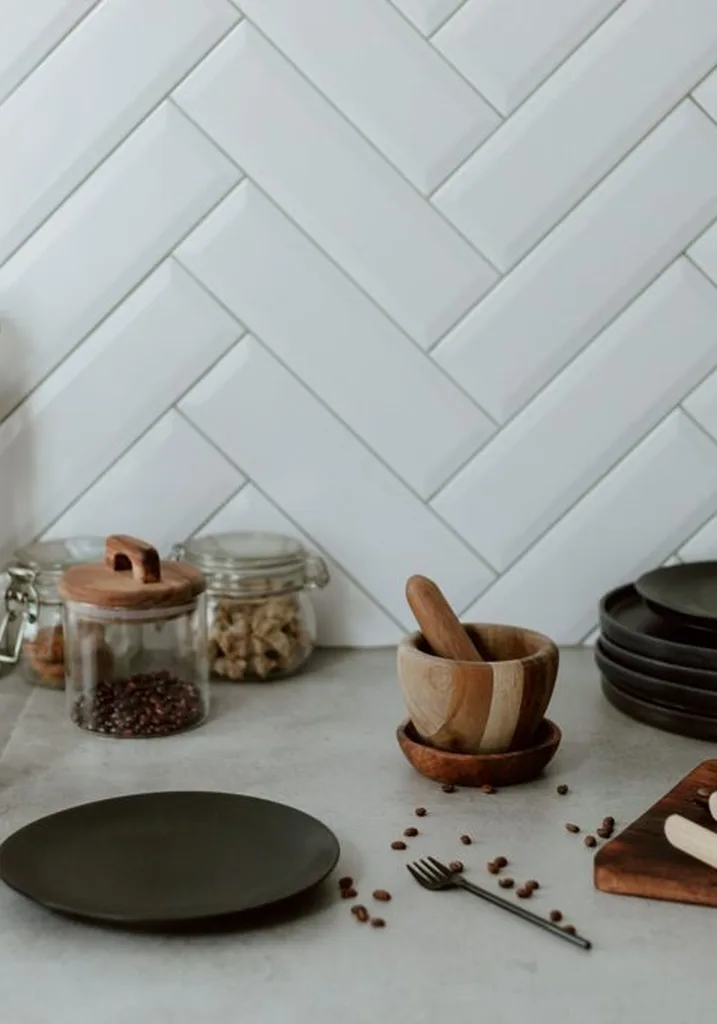
Warm walnut wood is the grounding partner dusty rose needs. A walnut island, walnut open shelves, or walnut bar stools against rose cabinets create a rich, layered contrast that keeps the pink from floating away. Walnut’s deep brown tones pull out the mauve in dusty rose, so the two colors make each other look more expensive. A walnut butcher-block island top runs $400–$900, walnut floating shelves $100–$250 each, and walnut veneer cabinet fronts start around $150 per door.
Use the wood sparingly and deliberately — one or two walnut moments, not a whole walnut kitchen. The rule is simple: rose provides the color, walnut provides the weight, and white provides the breathing room. Add a walnut cutting board leaned against the backsplash, a walnut tray on the island, and walnut-handled utensils, and the three materials start talking to each other across the room. Avoid orange-toned woods like honey oak here; they clash with rose’s cool gray undertone.
8. Pink Velvet Bar Stools at the Island
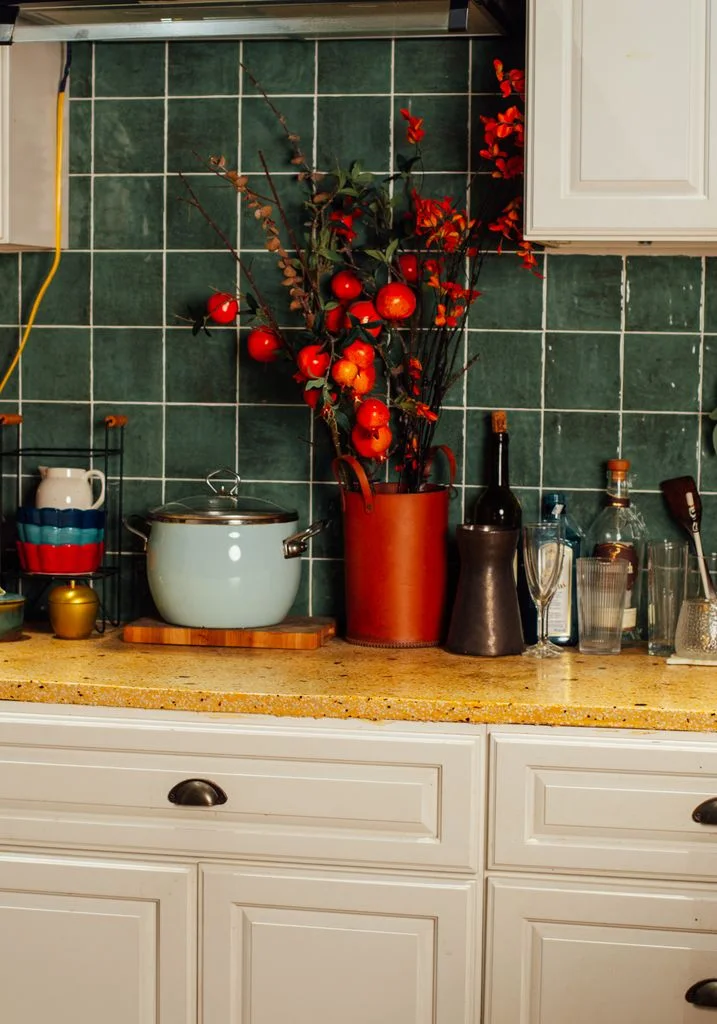
If you want dusty rose without touching a single cabinet, start with the bar stools. Dusty rose velvet stools at the island add color, softness, and a save-worthy focal point for about $80–$250 each, and they are the easiest rose in this whole list to change later. Velvet’s nap catches the light, so the stools shift between blush and mauve as you walk around the room, which makes the whole kitchen feel more alive.
Choose a low-back or backless profile to keep the modern lines clean, and pick a performance velvet or a stain-resistant fabric — kitchen stools meet coffee, tomato sauce, and small hands. Pair them with a white or walnut island and brass footrests to tie the palette together. Two stools suit a small island, three a standard one; keep at least 24 inches of width per seat so nobody eats elbow to elbow.
9. Matte Black Accents to Ground the Rose
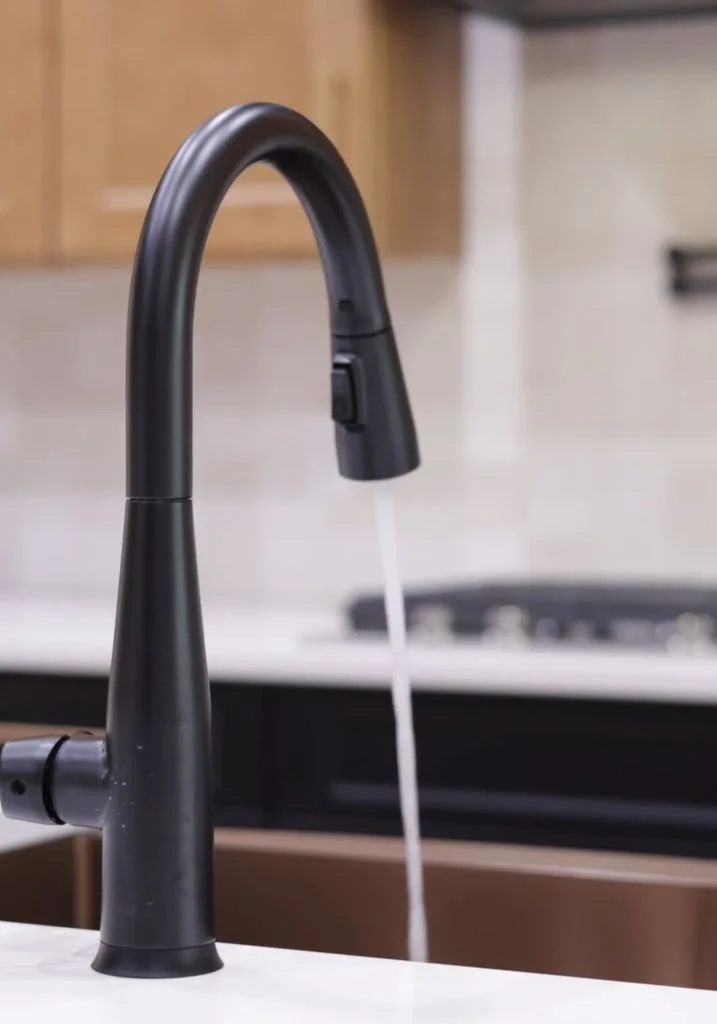
Matte black is the contrast dusty rose needs to stay modern. Without something dark in the room, a rose kitchen can drift toward pretty and soft; black window frames, a black faucet, black pendant cords, or black cabinet pulls give the eye somewhere firm to land. A matte black faucet runs $150–$400, black pulls $4–$12 each, and a black-framed window or glass door is a bigger project worth planning into a renovation.
Use black in small, repeated doses — three to five touches spread around the room — rather than one heavy black element. The contrast makes the rose look intentional and architectural instead of decorative. Black and blush is also one of the most pinned kitchen combinations on Pinterest, so this pairing does double duty: it looks great in real life and photographs like a magazine spread. Keep the black matte, not glossy, to match the soft finish of the rose.
10. Rose-Tinted Pendant Lighting
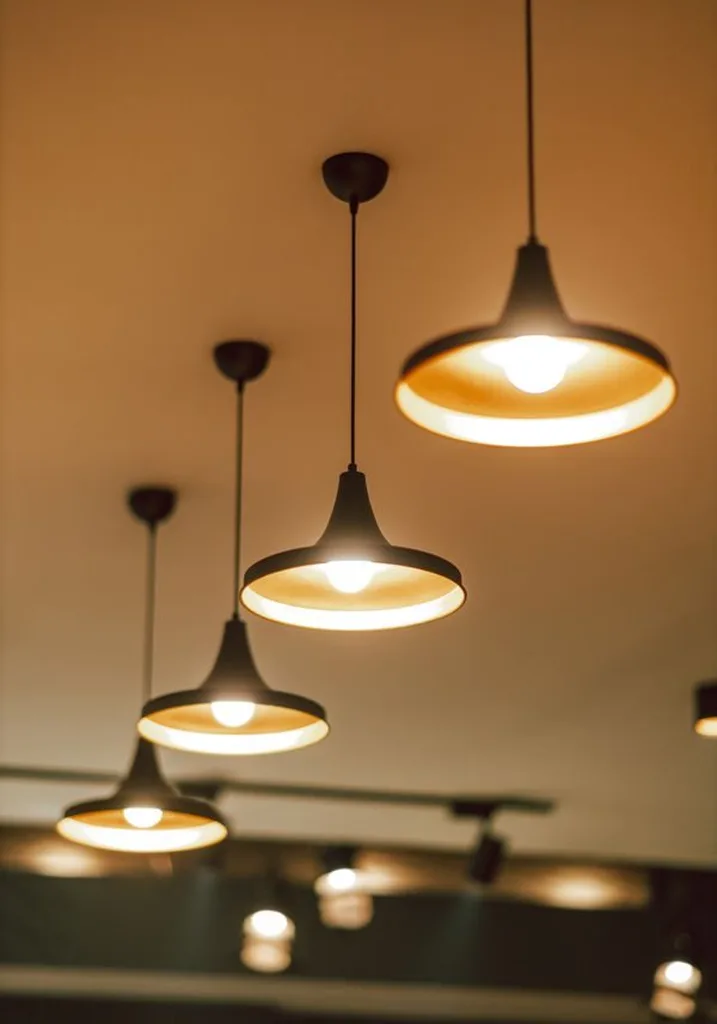
Pendant lights are the jewelry of a modern kitchen, and rose-tinted glass or blush metal shades turn them into the room’s softest glow. Rose glass pendants over the island cast a warm, flattering light that makes the whole kitchen feel golden at dinner time, while blush-painted metal domes give you the color by day and a clean silhouette by night. Single pendants run $60–$250 each, and a row of two or three over an island is the classic modern arrangement.
Hang pendants 30–36 inches above the countertop so they light the work surface without blocking sightlines, and put them on a dimmer — rose glass looks its best at a low, warm glow. Pair rose pendants with warm 2700K bulbs; cool white bulbs fight the pink and make it look gray. If you already own clear glass pendants, swapping in rose-tinted Edison bulbs is a $20 experiment that previews the whole effect.
11. Soft Rose Walls with White Trim
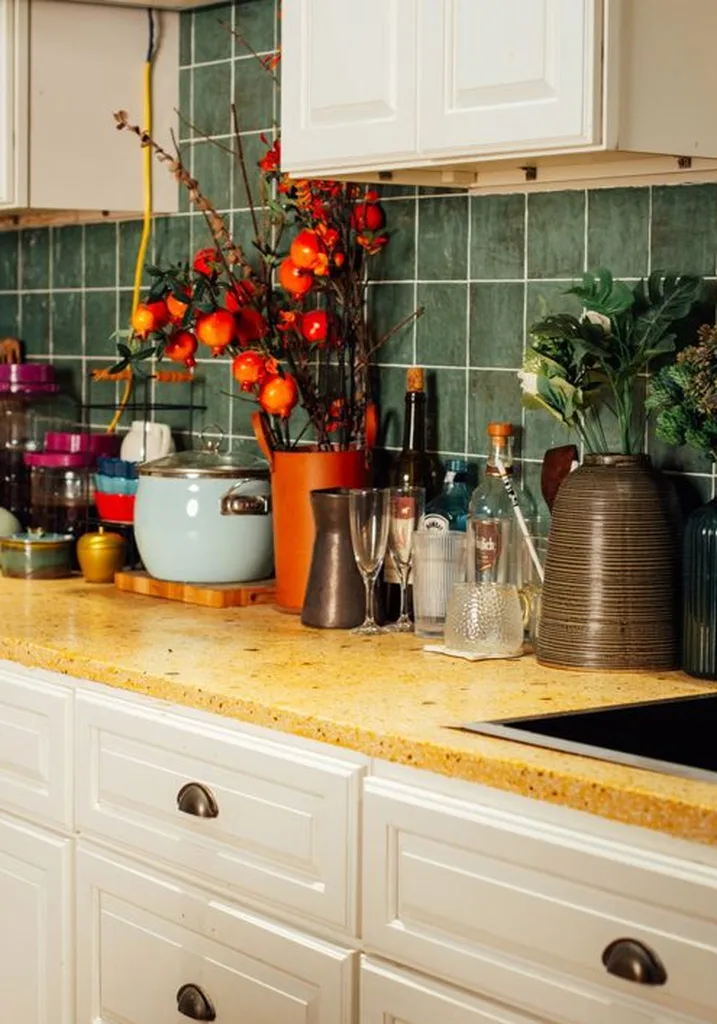
Painting the walls dusty rose is the fastest full-room transformation on this list, and it costs less than a dinner out. A soft rose wall color with crisp white trim and white cabinets creates a warm, cocooning kitchen that still feels bright, because the rose reflects light instead of absorbing it. A gallon of quality matte paint runs $35–$60 and covers a small kitchen’s walls with room to spare.
Choose a rose with a gray or taupe undertone rather than a peachy one — the gray keeps it modern and stops it reading pink in the wrong light. Paint a large swatch on each wall and watch it through a full day, because rose shifts dramatically between morning sun and evening lamplight. In a small kitchen, paint one accent wall rose and leave the rest white; in a larger one, all four walls in a pale dusty rose feel calm rather than overwhelming, especially with white cabinets breaking up the color.
12. Terracotta and Rose Floor Tiles
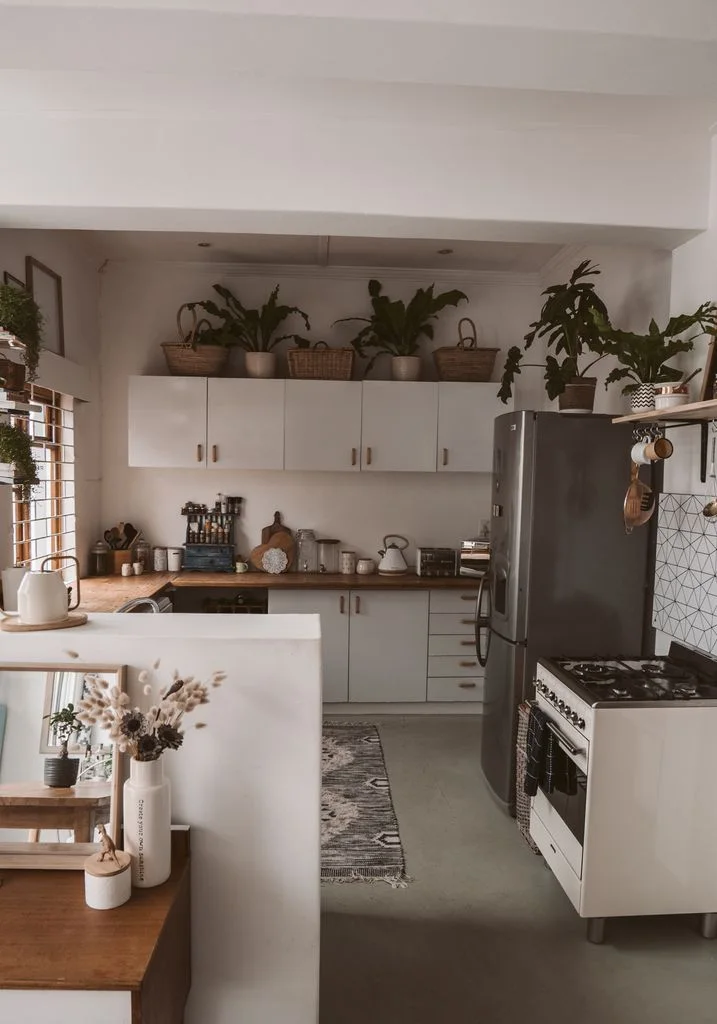
The floor is the most overlooked place to put dusty rose, and patterned terracotta-rose tiles are one of the most striking. Encaustic-look tiles in rose, cream, and clay bring a handmade, Mediterranean warmth to a modern kitchen, and they hide crumbs and splashes far better than a plain white floor. Porcelain encaustic-look tiles run $6–$15 per square foot, and a small kitchen floor typically costs $800–$2,000 installed.
Keep the rest of the room quiet when the floor is patterned: plain cabinets, a simple backsplash, and minimal color elsewhere. The floor becomes the art, and everything else frames it. If a full patterned floor feels like too much, use rose floor tiles in a small zone — the entry to the kitchen, or a rug-sized rectangle in front of the island — and plain wood or large-format tile everywhere else. Seal grout lines well, because kitchen floors meet everything from red wine to turmeric.
13. Glass-Front Cabinets with Rose Interiors
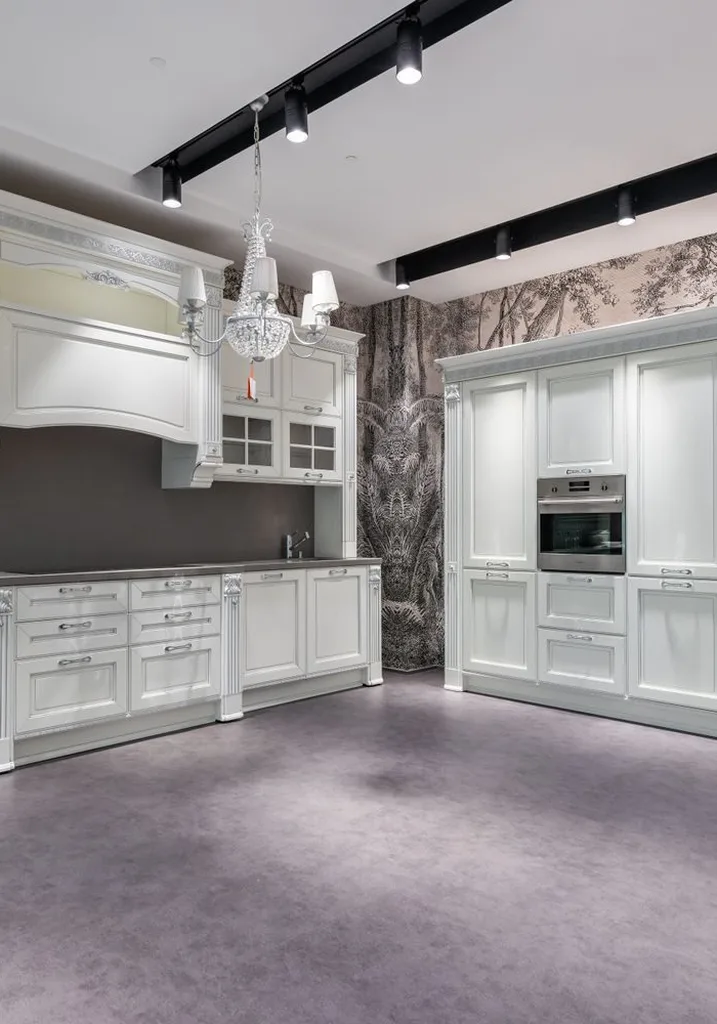
Painting the inside of glass-front cabinets dusty rose is a designer’s trick that costs almost nothing and looks custom. The rose interior glows behind clear or ribbed glass, making white dishes and glassware look styled even when they are just put away. A quart of paint and a weekend covers two or three cabinets; if you are ordering new, ask for the interior in a rose lacquer, usually a $100–$300 upcharge per cabinet.
Use this on one or two display cabinets only — the ones holding your prettiest pieces — and keep the rest of the kitchen’s cabinets solid. Ribbed or fluted glass softens the rose further and hides clutter, which makes it the practical choice for real kitchens. Style the shelves inside with restraint: white stoneware, a few glass jars, one small plant. The rose does the decorating, so the contents can stay simple.
14. Rose and Sage Two-Tone Pairing
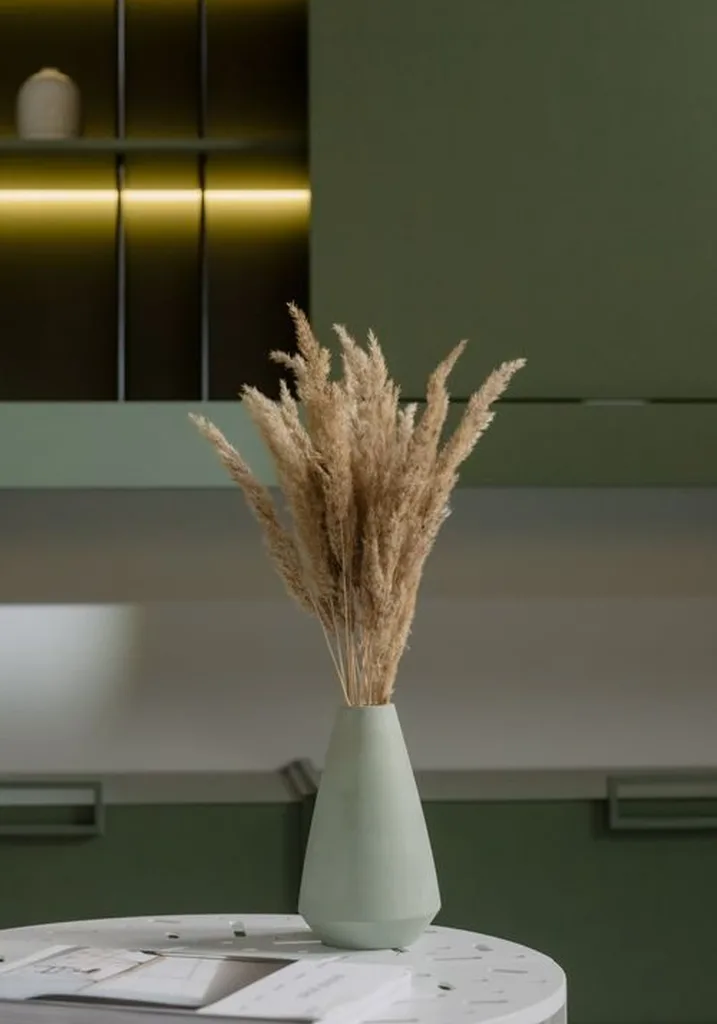
Dusty rose and sage green are the color pairing of the moment, and for good reason: the cool green steadies the warm pink, and together they feel like a garden brought indoors. Try dusty rose uppers with sage lowers, or a rose island against sage perimeter cabinets; either way, the two muted tones share the same dusty, grayed quality, so they harmonize instead of competing. A two-tone repaint in these shades runs the usual $3,000–$6,000, and the combination photographs beautifully for Pinterest.
Bridge the two colors with white counters and warm brass hardware, and add a living plant or two — the real green in the room makes both painted colors look more natural. This pairing suits kitchens that open onto gardens or dining rooms, because it borrows the outside palette and brings it in. Keep the rest of the room neutral and let the two colors be the whole story; a third strong color here would tip the room from serene into busy.
15. Statement Rose Range Hood
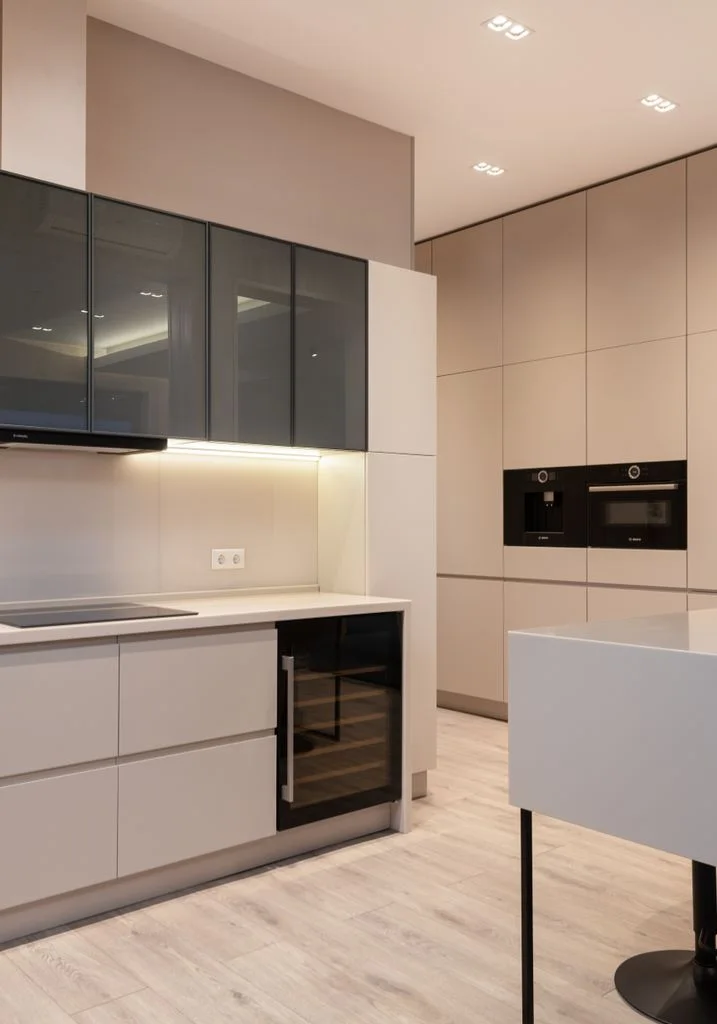
A dusty rose range hood turns the most functional object in the kitchen into its centerpiece. A plaster or painted hood in muted rose, especially in a simple arched or boxy modern shape, draws the eye the moment you enter the room and anchors the whole cooking wall. Custom plaster hoods run $1,500–$4,000, while a painted metal or wood hood cover starts around $800 and can be retrofitted over an existing insert.
Keep the hood as the room’s only big rose statement if you go this route — pair it with white or pale gray cabinets, a quiet backsplash, and brass or black accents. The shape matters as much as the color: a smooth, curved plaster hood reads soft and modern, while a sharp, slab-front hood reads graphic and contemporary. Either way, the hood becomes the photo moment of the kitchen, so style the counters below it simply and keep the stovetop clear.
16. Blush Textiles and Window Treatments
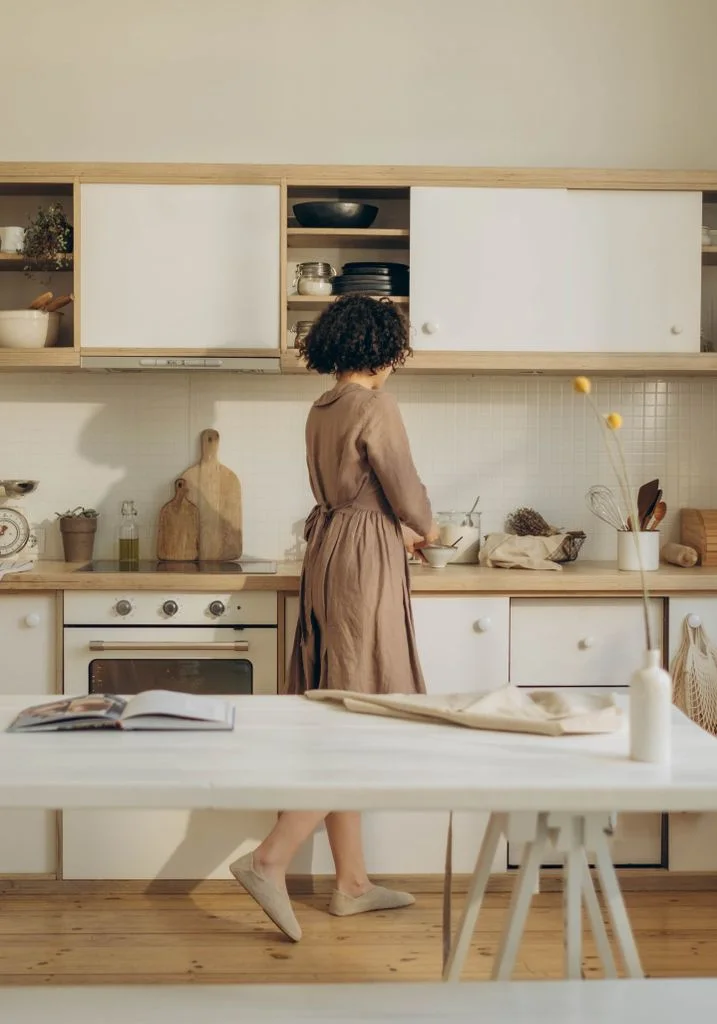
Textiles are the zero-commitment way to try dusty rose, and they soften a modern kitchen’s hard surfaces beautifully. A blush linen café curtain at the sink window, a dusty rose runner in front of the stove, and matching tea towels in a ticking stripe or plain linen give you the color story for $60–$150 total — and you can swap them out in minutes if you change your mind. Linen and cotton in rose tones also catch the light differently through the day, so the color feels alive rather than flat.
Choose washable fabrics, because kitchen textiles meet steam, splashes, and cooking smells daily. Hang café curtains on a simple brass or black rod at the window’s midpoint so light still pours in above them, and keep the runner low-pile and washable for easy cleaning. A blush seat cushion on a window bench or a rose linen apron hanging on a hook adds one more quiet echo of the color without any renovation at all.
17. Rose Island as the Room’s Feature
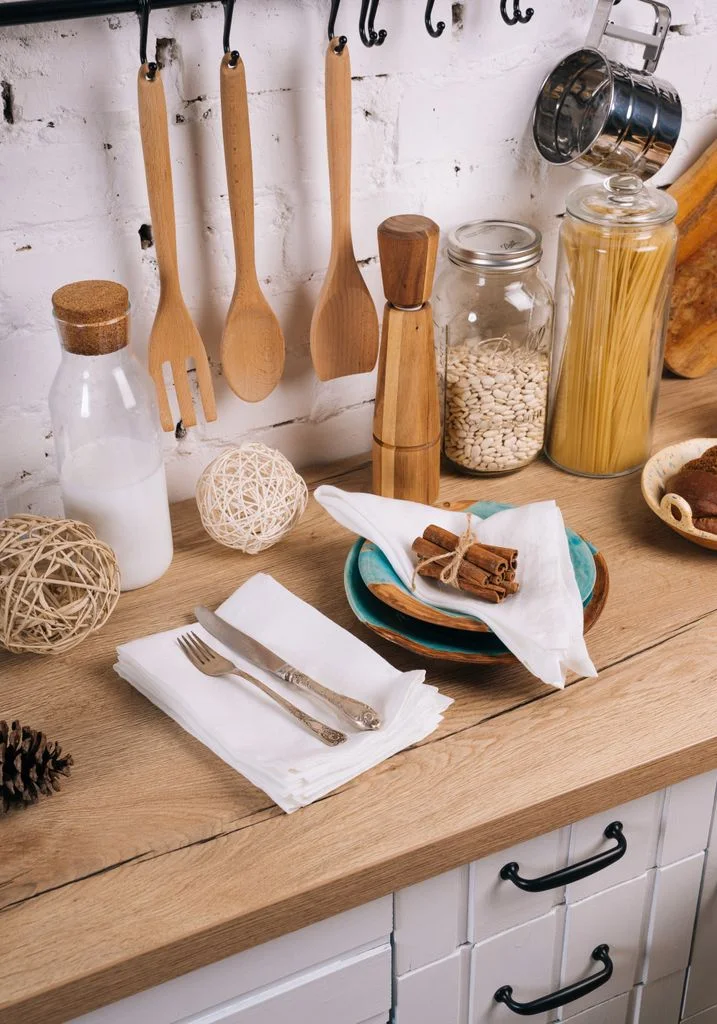
If one dusty rose move earns the biggest return, it is painting the island. A rose island against white perimeter cabinets creates an instant focal point, defines the cooking zone in an open-plan space, and gives you the color in exactly the place your eyes rest while you cook and eat. Painting an existing island runs $300–$800 professionally, or about $60 in paint if you do it yourself over a weekend.
Finish the island with a contrasting countertop — white quartz, pale marble, or walnut butcher block — and brass or matte black hardware that picks up the rest of the room. Style the top simply: a wooden board, a vase with eucalyptus, a bowl of lemons. The island becomes the kitchen’s anchor and its photo moment, and because it is one contained piece of furniture, it is the easiest rose statement to repaint if your taste ever changes. Start here if you are torn between ideas — the island rarely disappoints.
How to Choose the Right Dusty Rose for Your Kitchen
Start by sampling, not shopping. Buy three sample pots in different dusty rose tones — one with a gray undertone, one with a mauve undertone, one slightly deeper — and paint large swatches on the wall or on sample boards you can move around the room. Live with them for at least two full days, checking them in morning light, midday sun, and evening lamplight, because dusty rose is famously changeable and a shade that looks perfect at noon can turn peachy or gray by dinner.
Then decide how much rose your kitchen can carry. Small, dark, or north-facing kitchens suit a lighter, grayer rose and a single statement — an island, a backsplash, or textiles — because too much color in a small dark room feels heavy. Large, bright kitchens can handle deeper rose cabinets or a rose range hood, because daylight and white surfaces keep the color from closing in. Renters should weight every choice toward the portable: textiles, bar stools, open shelves, and peel-and-stick tile, all of which move with you.
Finally, respect your existing fixed elements. If your floors are warm wood, choose a rose with a warm, mauve undertone; if your counters are cool gray marble, choose a rose with a gray undertone so the two do not fight. Run the same three checks on every candidate purchase: is the finish matte or soft satin, does the undertone match your fixed surfaces, and will you still love it in five years? If a piece fails two checks, leave it, however pretty it looks in the shop.
Dusty Rose Kitchen Modern Ideas on a Budget
The under-$150 refresh. Blush linen café curtains, a dusty rose runner, matching tea towels, and a set of rose velvet cushion covers for your existing stools. This tier changes color, softness, and light — the three things guests notice first — for less than the cost of one new appliance. It is also fully reversible, which makes it the perfect test drive before you commit to paint.
The $150–$800 room lift. Add a rose backsplash with peel-and-stick or real tile, swap all hardware and the faucet for brushed brass, paint the island dusty rose, and add two rose velvet bar stools. At this level the kitchen reads unmistakably dusty rose modern, and every change is either cheap or reversible. Spend the money where your eyes land most: the island, the backsplash, and the hardware you touch every day.
The $800+ anchor investment. Spend on the pieces with the longest lives: a professional cabinet repaint in dusty rose, rose-veined quartz counters, a custom plaster range hood, or patterned encaustic floor tiles. Buy these slowly and buy them once, starting with the single statement that matters most to you. Everything else in a dusty rose kitchen is deliberately inexpensive — that contrast between one real anchor and many humble, found touches is exactly what makes the style feel rich rather than decorated.
Common Mistakes to Avoid
- Choosing a pink that is too bright or too sweet. Bubblegum and baby pink fight modern lines; dusty rose works because it is muted and grayed. If a swatch looks cute rather than calm, it is the wrong shade.
- Using glossy finishes everywhere. High-gloss rose cabinets and glossy tiles bounce light harshly and read candy-like. Keep finishes matte or soft satin for a grown-up, modern result.
- Pairing rose with cool chrome. Chrome cools dusty rose down and makes it look gray and washed out. Warm brass, copper, or matte black are the metals that make rose glow.
- Adding rose to every surface. Rose cabinets plus a rose backsplash plus rose walls plus rose stools is a pink room, not a dusty rose kitchen. One statement plus small echoes is the rule.
- Forgetting contrast. Without white, wood, or black in the room, dusty rose has nothing to stand against and the kitchen turns flat and washy. Every rose needs a neutral partner.
- Skipping the swatch test. Rose shifts more with light than almost any other color. Paint large swatches and live with them for two days before ordering paint, tile, or cabinets.
📌 Also Read:
Frequently Asked Questions
What is the difference between dusty rose and blush pink in a kitchen?
Dusty rose is deeper, grayer, and more muted than blush pink, with a mauve or taupe undertone that keeps it sophisticated. Blush is lighter, sweeter, and closer to pale pink, which can read young or sugary in a kitchen. Dusty rose suits modern design better because its muted tone behaves almost like a neutral and pairs with brass, walnut, marble, and matte black.
Does a dusty rose kitchen hurt resale value?
Not if it is done with restraint. A single rose statement — an island, a backsplash, or textiles — is easy for a buyer to change and often photographs so well that it helps a listing stand out. Full rose cabinetry is a bolder choice, so keep the rest of the kitchen neutral and the paint job professional; a buyer who dislikes it only faces one repaint, not a renovation.
What colors go best with dusty rose in a modern kitchen?
White, warm gray, walnut, and sage green are the best partners, with brushed brass or matte black as the metal. White keeps the room bright, walnut adds warmth and weight, sage cools the pink down, and brass makes it glow. Avoid cool chrome and orange-toned woods, which clash with rose’s gray undertone.
Can I do a dusty rose kitchen in a rental?
Yes — it is one of the most renter-friendly color stories because its best moves are portable. Blush textiles, rose velvet bar stools, peel-and-stick rose backsplash tiles, and freestanding rose shelves create the whole look without paint or holes. Keep the original hardware in a labeled bag, use removable tiles, and everything moves with you at the end of the lease.
How do I keep a dusty rose kitchen from looking too pink?
Use one rose statement and let neutrals do the rest: white counters, wood accents, and matte black or brass hardware. Choose a rose with a gray or mauve undertone rather than a peachy one, keep finishes matte, and repeat the rose in small doses — a stool, a towel, a vase — instead of painting every surface. The color should be the accent of the room, not the whole room.
Conclusion
A dusty rose kitchen modern look is less about painting everything pink than about choosing one beautiful rose statement and letting calm neutrals, warm wood, and the right metal do the rest. Start where this guide starts — the island, the backsplash, or a set of velvet stools — and add layers as you find them. Your kitchen does not need to be finished by Friday; the best rose kitchens are built one thoughtful change at a time.
If these ideas sparked a plan, save this post to your kitchen decor board on Pinterest so it is waiting for you on your next paint run — and pin your favorite idea to share the soft, stylish look.