Top 19 Mirror Tricks to Magically Expand Your Small Living Room

Living in a small space doesn’t mean sacrificing style or the feeling of openness. In fact, with the right design strategies, you can make even the coziest living room feel significantly larger, brighter, and more inviting. One of the most powerful and often underestimated tools in a designer’s arsenal for achieving this illusion is the humble mirror. Far more than just a reflective surface, mirrors are optical magicians that can trick the eye, multiply light, and even add architectural interest to your home.
From grand statement pieces to cleverly integrated accents, mirrors offer an incredible range of possibilities for transforming tight quarters into expansive havens. Whether your style is minimalist chic, bohemian eclectic, or classic traditional, there’s a mirror trick perfectly suited to your aesthetic and spatial challenges. This comprehensive guide will walk you through 19 ingenious ways to harness the power of mirrors, helping you craft a living room that feels effortlessly spacious, stylish, and utterly reflective of your personal taste. Get ready to see your small living room in a whole new light!
1. Go Big with a Large Statement Mirror
Embrace the power of grandeur, even in a small room, by installing one oversized statement mirror. Instead of several small pieces, a single large mirror acts like a second window, visually expanding the wall it occupies and reflecting the entire room back, creating an instant sense of doubled space. Choose a mirror with a minimalist frame to maintain a clean, airy feel, or opt for a unique, artful frame to introduce a touch of personality and serve as a focal point.
Positioning is key for this trick to truly shine. Place your large mirror on the longest wall in the living room, or opposite a doorway or another window to maximize light and views. The goal is to make it feel like an architectural feature rather than just an accessory, allowing it to dominate the space in a visually pleasing way. This strategy effortlessly blurs the lines of your room, making it feel less confined and much more open.
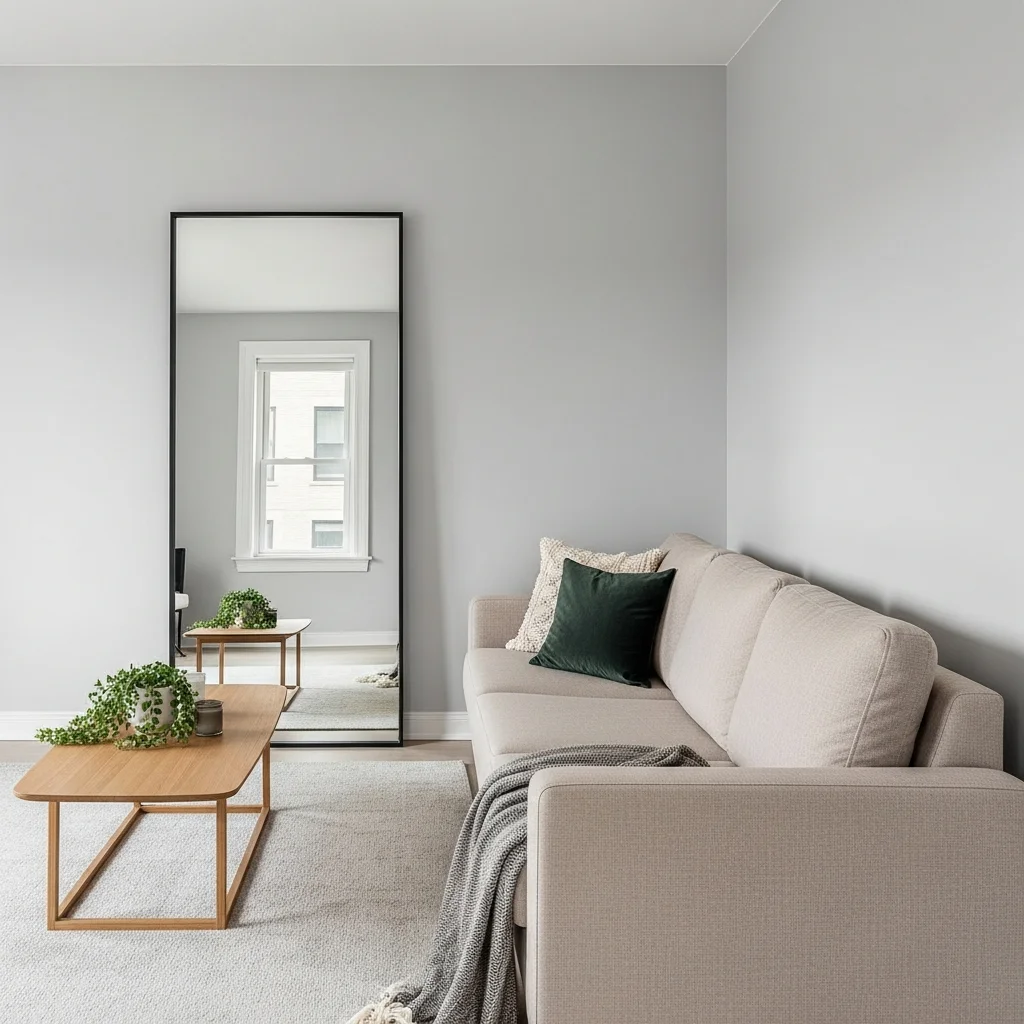
A single oversized mirror creates an incredible illusion of depth, making this small living room feel vast and open.
2. Create a Mirror Gallery Wall
Who says gallery walls are only for art? Curate a stunning collection of mirrors in various shapes, sizes, and frames to create a dynamic and light-reflecting gallery wall. This approach adds visual interest and personality while still capitalizing on the light-amplifying properties of mirrors. Mix antique mirrors with modern ones, or stick to a cohesive theme like geometric shapes or ornate gold frames to achieve a particular aesthetic.
Arranging a mirror gallery wall thoughtfully can draw the eye upwards, making the ceilings appear higher and the room feel less cramped. Experiment with different layouts on the floor before hanging to ensure a balanced composition that flows well with your existing decor. This trick works beautifully above a console table, a small sofa, or even in a corner that needs a little extra sparkle and dimension, turning a previously dull wall into a captivating feature.

A curated gallery wall of mirrors adds both artistic flair and reflective magic to a compact living room.
3. Incorporate Mirrored Furniture
Mirrored furniture pieces are design chameleons, blending seamlessly into any decor while adding a touch of glamour and reflective surface area. A mirrored coffee table, end table, or console not only serves its functional purpose but also reflects its surroundings, making the furniture itself less visually heavy and more integrated into the overall space. This transparency helps maintain an open feel, preventing the room from feeling cluttered with solid, bulky pieces.
Consider a mirrored chest of drawers in a small living room that doubles as storage and an elegant side table, or a mirrored bar cart that reflects ambient light. The key is to use these pieces strategically, perhaps just one or two, to avoid an overly glitzy or busy look. They are particularly effective in tight spots where you want to add functionality without visually shrinking the area, bouncing light and color throughout the room with effortless grace.

Mirrored furniture, like this elegant coffee table, reflects its surroundings, making the piece feel less imposing and the room more open.
4. Lean a Floor-Length Mirror
A floor-length mirror leaned casually against a wall offers a stylish and surprisingly effective way to add depth and light without the commitment of hanging. This relaxed placement gives off an effortlessly cool, contemporary vibe and can be easily moved if you rearrange your furniture. When leaned, the mirror captures a wider angle of the room, often including the ceiling, which further enhances the feeling of spaciousness by extending vertical lines.
Choose a mirror with a substantial frame to ground the piece and ensure stability, especially if you have pets or children. Placing it in a corner or alongside a bare wall instantly transforms that area, making it appear wider and brighter. This trick is particularly effective in spaces that lack architectural details, as the mirror itself becomes an impressive, light-catching feature. It’s an easy yet impactful way to elevate your living room’s aesthetic while expanding its perceived boundaries.

Leaning a floor-length mirror against a wall adds casual elegance and instant depth to a compact living area.
5. Position a Mirror Behind the Sofa
Placing a large mirror directly behind your sofa is a clever design move that instantly doubles the visual space in your living room. The sofa, a dominant piece of furniture, often defines the room’s boundaries. By placing a mirror behind it, you essentially extend the room beyond the sofa, tricking the eye into believing there’s more space where the wall once was. This is particularly effective in narrow living rooms where adding width is a priority.
Ensure the mirror is securely mounted or large enough to sit safely on the floor behind the sofa, reaching above the backrest. The reflection should capture appealing elements of the room, such as a window on the opposite wall, a piece of art, or a beautifully styled console. This strategic placement not only creates an illusion of depth but also reflects light coming from the front of the room, brightening the entire area and making it feel more airy and open.

A well-placed mirror behind the sofa visually extends the room, making it feel deeper and more expansive.
6. Place a Mirror Directly Across from a Window
This classic mirror trick is a favorite for a reason: it’s incredibly effective at maximizing natural light and views. By positioning a mirror directly opposite a window, you essentially create a second ‘window’ that not only reflects the outdoor scenery but also doubles the amount of daylight entering your living room. This instantly brightens the space, making it feel more open, fresh, and connected to the outside world.
Choose a mirror size and frame style that complements the window itself – a similar scale can enhance the ‘faux window’ effect. This placement is especially beneficial in living rooms that receive limited natural light or have only one small window. The mirror will capture and distribute light, reducing dark corners and infusing the entire room with a cheerful, airy ambiance. It’s a simple yet powerful way to amplify your room’s best features.

Reflecting a window doubles natural light and outdoor views, transforming a small living room into a brighter, more open space.
7. Use Mirrors to Define Zones
In open-plan small living rooms, mirrors can be cleverly used to subtly define different zones without erecting physical barriers that would further shrink the space. For example, a tall, narrow mirror placed vertically between a small seating area and a dining nook can act as a visual separator, hinting at distinct areas while still allowing light and sightlines to flow through. This technique creates a sense of order and purpose within a multifunctional space.
Consider placing a mirror above a console table in an entryway zone within an open living room, clearly marking that area as separate from the main lounging space. The reflection will also make the entryway feel grander. By strategically placing mirrors, you can give each ‘zone’ its own identity and depth, making the entire open-plan area feel more considered and functional, rather than a single, undifferentiated expanse. This adds sophistication to your layout.

A strategically placed mirror can subtly define zones in an open-plan living room, adding structure without walls.
8. Style with a Mirrored Tray or Coffee Table Top
Sometimes the smallest details can make a big difference. Incorporating a mirrored tray on your coffee table or side table, or even choosing a coffee table with a mirrored top, introduces a subtle but effective reflective surface to your living room. These small touches catch and bounce light, adding a hint of sparkle and lightness without overwhelming the space. They make your tabletop decor appear to float, contributing to an overall airy feel.
Use a mirrored tray to group decorative items like candles, small plants, or remote controls. The reflection creates an illusion of more space within the vignette itself, making the items seem less cluttered and more curated. This trick is perfect for those who want to experiment with reflective surfaces without committing to a large wall mirror, offering a sophisticated way to enhance brightness and visual interest on a smaller scale.

A mirrored tray on a coffee table adds subtle reflection and elevates small decor items, enhancing overall brightness.
9. Strategic Placement to Reflect Light Sources
Beyond windows, mirrors can be strategically placed to reflect artificial light sources, amplifying their glow and spreading warmth throughout a small living room. Position a mirror directly across from a stylish floor lamp, a table lamp, or even wall sconces to essentially double their illuminating power. This creates a brighter, more inviting ambiance, especially during evening hours, and helps to minimize dark corners that can make a room feel smaller.
When planning your lighting, consider how mirrors can play a supporting role. A mirror placed behind a lamp can make the lamp itself feel like a more substantial design element while bouncing its light further into the room. This technique is particularly valuable in living rooms that lack ample natural light, allowing you to create a well-lit and welcoming atmosphere at any time of day, effectively making the most of every lumen.

Placing a mirror opposite a lamp doubles its light, creating a brighter, more atmospheric small living room.
10. Utilize Mirrored Closet or Cabinet Doors
If your small living room integrates storage, such as a built-in cabinet or a closet, consider replacing solid doors with mirrored ones. This is a highly functional and space-saving trick that serves a dual purpose: it provides a full-length mirror for practical use and simultaneously makes the entire wall appear to recede, expanding the room. The seamless surface of mirrored doors helps to maintain a clean, unbroken visual line.
Mirrored doors on a wardrobe or entertainment unit can make that bulky piece of furniture disappear into the background, reflecting the rest of the room instead of dominating it. This is an excellent solution for studio apartments or open-concept homes where the living room shares space with other functions. The reflective surface prevents the wall from feeling heavy and oppressive, contributing to an overall sense of openness and airiness.

Mirrored closet doors make bulky storage units disappear, reflecting the room and vastly expanding its perceived size.
11. Backlit Mirrors for Ambient Glow
Elevate your mirror trick with a touch of modern sophistication by opting for a backlit mirror. These mirrors, often with LED strips integrated into their frames or behind them, cast a soft, ambient glow that not only illuminates the mirror itself but also adds a layer of indirect lighting to your living room. The gentle illumination creates a luxurious atmosphere and further enhances the mirror’s ability to create depth.
A backlit mirror can serve as a stylish focal point and a secondary light source, perfect for setting a mood in the evenings without harsh overhead lighting. The light washing around the mirror softens its edges and creates a subtle halo effect, making the wall behind it appear to recede even more. This trick is particularly effective in small, contemporary living rooms where a sleek, high-tech aesthetic is desired, adding both function and futuristic flair.

A backlit mirror adds an ambient glow, enhancing depth and creating a sophisticated, inviting atmosphere in a small room.
12. Create a Mirrored Alcove or Niche
If your small living room has an architectural alcove or a recessed niche, consider lining the back wall of it with a mirror. This simple but ingenious trick instantly transforms a potentially dark and overlooked space into a bright, deep feature. The mirror expands the perceived depth of the alcove, making it feel like a grander, more intentional architectural element rather than just a shallow recess. It also reflects any items placed within the niche.
When shelving is added, the mirror backdrop makes the displayed objects, such as books, decorative vases, or small sculptures, appear to float and be illuminated from within. This creates an elegant display area that adds character and sophistication to your living room while visually expanding the wall. It’s an effective way to maximize every inch of a small space, turning a constraint into a beautiful design opportunity.

Lining an alcove with a mirror transforms a shallow recess into a deep, luminous display space.
13. Add Character with an Antique or Ornate Mirror
While modern, minimalist mirrors are excellent for subtle expansion, an antique or ornately framed mirror can introduce significant character and a focal point without overwhelming a small space. The intricate details of a vintage frame draw the eye, turning the mirror into a piece of art that happens to also reflect light and depth. This adds a layer of history and texture, making your living room feel richer and more thoughtfully curated.
Choose an antique mirror with a beautiful patina or a gilded frame to add a touch of old-world charm or bohemian elegance. Placement should be considered for impact; above a small fireplace mantel, a console table, or as a standalone piece on a feature wall, it can command attention. The ornate frame visually grounds the mirror, allowing its reflective surface to work its magic without making the room feel sterile. This trick proves that small spaces can handle bold, interesting pieces.

An ornate antique mirror adds character and visual interest, turning a reflective surface into a stunning focal point.
14. Use a Mirror as a Faux Window
For living rooms that lack natural light or feel particularly boxed in, a mirror can be cleverly employed to create the illusion of a window where there isn’t one. Opt for a window-pane style mirror – one with multiple segments or mullions – to mimic the appearance of a real window. This design instantly brightens a dark wall and adds architectural interest, making the room feel less confined and more open to the outside.
Place the faux window mirror on a wall that feels heavy or empty, ideally reflecting an appealing part of the room or even just a plain wall with good lighting. The framed segments break up the reflective surface, making it feel less like a solid block of mirror and more like a view. This trick is especially effective in basement living rooms or spaces with limited exterior access, providing a much-needed visual escape and a boost of brightness.

A window-pane mirror mimics a real window, bringing light and an ‘outside view’ to a windowless wall.
15. Group a Grid of Smaller Mirrors
Instead of one large mirror, consider a symmetrical grid of several smaller, identical mirrors. This arrangement creates a sophisticated, organized look that draws the eye and makes the wall feel longer and more expansive. The repetition of shape and size adds a sense of order and design intention, turning a simple wall into a statement. Each mirror segment reflects a small portion of the room, collectively contributing to an overall brighter feel.
This trick works beautifully above a console table, a small bench, or to fill an otherwise blank wall. Choose mirrors with simple, identical frames (e.g., thin black, brass, or white) to maintain a cohesive and minimalist aesthetic that won’t overwhelm a small space. The grid pattern itself adds depth and visual rhythm, making the wall feel less flat and more dimensional, tricking the eye into perceiving greater space.

A symmetrical grid of smaller mirrors adds structured elegance and expansive reflections to a compact living room.
16. Integrate a Mirrored Accent Wall (Partial)
For a bold statement that dramatically transforms a small living room, consider a partial mirrored accent wall. Instead of mirroring an entire wall, which can sometimes feel overwhelming, select a strategic section – perhaps the upper half of a wall, a large vertical strip, or even a geometric cutout – to clad in mirror panels. This creates an immediate impact, adding immense depth and light without the cost or visual weight of a full wall.
This technique is particularly striking behind a key piece of furniture, like a television console or a small bar cabinet. The partial mirroring reflects only a specific view, carefully curated to enhance the room’s best features. It turns a flat surface into an active participant in your decor, bouncing light from all angles and creating an almost cinematic effect, making the small space feel grander and infinitely more glamorous.

A partial mirrored accent wall dramatically expands a small living room, adding depth and a touch of luxurious flair.
17. Position a Mirror Above a Fireplace
The area above a fireplace mantel is a natural focal point in many living rooms, even small ones. Placing a large, eye-catching mirror here not only enhances this existing focal point but also serves as an excellent space-expanding tool. The mirror reflects the entire room, making the central gathering area feel much larger and more open, while also brightening the space by bouncing light from windows or overhead fixtures.
Choose a mirror that is proportionate to your fireplace and mantel, ensuring it doesn’t look too small or overwhelmingly large. An ornate frame can complement a traditional fireplace, while a sleek, minimalist frame suits a modern design. This placement draws the eye to the heart of the room, making it feel more intentional and grander than its actual size. It’s a classic design move that consistently delivers on both style and spatial illusion.

A mirror above the fireplace enhances the room’s focal point and reflects the entire space, making it feel larger.
18. Integrate Mirrors into Entryways (within Living Room)
For small living rooms that open directly into an entryway or lack a distinct foyer, integrating a mirror near the entrance can be incredibly beneficial. This creates a functional spot for last-minute checks before heading out and simultaneously makes the entry area feel grander and more defined. A mirror here reflects the light coming from the main living space, preventing the entrance from feeling dark or cramped.
Consider a stylish round mirror above a small console table, or a full-length mirror leaned against the wall near the door. The reflection helps to visually separate the ‘entry’ from the ‘living’ zone without needing walls, maintaining an open flow while adding definition. This trick ensures that even the transition into your living room feels welcoming, spacious, and well-designed, setting the tone for the entire small space.

An entryway mirror reflects light and visually expands the space, creating a more defined and welcoming entrance to a small living room.
19. Layer Mirrors for Added Dimension
For a truly sophisticated and dimensional look, don’t be afraid to layer mirrors. This advanced design trick involves placing a smaller mirror in front of a larger one, or even several smaller mirrors in front of a larger backdrop mirror. The varying depths and reflections create an intriguing interplay of light and space, adding visual richness and a bespoke feel to your living room without adding bulk.
Experiment with different shapes and frame styles when layering. For example, a round decorative mirror could be placed slightly off-center on a large rectangular mirror, creating a unique art piece that reflects the room multiple times. This technique works best as a focal point, perhaps above a console table or a small credenza, ensuring it doesn’t overwhelm the space. Layering mirrors introduces an artistic element that makes a small room feel thoughtfully designed and wonderfully complex.

Layering mirrors adds intriguing depth and artistic flair, creating a dynamic focal point that expands space.
Conclusion
Harnessing the reflective power of mirrors is undoubtedly one of the most impactful and elegant ways to transform a small living room into a space that feels significantly larger, brighter, and more inviting. From grand statement pieces that double your room’s perceived size to subtle mirrored accents that catch and disperse light, each of these 19 tricks offers a unique approach to maximizing your square footage and enhancing your home’s aesthetic. Remember, the goal is not just to add a mirror, but to thoughtfully integrate it into your decor, considering its size, frame, and most importantly, its placement to achieve the desired illusion of space and light. So go ahead, experiment with these ingenious mirror tricks, and watch your small living room reflect its fullest, most beautiful potential.