
Top 21 Striped Black White Bathroom Accent Ideas for a Bold Classic Bath
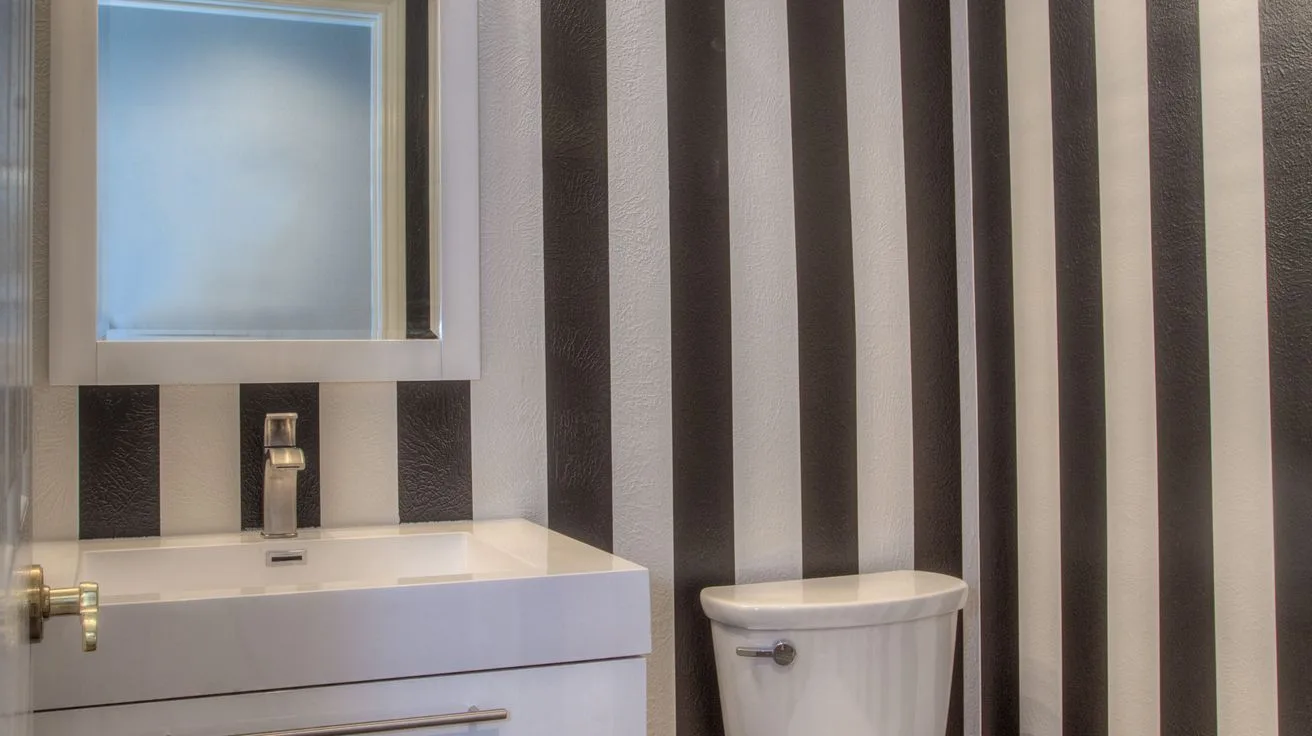
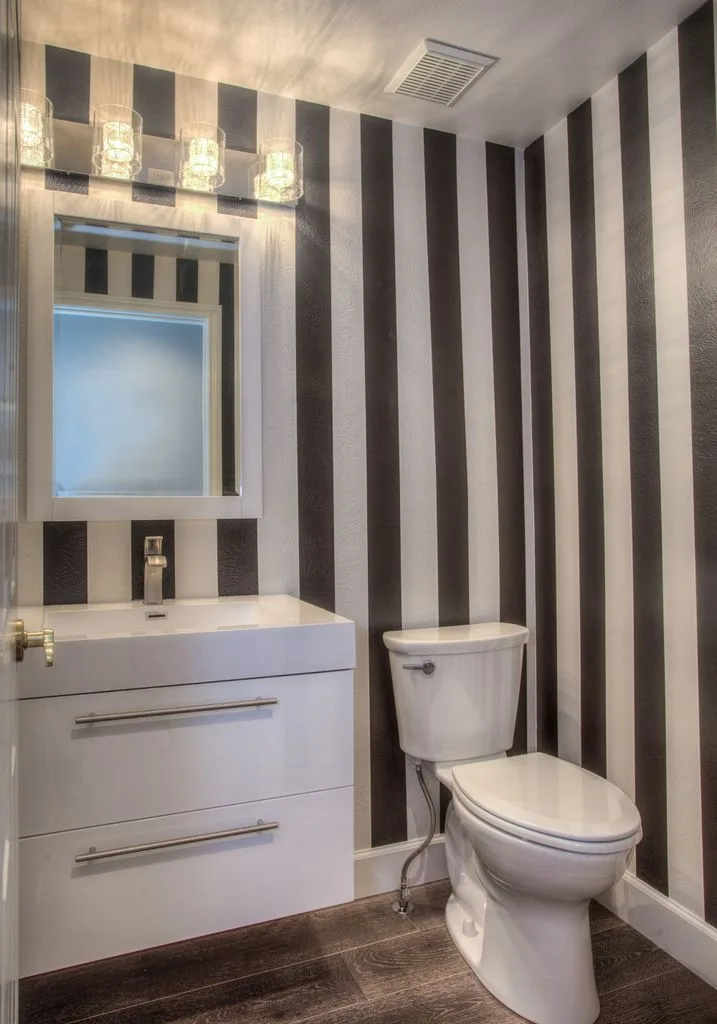
Black and white stripes are the boldest move you can make in a bathroom, and the easiest to love for years. One striped wall, one striped shower curtain, or one striped tile band turns a plain white bath into a graphic, hotel-like space with almost no renovation. Stripes add height, rhythm, and drama, and the black and white palette never dates, never clashes with your fixtures, and photographs beautifully for Pinterest.
In this guide you will find 21 striped black white bathroom accent ideas for every size of bath, from a full striped wallpaper wall in the powder room to a single striped towel stack that softens a dark vanity. Every idea includes the stripe direction to choose, the materials that hold up in humidity, realistic costs, and styling moves that keep the pattern feeling intentional rather than busy. You will finish knowing exactly where to put your stripes, how wide to make them, and what to pair them with.
Save this list before your next bathroom refresh. Most of these accents take an afternoon or less and cost under fifty dollars.
Overview
Striped black white bathroom accents work because stripes are architecture as much as decoration. Vertical stripes pull the eye upward and make a low ceiling feel taller, while horizontal stripes widen a narrow room and make a small bath feel broader. A single striped surface — a wall, a shower, a curtain — gives the whole room a focal point, so everything else can stay calm: white fixtures, one metal finish, and a quiet floor. That contrast is what makes the look feel designed rather than decorated.
The key is restraint. Stripes are a strong pattern, so they need plain surfaces around them to breathe. One striped wall pairs with three plain walls. A striped shower curtain pairs with a solid bath mat and plain towels. A striped tile band pairs with a quiet floor. When you give the stripes room, the bathroom reads as bold and classic at the same time, and you can swap the small accents seasonally without ever touching the walls.
Key Takeaways
- Pick one striped hero: one wall, one shower, or one curtain carries the pattern — everything else stays plain so the stripes can shine.
- Choose direction on purpose: vertical stripes add height to low ceilings; horizontal stripes widen narrow rooms and short walls.
- Keep the palette strict: true black and crisp white read classic; soft grays and warm woods are the only supporting tones you need.
- Use humidity-proof materials: vinyl wallpaper, porcelain tile, and mildew-resistant fabric hold up in a steamy bathroom.
- Repeat the stripe once, small: echo the pattern in towels, a bath mat, or a soap dispenser so the room feels connected.
- Soften with one warm element: brass fixtures, a wooden stool, or a green plant keeps high-contrast stripes from feeling cold.
1. Warm Wood Stripes for a Softer Take
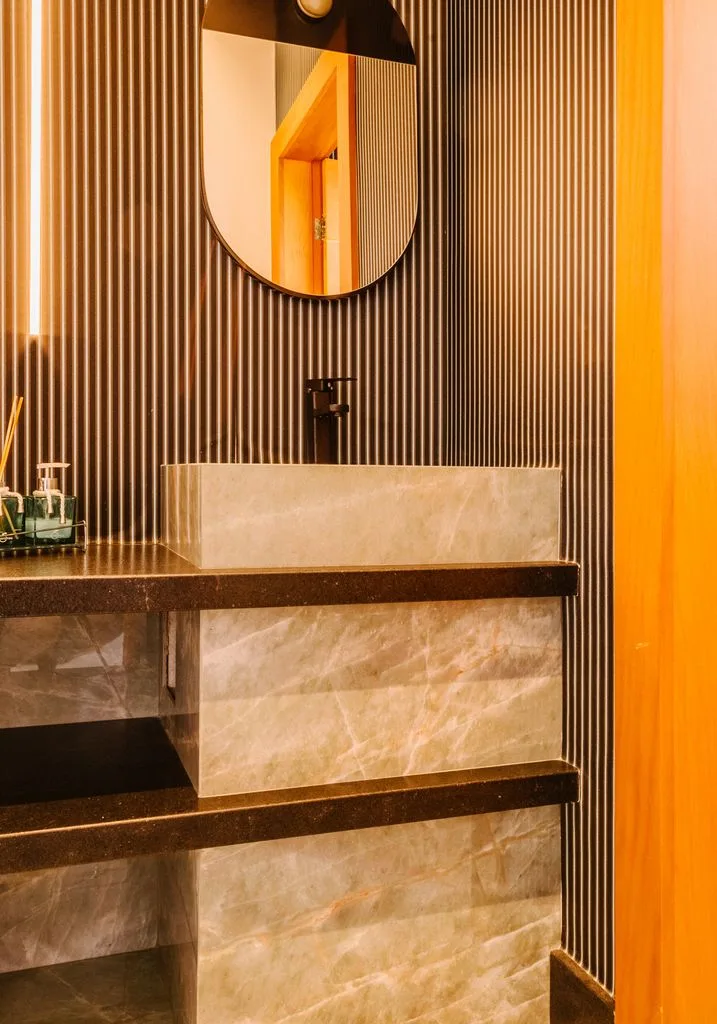
Not every striped bathroom has to be stark black and white. Warm wood-toned stripes — thin vertical lines in walnut, oak, or honey tones against a cream wall — give you the same graphic rhythm with a much softer feel. This is the striped accent to choose if your bathroom already has wood floors, a wooden vanity, or warm brass fixtures, because the stripes echo those tones instead of fighting them. Hang the striped paper or paneling on the vanity wall, where it frames the mirror and sink like a piece of art.
Keep the rest of the room light so the wood stripes stay the star. A white or stone countertop, a plain white vessel sink, and one simple mirror are all the support this wall needs. Expect to spend $80 to $180 for a peel-and-stick striped paper on one vanity wall, and choose a vinyl-coated paper so steam and splashes wipe off easily.
2. Striped Shower Tile Accent Wall
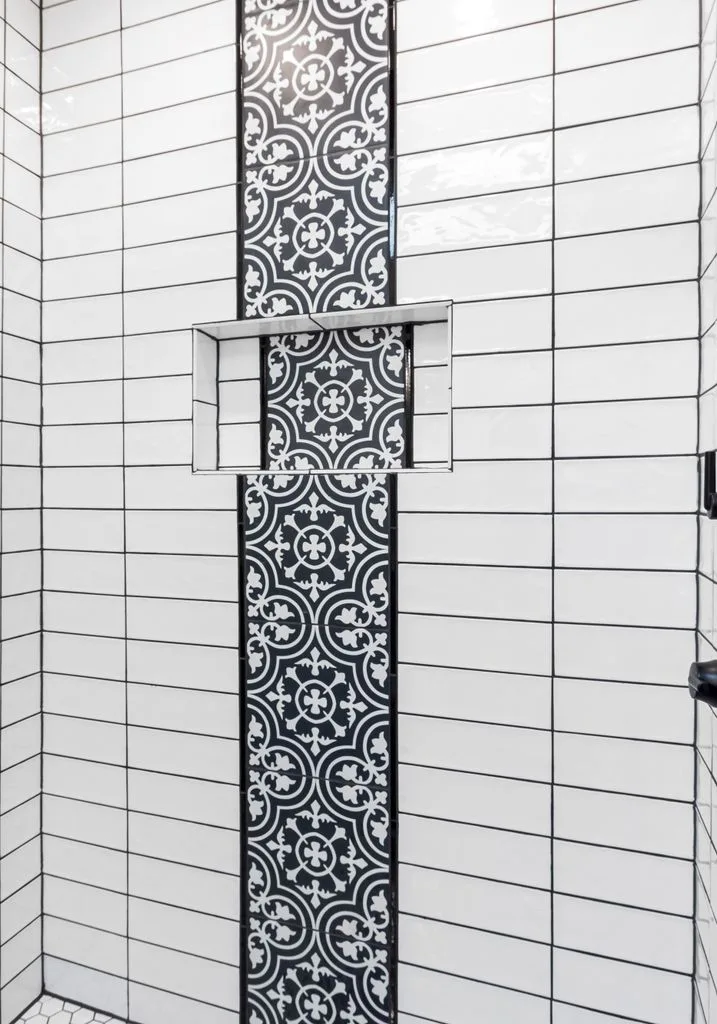
A single striped tile wall inside the shower is the most permanent and most impressive striped accent you can add. Narrow vertical tiles in alternating black and white, or a bold black patterned stripe running down a white subway tile wall, turn the shower into the focal point of the whole bathroom. The stripe draws the eye upward, which makes even a compact shower feel taller, and the glossy tile surface is made for water, so there is no worry about steam or splashes.
Keep the rest of the shower quiet: white subway tile on the other walls, a frameless glass panel, and matte black fixtures that pick up the dark stripe. A striped shower wall pairs beautifully with a plain white floor and a simple round mirror outside the shower. Budget $300 to $700 for tile and installation on one shower wall, and ask your tiler to dry-lay the stripe first so every line lands exactly where you want it. Houzz’s striped bathroom photo collection shows how designers place these accent stripes so the pattern lines up with the vanity and the mirror for a finished, architectural look.
3. Striped Shower Curtain as the Statement Piece
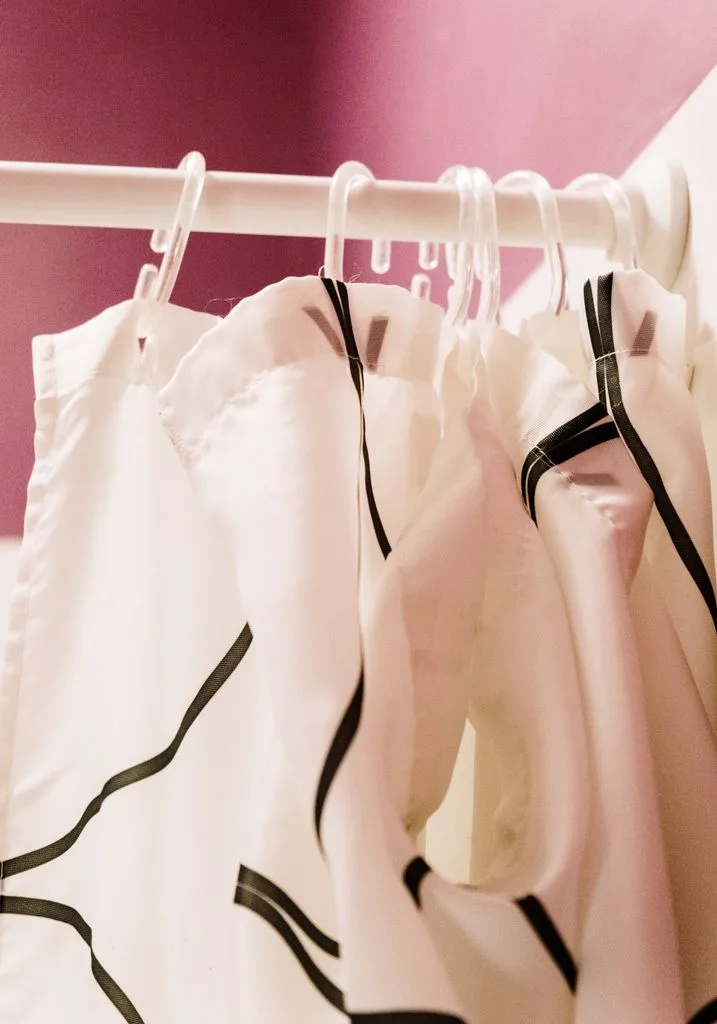
If you want stripes without any renovation, a striped shower curtain is the fastest win on this list. A white curtain with bold black stripes — vertical for height, horizontal for a classic nautical feel — instantly becomes the largest pattern in the room, and you can swap it in minutes whenever you want a change. It is the ideal striped accent for renters, for small bathrooms, and for anyone testing whether they love the look before committing to tile or wallpaper.
Choose a fabric curtain with a weighted hem so it hangs straight and does not billow into the tub, and pair it with a plain white or black liner. Keep the towels and bath mat solid — white, black, or one soft gray — so the curtain stays the only pattern in the room. A good striped fabric curtain costs $25 to $60, and it washes easily, which matters in a room where mildew loves to hide. Hang it high, close to the ceiling, to stretch the wall visually.
📌 Related Articles:
4. Black Mosaic Tile with a Striped Border
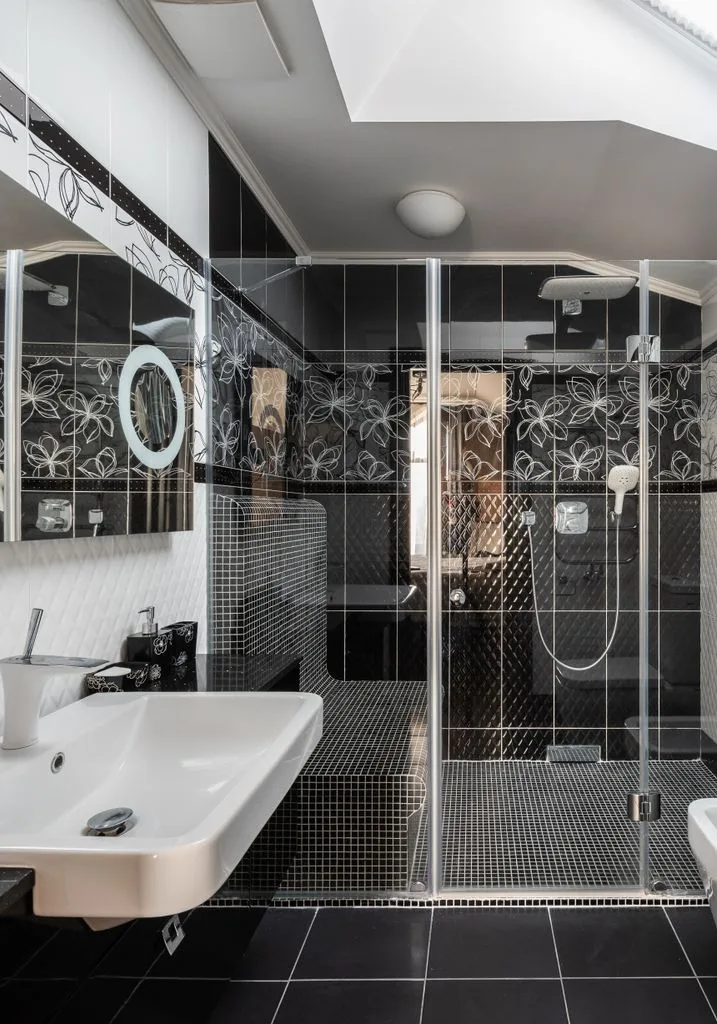
Black mosaic tile is dramatic on its own, but a striped or patterned border is what turns it into a designed look. A band of patterned black and white tile running across a black mosaic shower wall — or a thin striped border where the tile meets the paint — adds a crafted, almost tailored detail that plain tile never achieves. The border works like piping on a jacket: a small stripe that makes the whole surface feel finished.
Place the border at eye level or along the top edge of the tile, and keep it to one band only so it reads as an accent rather than a second pattern. Pair the mosaic with white fixtures and a frameless glass panel so the tile stays visible, and use black grout on the mosaic for a seamless look. A patterned border tile costs $40 to $120 for one shower wall.
5. Checkerboard Floor Under Bold Stripes
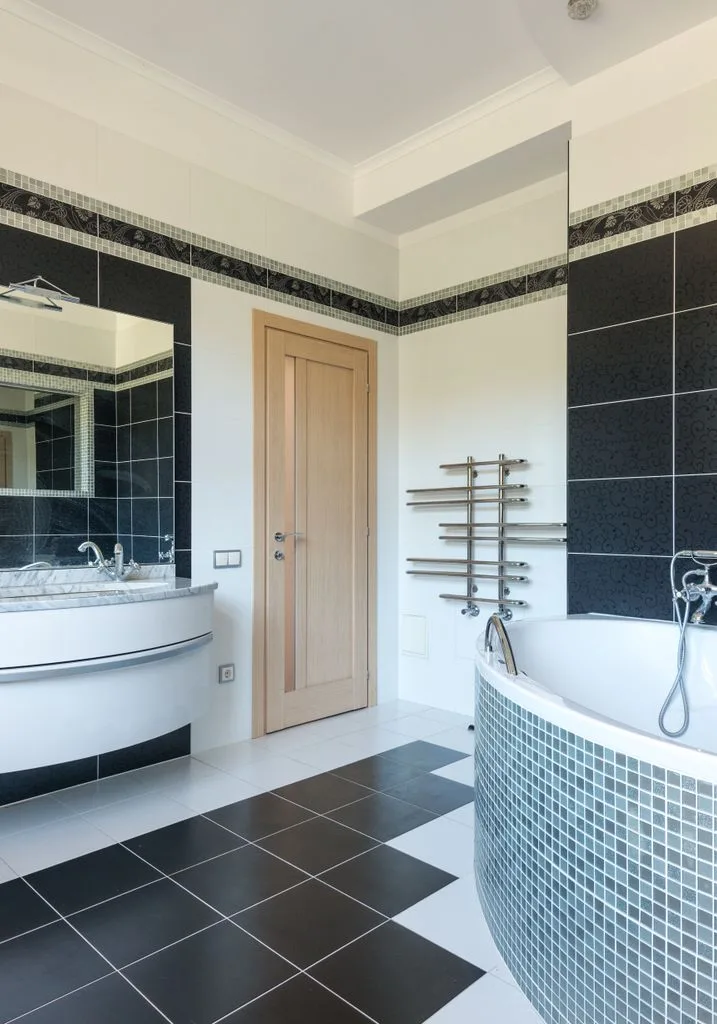
Stripes on the walls and checkerboard on the floor sound like pattern overload, but in black and white they are a classic pairing that has worked for a century. The trick is scale: bold, wide stripes on one wall with a small checkerboard floor, or a fine pinstripe wall with a large checkerboard floor. When one pattern is big and the other is small, they balance each other instead of competing, and the room feels graphic and intentional.
Keep the fixtures and vanity plain — white, black, or one metal — so the two patterns have a quiet frame. A freestanding tub or a simple white vanity sitting on a checkerboard floor with a striped wall behind it is one of the most photographed bathroom combinations on Pinterest for good reason. Budget $400 to $900 for a checkerboard porcelain floor in a standard bathroom, and choose a matte finish so the floor is not slippery when wet.
6. Black Marble Walls with Striped Accents
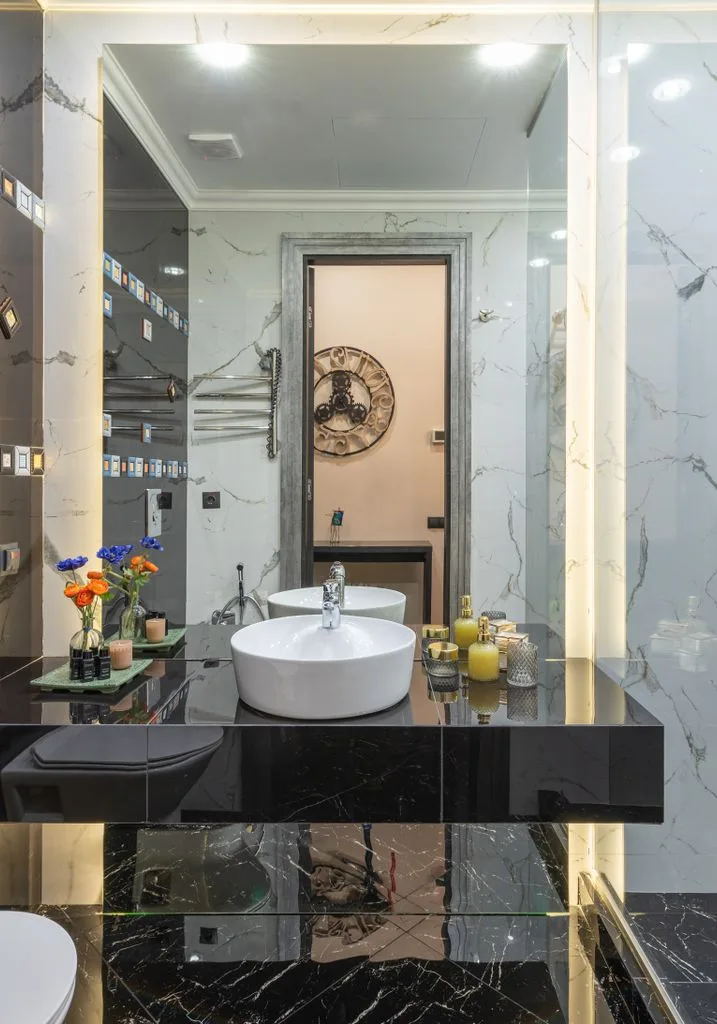
Black marble is the most luxurious backdrop for stripes, because the white veining in the stone already echoes the stripe rhythm. A black marble shower wall or vanity wall with a striped accent — a striped towel, a striped shower curtain, or a thin striped tile band — feels like a boutique hotel bathroom. The marble does the heavy lifting on drama, so the stripes can stay small and precise, which keeps the room feeling expensive rather than busy.
Pair black marble with a white vessel sink, chrome or brass fixtures, and a large mirror to bounce light around the dark surfaces. Keep the floor light — white marble or pale porcelain — so the room does not feel like a cave. Porcelain marble-look tile gives you the same drama for $300 to $700 and handles water better than real marble.
7. Dark Tiled Accent Wall
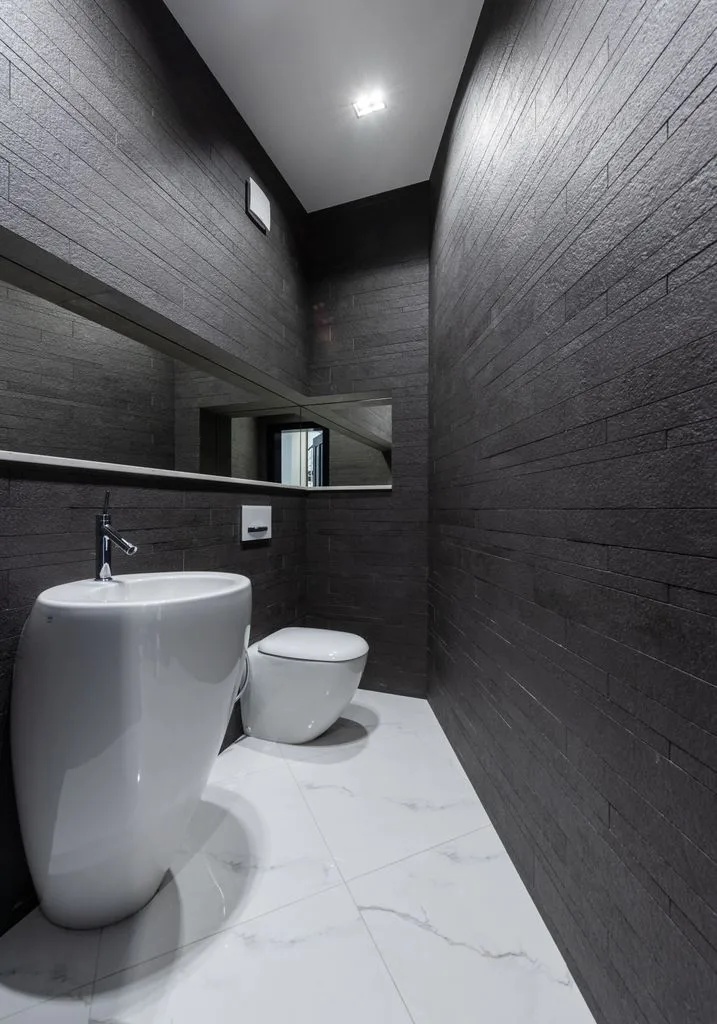
A dark tiled accent wall is the moody cousin of the striped wall, and it works beautifully as the backdrop for striped accessories. Deep charcoal or near-black tiles with a subtle vertical line pattern give the bathroom depth and drama, while white fixtures pop against them like jewelry. This is the accent to choose if you love stripes but want the wall itself to feel calm and architectural rather than graphic.
Hang striped towels on a black rail, place a striped bath mat on the floor, and let those small stripes carry the pattern while the dark wall provides the contrast. A white freestanding sink and a round mirror soften the darkness. Budget $250 to $600 for a dark tiled accent wall, and use large-format tiles with minimal grout lines for the cleanest look.
8. Black Vanity with a White Vessel Sink
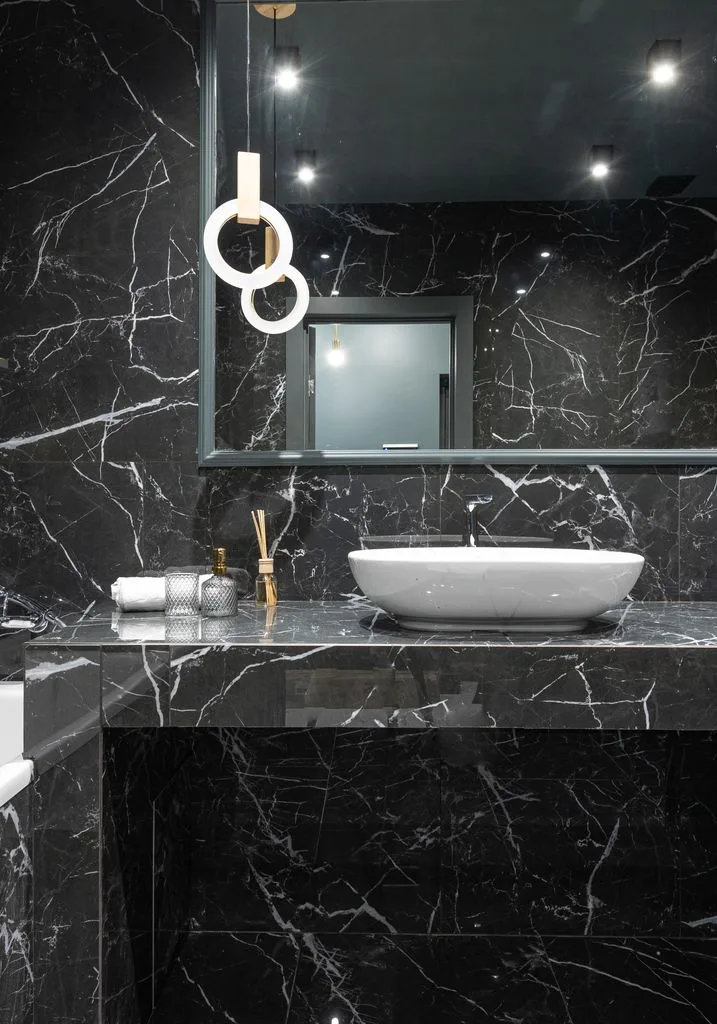
A black vanity with a white vessel sink is the fastest way to bring high contrast to a bathroom without touching the walls. The black cabinet anchors the room, the white sink floats above it like a sculpture, and the combination reads as intentional and modern. Add striped accents around it — a striped hand towel on the rail, a striped soap dispenser, or a small striped tray — and the vanity area becomes the focal point of the whole bathroom.
Keep the countertop clear so the vessel sink stays the star: one soap dispenser, one small plant, and nothing else. A large round or arched mirror above the vanity reflects the stripes and doubles the light, which matters in a bathroom with dark cabinetry. A black vanity with a white vessel sink costs $400 to $1,200 depending on size and stone, and it pairs with almost any stripe direction on the walls.
9. Freestanding Tub Against a Dark Striped Wall
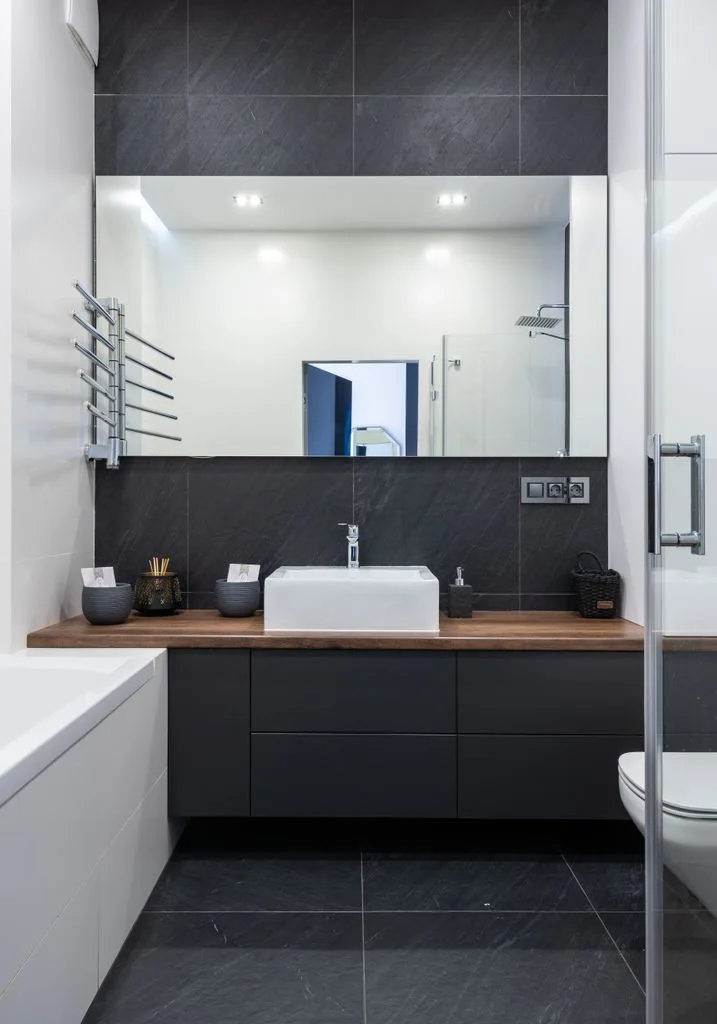
A freestanding tub deserves a backdrop, and a dark striped wall is one of the best. Vertical black and white stripes behind a white tub create a gallery-like frame: the tub becomes the sculpture and the stripes become the art behind it. The contrast is so strong that you need almost nothing else in the room — a small wooden bath tray, a folded towel, and a single plant are enough.
Choose a wall-mounted or freestanding tub filler in matte black or brass so the fixtures join the palette instead of interrupting it. Keep the floor plain and pale, and let the tub sit a few inches off the wall so the stripes stay visible behind it. A freestanding tub costs $600 to $2,500, while the striped wall behind it can be peel-and-stick paper for under $150.
10. Round Window and Gold Faucet at the Tub
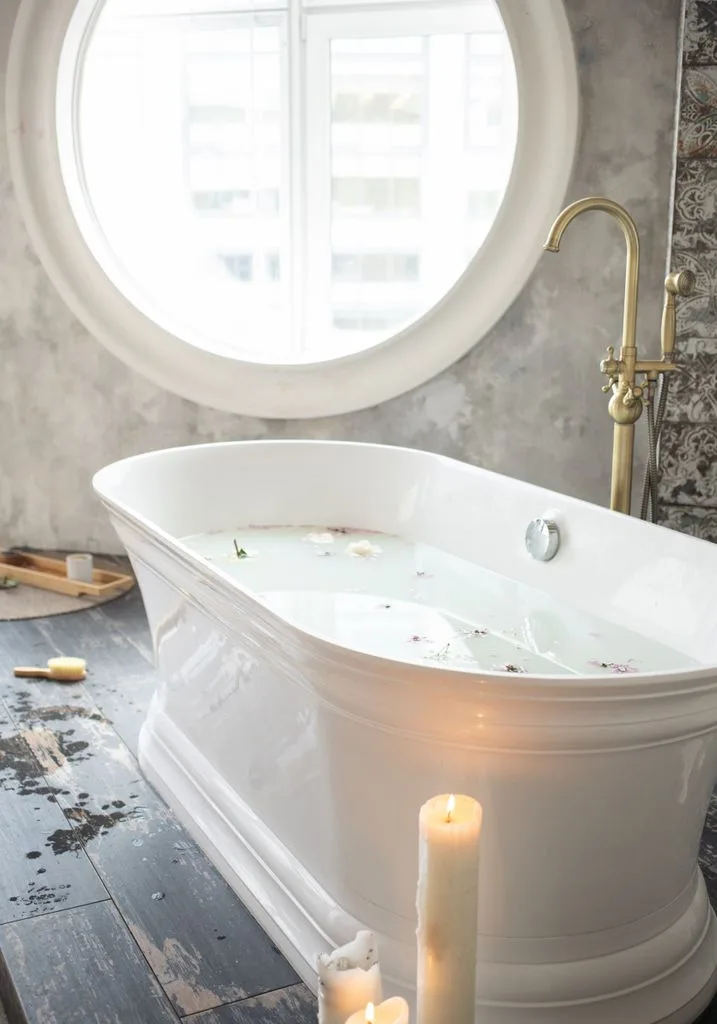
Stripes are graphic and straight, so a round window or a round mirror is the perfect counterpoint. A circular window above the tub softens all those vertical lines, lets in daylight, and turns the bathing area into a focal point. Pair it with a gold or brass faucet, which warms the black and white palette and stops the room from feeling stark, and you have a bathroom that feels both bold and calm.
Style the tub simply: a wooden bath tray, a candle, and a folded white towel. The round shape does the decorating work, so the surfaces can stay quiet. If a round window is not possible, a large round mirror above the tub gives you the same softening effect for a fraction of the cost. A round mirror costs $60 to $200, and a brass tub filler runs $200 to $600.
11. Gold Fixtures to Warm Up the Stripes
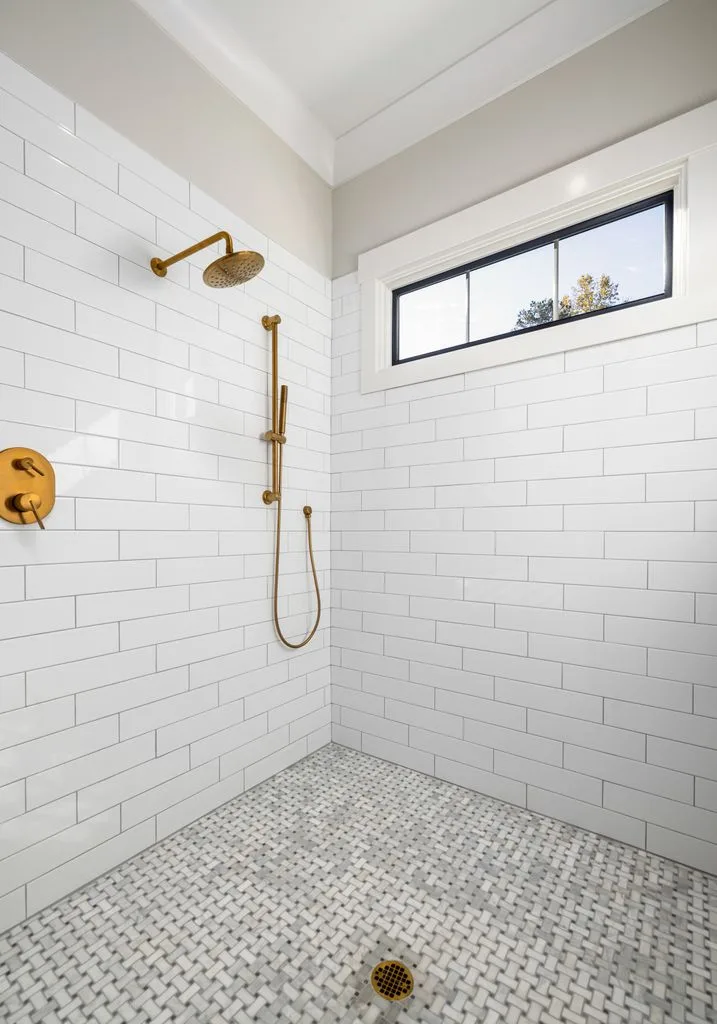
Black and white stripes can feel cold if every surface is hard and glossy, and gold fixtures are the easiest fix. Brushed brass or matte gold shower controls, a gold rain head, and gold towel hooks add warmth and a hint of luxury without introducing a third color. The warm metal sits beautifully against both the black and the white, and it photographs with a soft glow that chrome never achieves.
Use gold in three places — shower, vanity, and one accessory — and keep everything else black and white so the metal reads as a deliberate accent. A white subway tile shower with gold fixtures and a striped tile band is one of the most saved bathroom combinations right now, because it balances graphic pattern with warm, human detail. Budget $300 to $800 for a gold shower set and matching vanity fixtures.
12. Shower Bench with a Striped Tile Band
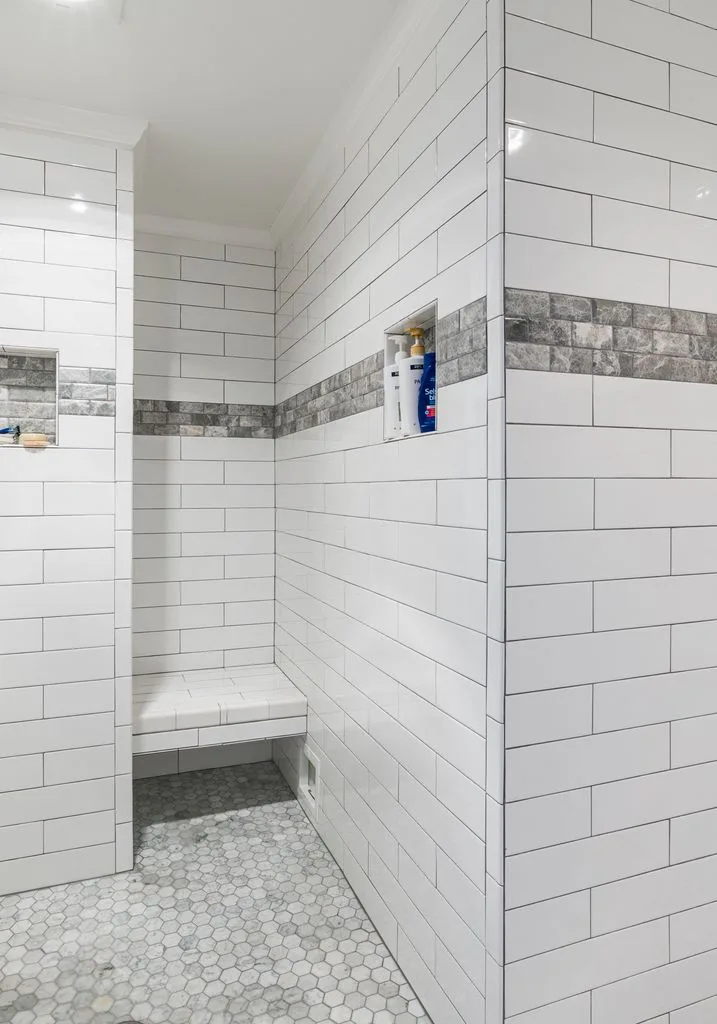
A built-in shower bench is practical, and a striped tile band across it is what makes it beautiful. A horizontal band of black and white striped tile running across a white subway tile shower — at bench height or along the top edge — adds a tailored detail that makes the whole shower feel custom. The bench itself becomes a design feature rather than an afterthought, and the stripe ties it to the rest of the room.
Keep the band to one row of tile, about four to six inches tall, and align it with the vanity counter or the mirror height outside the shower for a finished architectural look. Use the same stripe in the soap niche so the pattern repeats once, small, inside the shower. A tiled bench with a striped band costs $200 to $500 as part of a shower build.
13. Rain Shower in a White Subway Shower
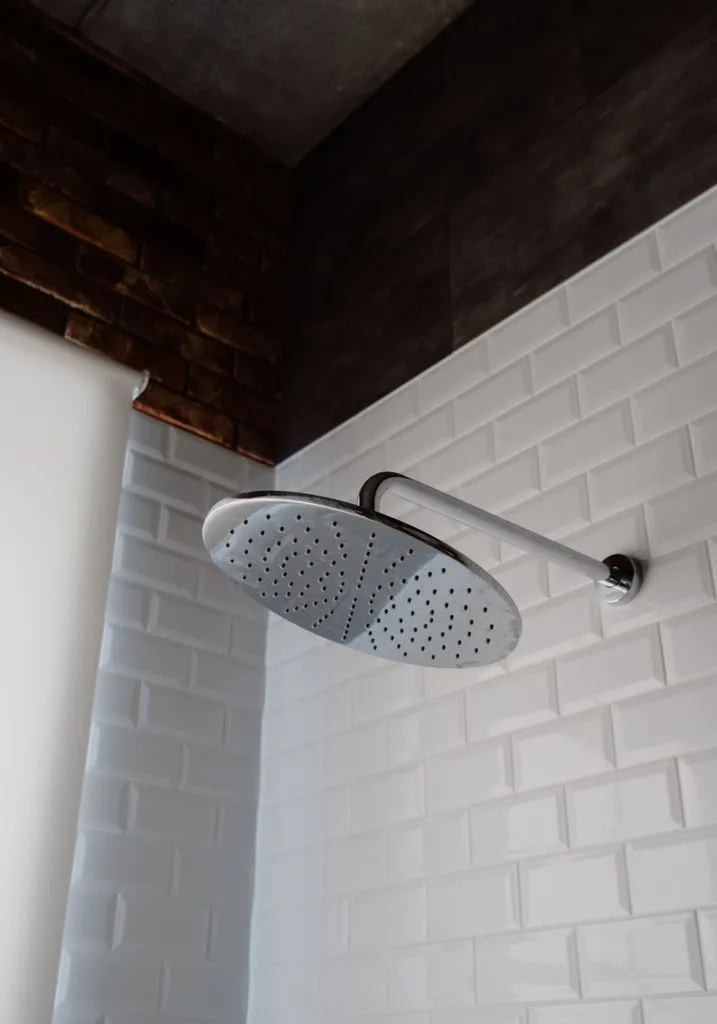
A rain showerhead in a white subway tile shower is the calm counterpoint to bold stripes elsewhere in the room. The large, flat showerhead and the clean white tile give the eye a place to rest, which is exactly what a striped bathroom needs: one quiet zone that lets the pattern breathe. The white tile also bounces light around the shower, so a small bathroom feels brighter and larger.
Add the stripe back in one small place — a black striped shower curtain outside the glass, a striped bath mat at the shower door, or black fixtures that echo the dark stripe. A ceiling-mounted rain head costs $150 to $400, and white subway tile is one of the most affordable wall finishes, at $100 to $300 for a standard shower.
14. Double Vanity with Matte Black Faucets
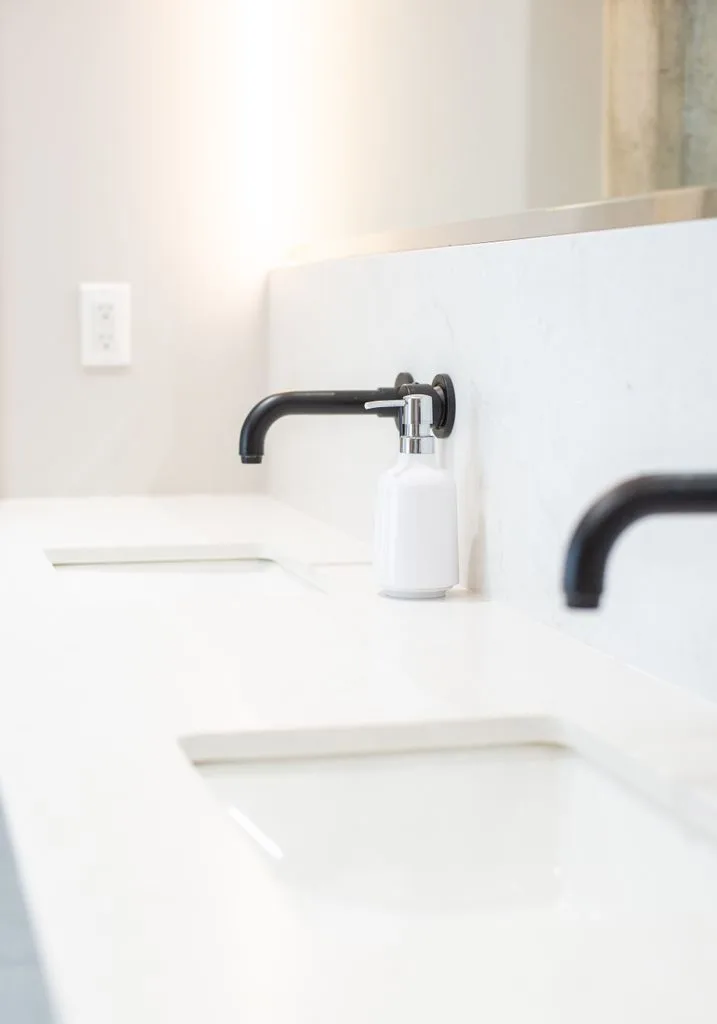
A double vanity is where stripes meet daily life, and matte black faucets are the detail that ties it together. Two white sinks with black wall-mounted faucets create a strong horizontal rhythm that echoes a striped wall, and the matte black finish hides water spots far better than chrome. It is the practical choice for a shared bathroom, and it looks intentional rather than merely functional.
Keep the countertop white or pale stone, add one striped hand towel per sink, and hang a single long mirror or two matching mirrors above. The symmetry of the double vanity does half the decorating work for you. A double vanity with matte black faucets costs $800 to $2,500, and the black fixtures are the easiest striped-bathroom accent to add later if you already own the vanity.
15. Matte Black Faucets on a White Sink
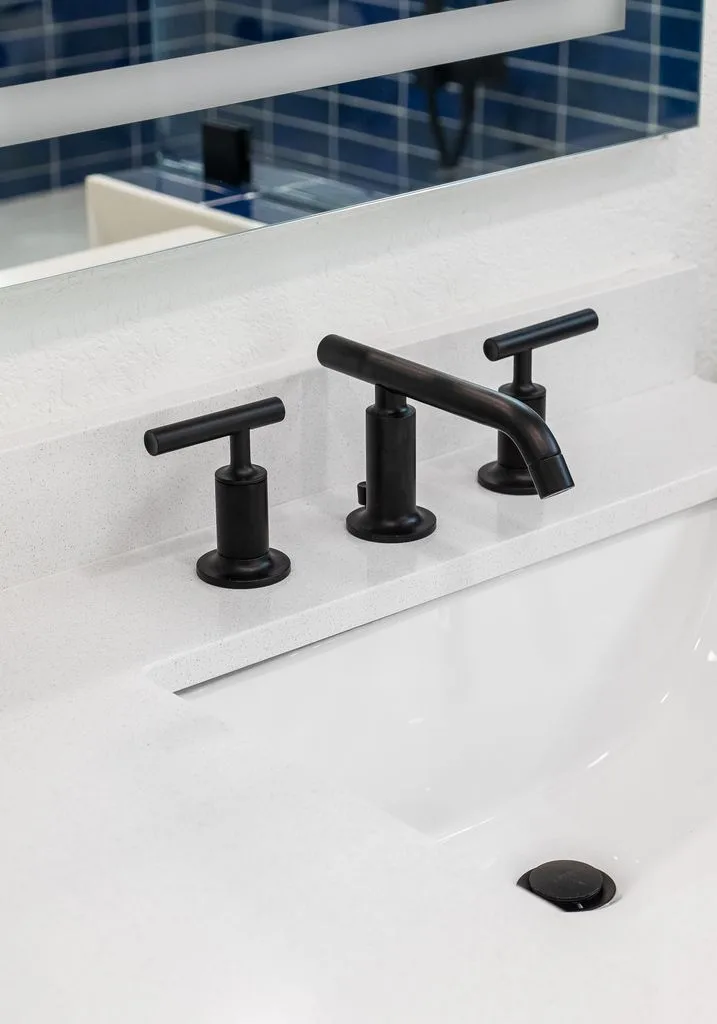
If a full striped wall feels like too much, start with the smallest striped accent of all: matte black faucets on a white sink. The black fixtures read as a thin dark stripe against the white porcelain, and they set the palette for the whole room without any pattern at all. Add one striped hand towel and a black soap dispenser to complete the look.
Matte black is the most forgiving faucet finish for a bathroom: it hides fingerprints and water spots, it pairs with every tile, and it never goes out of style. A matte black faucet costs $80 to $250, and swapping faucets is a one-hour job that transforms the vanity more than any other single change. It is the best first step if you are testing the black and white look before committing to stripes on the walls.
16. Black Marble Floor with White Walls
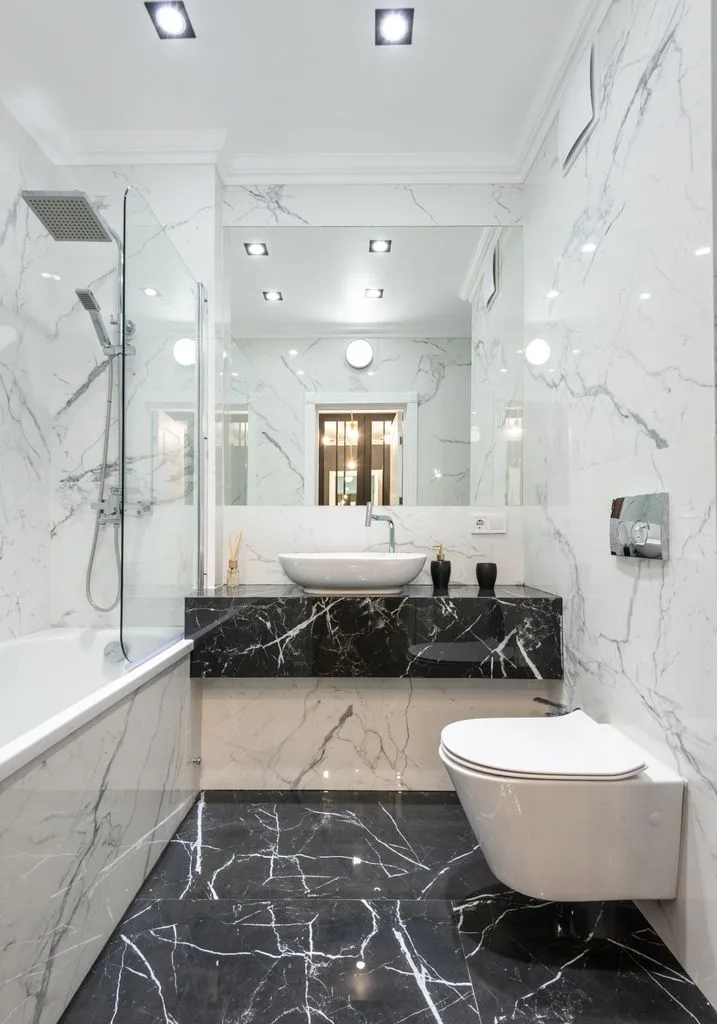
Stripes do not have to live on the walls — a black marble floor with white walls flips the pattern to the ground and lets the walls stay calm. The dark floor grounds the room, the white walls lift it, and the contrast is every bit as graphic as a striped wall. Add the stripes back at eye level with a striped shower curtain, striped towels, or a striped tile band, and the room feels layered rather than top-heavy.
Keep the vanity and fixtures white so they float above the dark floor, and use a large mirror to bounce light down to the marble. Black marble-look porcelain is the practical choice here: it gives you the drama of marble for $300 to $700, it is not slippery when sealed, and it hides dust far better than a white floor ever will.
17. Classic White Tile with Black Striped Trim
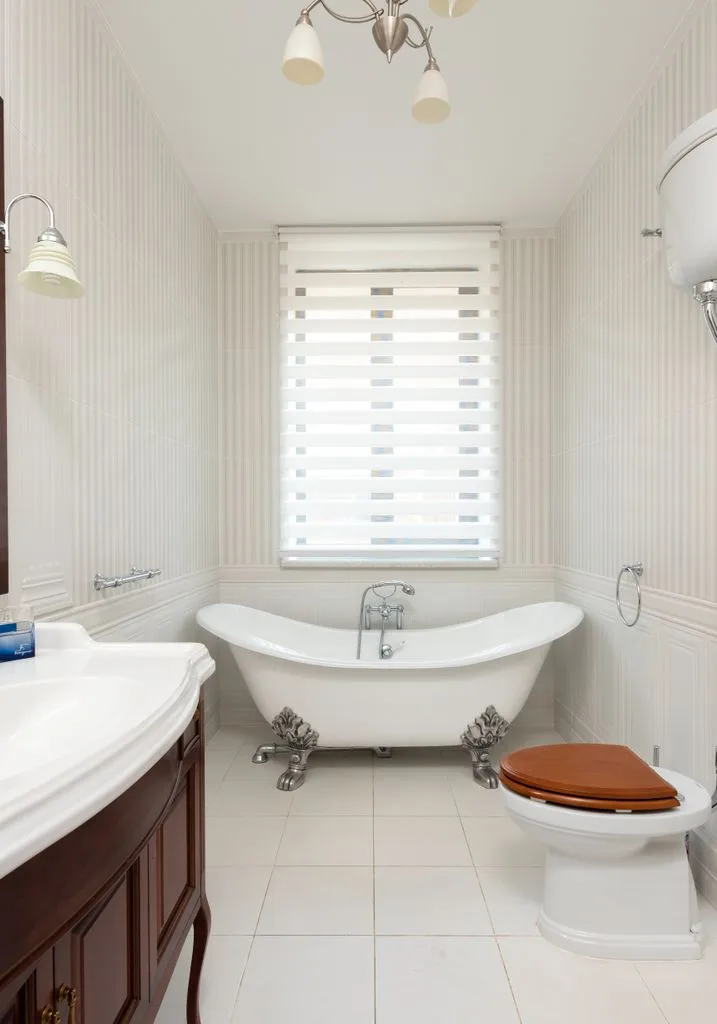
Classic white tile with a thin black striped trim is the most timeless idea on this list, and the one most likely to still look right in twenty years. White subway or square tile on the walls, a single black stripe running along the top edge or down one corner, and a freestanding clawfoot tub in front of it — the combination is simple, elegant, and almost impossible to get wrong. It is the striped bathroom for people who love pattern but fear commitment.
The trim is the key: one thin black stripe, perfectly straight, does more than a whole wall of pattern. Use black grout on the white tile for a stronger graphic effect, or white grout for a softer one, and keep the vanity dark wood or black so the trim has a partner. The tile and trim run $200 to $500 for one wall.
18. Moody Dark Bathroom with Striped Touches
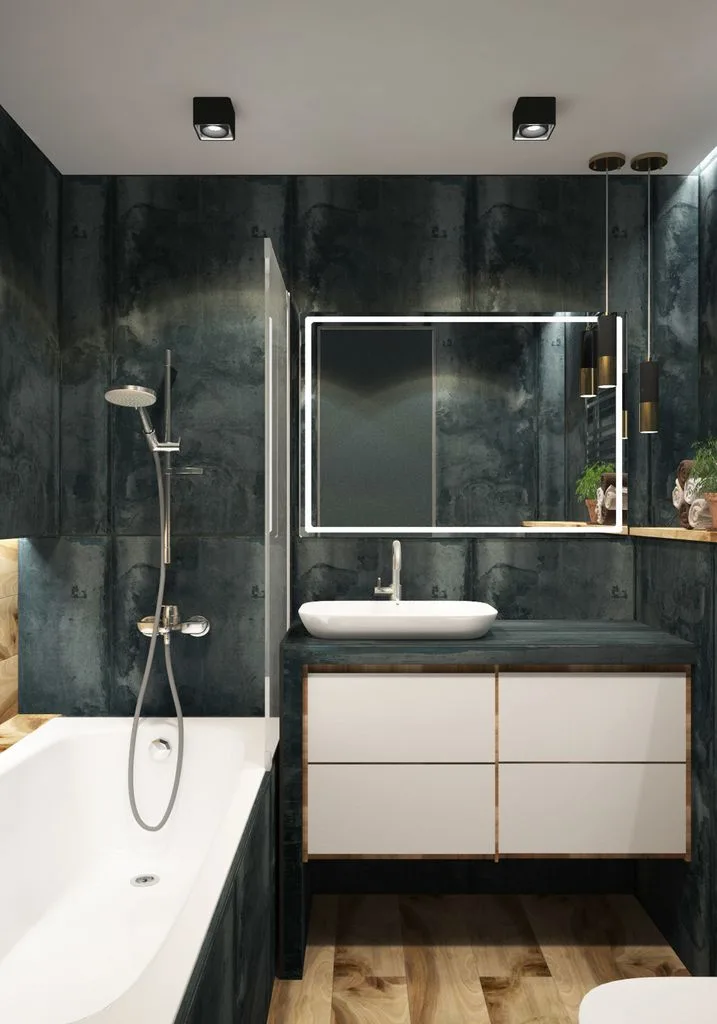
A moody dark bathroom — deep green-black or charcoal walls, dark marble, dim lighting — is the most dramatic setting for stripes, because a single white stripe glows against the darkness. One striped towel, one white striped shower curtain, or one pale striped tile band is all the pattern a dark bathroom needs. The contrast is so strong that a little stripe goes a very long way, and the room feels like a boutique hotel rather than a family bathroom.
Keep the lighting warm and layered: sconces beside the mirror, a dimmer on the ceiling light, and a candle on the vanity. The warm light softens the dark walls and makes the white stripes feel crisp rather than harsh. Apartment Therapy’s black-and-white bathroom makeover shows how one homeowner used black wall tiles against freshly painted white walls and simple wooden shelves to get this high-contrast look for only $100, proving that a moody monochrome bath does not need a renovation budget.
19. Crisp White Towels as the Soft Layer
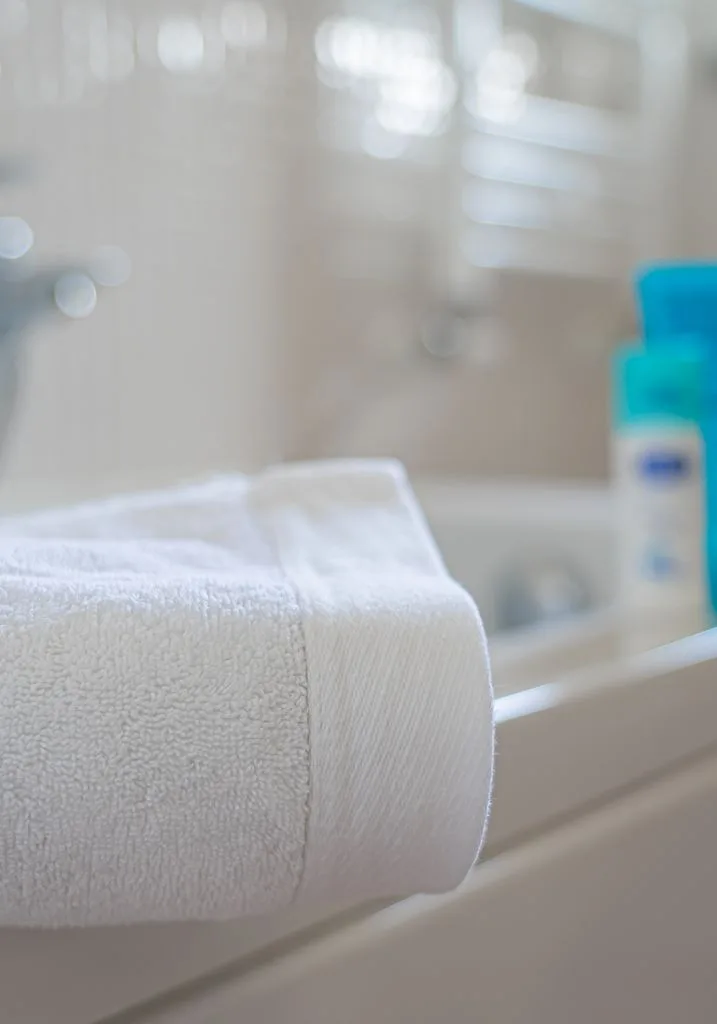
Stripes are hard and graphic, so every striped bathroom needs a soft layer — and crisp white towels are the simplest one. A stack of thick white towels on the edge of the tub, or folded white towels on an open shelf, breaks up the black and white pattern with softness and texture. White towels also signal cleanliness, which matters in a room where the pattern is already doing a lot of visual work.
Choose towels with a subtle stripe of their own — a thin black border or a narrow pinstripe — so they join the pattern instead of just sitting next to it. Keep them folded the same way every time, and replace them when they go gray, because dingy towels ruin a black and white bathroom faster than anything else. Quality white bath towels cost $10 to $25 each, and they are the cheapest striped accent on this list.
20. Rolled Towels for a Spa Finish
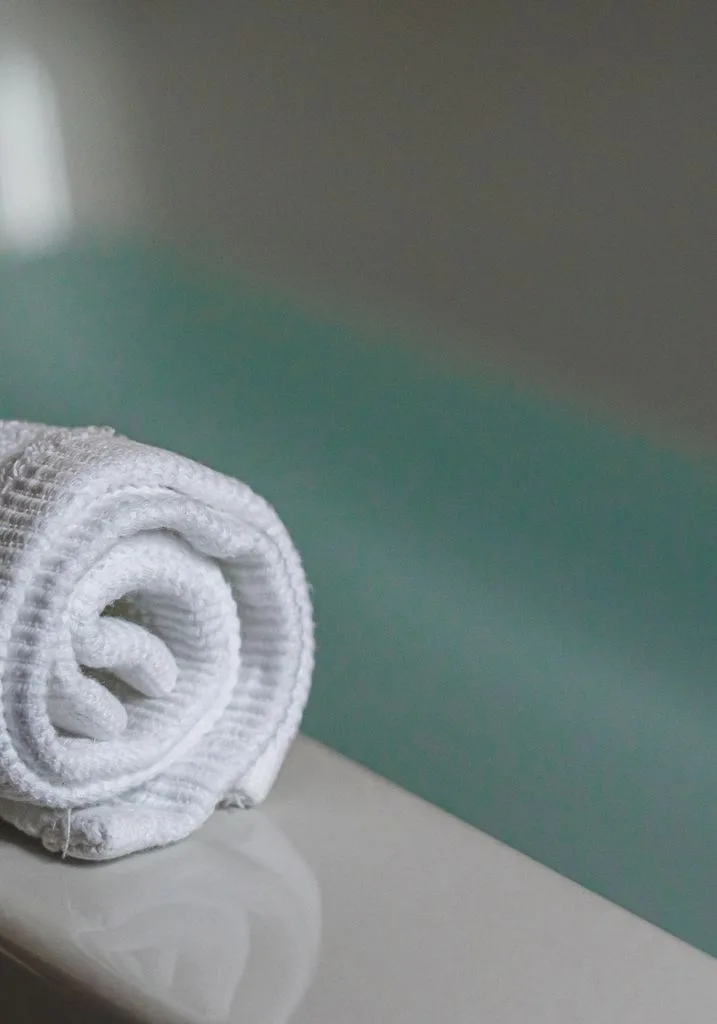
Rolled towels are the spa detail that makes a striped bathroom feel finished. A row of tightly rolled white towels on the edge of the tub or in a basket beside the vanity adds soft, sculptural texture that balances all the straight lines of the stripes. The rolls catch the light differently from folded towels, so they read as a deliberate styling choice rather than storage.
Roll towels with a thin black stripe showing, or tie each roll with a narrow black ribbon for a tailored look that echoes the wall stripes. Keep the rolls to one color — all white, or alternating black and white — and store them where they stay dry. A basket of rolled towels costs nothing beyond the towels themselves.
21. Sheer White Curtains at the Window
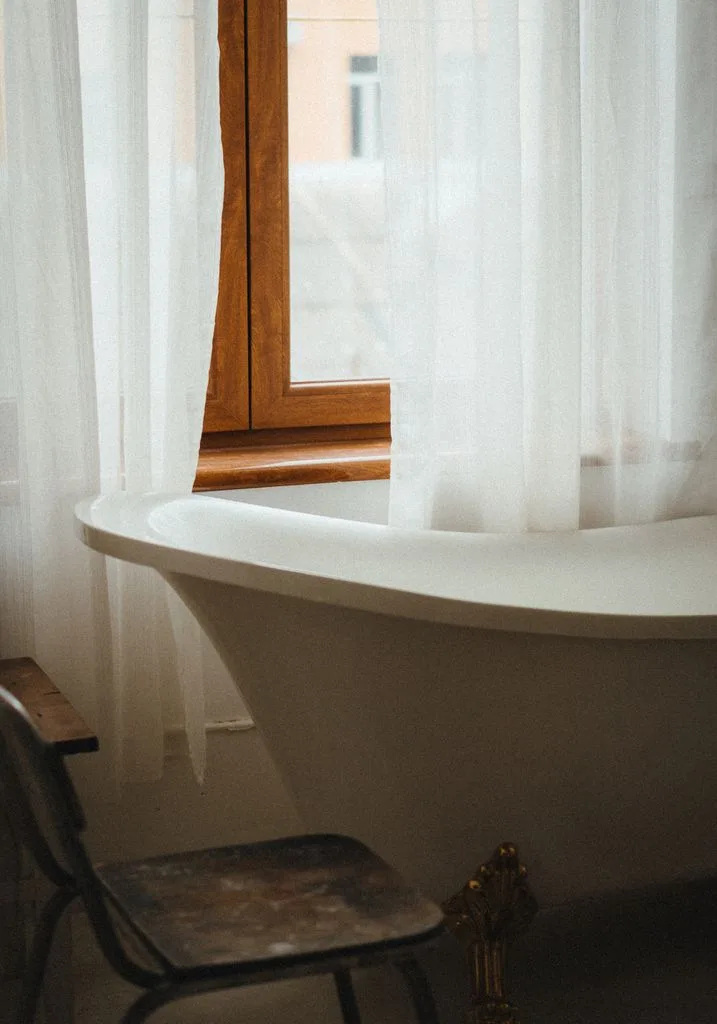
A bathroom window needs privacy without darkness, and sheer white curtains are the answer in a striped bathroom. The soft white fabric diffuses the light, softens the hard lines of the stripes, and gives the room a gentle glow that no blind can match. Against a striped wall, a sheer curtain reads as a calm white panel — the quietest accent in the room, and the one that makes everything else look intentional.
Choose a washable sheer fabric and hang it on a black rod so the hardware joins the palette. Keep the curtain just past the windowsill or to the floor for a more tailored look, and avoid patterns on the fabric itself — the stripes on the walls are pattern enough. Sheer white curtains cost $15 to $40 per window.
📌 Also Read:
How to Choose
Start with the room, not the pattern. A powder room can handle the boldest stripes in the catalog, while a family bathroom needs a pattern you can live with every day. Measure your wall first, then decide the stripe width: wide stripes (six inches or more) suit large rooms and tall walls, while narrow pinstripes suit small rooms and short walls. Check the stripe direction too — vertical stripes add height, horizontal stripes add width — and pick the direction that fixes your room’s actual problem.
Next, order a sample. A peel-and-stick striped paper sample stuck on your wall for a week tells you more than a hundred photos: check it in morning light, evening light, and lamplight, and watch how it looks next to your fixtures. Finally, consider the surface: striped wallpaper needs smooth, clean, fully cured paint, while striped tile needs a flat, level wall. Test in a hidden corner first, and always buy ten percent extra for pattern matching and trimming.
Budget Breakdown
A striped black and white bathroom can cost almost nothing or several thousand dollars, depending on how permanent you want the stripes to be. Budget $25 to $60 for a striped shower curtain, $80 to $250 for matte black faucets, $80 to $180 for peel-and-stick striped wallpaper on one wall, and $150 to $400 for striped towels, a bath mat, and accessories. Those four moves alone transform a plain white bathroom for under $500.
For permanent stripes, budget $300 to $700 for a striped tile shower wall, $400 to $900 for a checkerboard or black marble-look floor, and $800 to $2,500 for a new vanity or freestanding tub. Compared with a full bathroom renovation, which starts at $5,000 and climbs fast, striped accents sit in the sweet spot: designer impact, DIY price, and a look that never dates.
Common Mistakes to Avoid
The most common mistake is striping too much. Two striped walls, a striped floor, and a striped curtain in one small bathroom will fight each other and make the room feel chaotic. Pick one striped hero, repeat the pattern once small, and leave everything else plain. The second mistake is mixing stripe scales badly — a bold wide stripe next to a busy pinstripe looks accidental, so keep all your stripes in the same family of widths.
Other mistakes are easy to avoid once you know them. Do not use non-vinyl wallpaper in a steamy bathroom, or it will peel within months. Do not hang stripes by eye — use a level, because a crooked stripe is visible from across the room. Do not pair stripes with another loud pattern like florals or geometrics, and do not forget the grout: black grout on white tile strengthens the stripe effect, while white grout softens it. Finally, do not choose stripe width from a phone screen alone; tape paper strips to the wall first and live with them for a day.
FAQ
Do black and white stripes make a small bathroom look smaller?
No, when you choose the direction on purpose. Vertical stripes make a small bathroom feel taller, and horizontal stripes make a narrow bathroom feel wider. The mistake is striping every wall, which closes the room in. Stripe one wall — the wall you see first when you walk in — and keep the other walls plain white, and the bathroom will feel larger, not smaller.
What stripe direction works best in a bathroom?
Vertical stripes work best in most bathrooms because they add height and suit tall, narrow walls, shower enclosures, and wallpaper. Horizontal stripes work best on short walls, above wainscoting, or as a single tile band, where they widen the room. In a shower, vertical stripes draw the eye up and make the enclosure feel taller, while a horizontal striped band works well across a vanity wall.
Are striped bathroom walls hard to keep clean?
Striped tile and vinyl wallpaper are no harder to clean than plain surfaces, and black and white actually hides water spots better than mid-tone colors. Wipe tile stripes with a standard bathroom cleaner, and wipe vinyl striped wallpaper with a damp cloth. Fabric striped shower curtains need a regular wash to prevent mildew, so choose a machine-washable curtain and wash it monthly.
Can I add stripes to a rental bathroom?
Yes, and stripes are one of the most renter-friendly patterns. A striped shower curtain, striped towels, a striped bath mat, and peel-and-stick striped wallpaper all come down cleanly with no damage. Avoid permanent striped tile or painted stripes in a rental, and always test peel-and-stick paper in a hidden corner first to confirm it releases without taking paint with it.
What fixtures pair best with black and white stripes?
Matte black fixtures are the natural partner for black and white stripes, because they echo the dark stripe and hide water spots. Brushed brass or gold fixtures are the best alternative if you want warmth, since gold softens the high contrast. Chrome works too, but it reads cooler and more modern. Pick one metal finish and use it for every fixture in the room so the stripes stay the star.
Conclusion
Striped black white bathroom accents are the rare decorating move that is bold, classic, cheap, and reversible all at once. Whether you choose a full striped wallpaper wall, a striped tile shower, a simple striped curtain, or just matte black faucets and crisp white towels, one striped accent gives your bathroom the personality it was missing. Pick your hero stripe, keep everything else plain, and enjoy the room you have been picturing.
Found an idea you love? Save this guide to your Pinterest board before your next bathroom refresh, so your stripe direction, budget, and shopping list are all in one place when you are ready. Your next favorite bath is one striped accent away.


