Top 19 Living Room Decor Ideas for Apartments That Feel Bigger and Brighter
An apartment living room has to work harder than almost any other room in your life. It is where you relax after work, host friends, fold laundry, and take video calls — all inside a footprint that might be 10 by 12 feet if you are lucky. Add rental rules that ban paint and nails, beige walls you cannot change, and windows facing another building, and it is no wonder so many apartment living rooms feel small, dark, and temporary.
Here is the good news: none of those limits are the real problem. The apartments that feel bigger and brighter rarely have more square footage — they are the ones where every piece was chosen on purpose. A sofa that fits the wall instead of fighting it, a rug that quietly draws the room’s boundaries, curtains hung six inches higher than the frame. Small decisions, layered together, change how a room feels the moment you walk in.
This guide walks you through 19 practical living room decor ideas for apartments, in the order that makes the biggest difference first. You will find exact measurements for sofas, rugs, and curtain placement, realistic prices for every budget, and renter-safe ways to do all of it without risking your deposit. By the end, you will know what to buy, what to skip, and how to arrange it — whether your living room is a studio corner or a proper one-bedroom lounge.
Overview
Decorating an apartment living room comes down to three principles: scale, light, and layers. Scale means furniture matched to the room’s real dimensions, with walking paths of at least 30 inches and a little breathing room around larger pieces. Light means helping whatever daylight you have travel further — pale walls, mirrors, sheer fabrics — then backing it up with lamps at different heights so no corner stays gloomy after sunset.
Layers are what make a small room feel finished rather than furnished: a rug under the seating, textiles with different textures, art at eye level, a plant or two. The 19 ideas below follow that order deliberately — big pieces and light first, layers on top. Almost everything here is reversible, movable, and suitable for rentals as well as owned apartments.
Key Takeaways
- Measure before you buy: a sofa between 72 and 84 inches suits most apartment living rooms, with 30 to 36 inches of clearance for walkways.
- Light colors plus mirrors are the fastest way to make a small, dim room feel bigger and brighter — no renovation required.
- Every piece should earn its place: storage ottomans, nesting tables, and foldable chairs give function without permanent bulk.
- Hang curtains high and wide — 4 to 6 inches above the frame, 8 to 12 inches wider each side — to fake taller ceilings and bigger windows.
- Layer lighting at three levels instead of relying on one harsh overhead fixture.
- Define zones with rugs and furniture placement, especially in studios, so one room can do the job of three.
1. Choose a Space-Smart Sofa
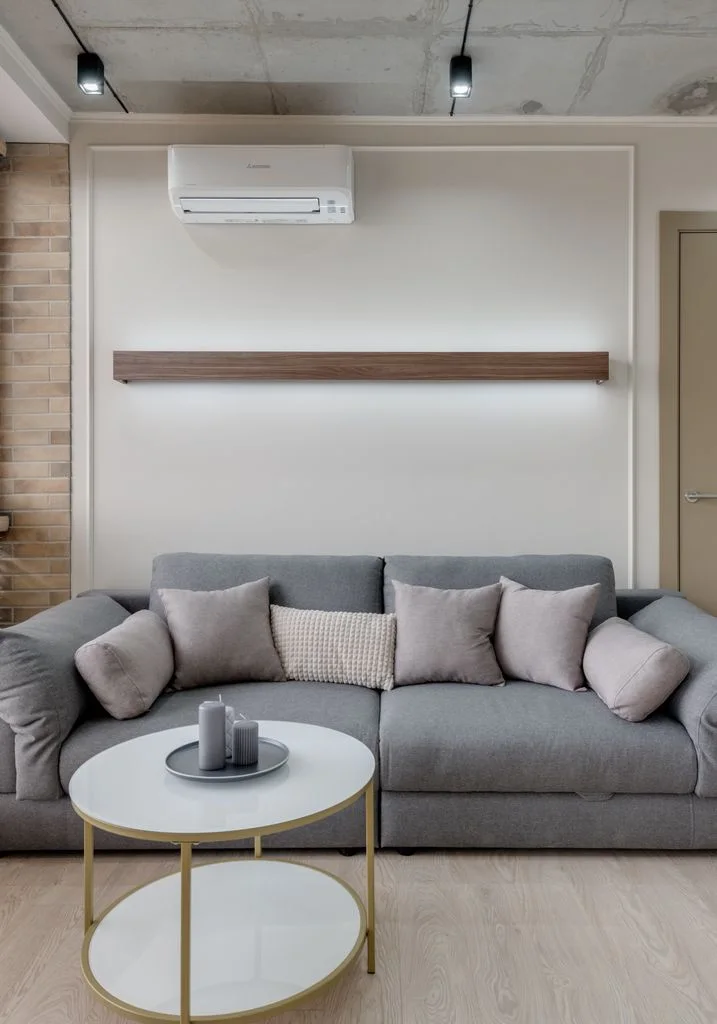
The sofa is the largest object in the room, so its size matters more than any other decision. For most apartment living rooms, a sofa between 72 and 84 inches long and no more than 35 inches deep is the sweet spot — roomy for two, small enough to leave breathing space. Apartment-size models run $500 to $1,200, and a lower back (under 32 inches) keeps sightlines open so the room feels airier. Raised legs with 5 to 7 inches of clearance let light pass underneath, visually lightening the whole piece.
Before ordering, tape the sofa’s outline on the floor with painter’s tape and live with it for a day. Check that you can walk around it and that doors and balcony sliders still open fully. Pick a performance fabric in a mid-tone: light enough to brighten the room, forgiving enough to hide everyday lint and pet hair between cleanings.
2. Layer Rugs to Define the Zone
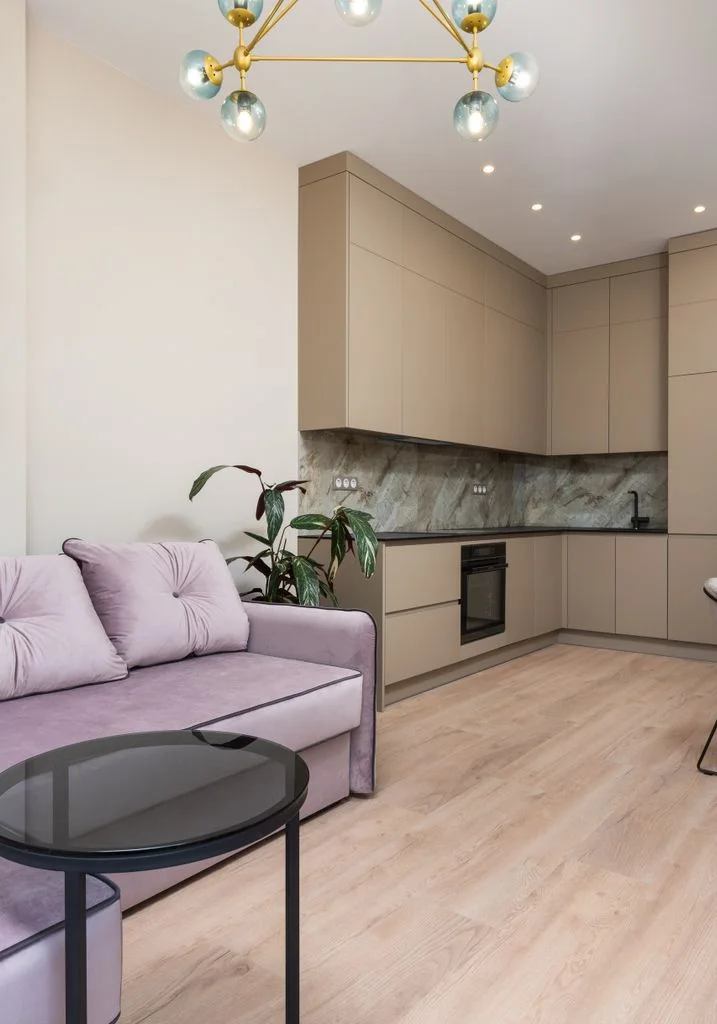
In an apartment — especially a studio or open-plan layout — a rug is what tells your brain “this is the living room.” The main rug should be big enough that at least the front legs of the sofa and chairs sit on it: 5 by 8 feet is the minimum for a small seating area, and 8 by 10 works if your room is 12 feet wide or more. An undersized rug floating in the middle of the floor is the most common reason a room feels chopped up and smaller than it is.
Layering adds the cozy, collected look. Start with a large flat-weave base rug in a natural fiber or pale neutral ($120 to $300 for an 8 by 10), then layer a smaller, softer vintage-style rug centered under the coffee table ($60 to $150). The base defines the zone; the top layer adds texture and color. In rentals, a rug also protects the floor and softens footsteps for the neighbors below.
3. Light and Airy Color Palette
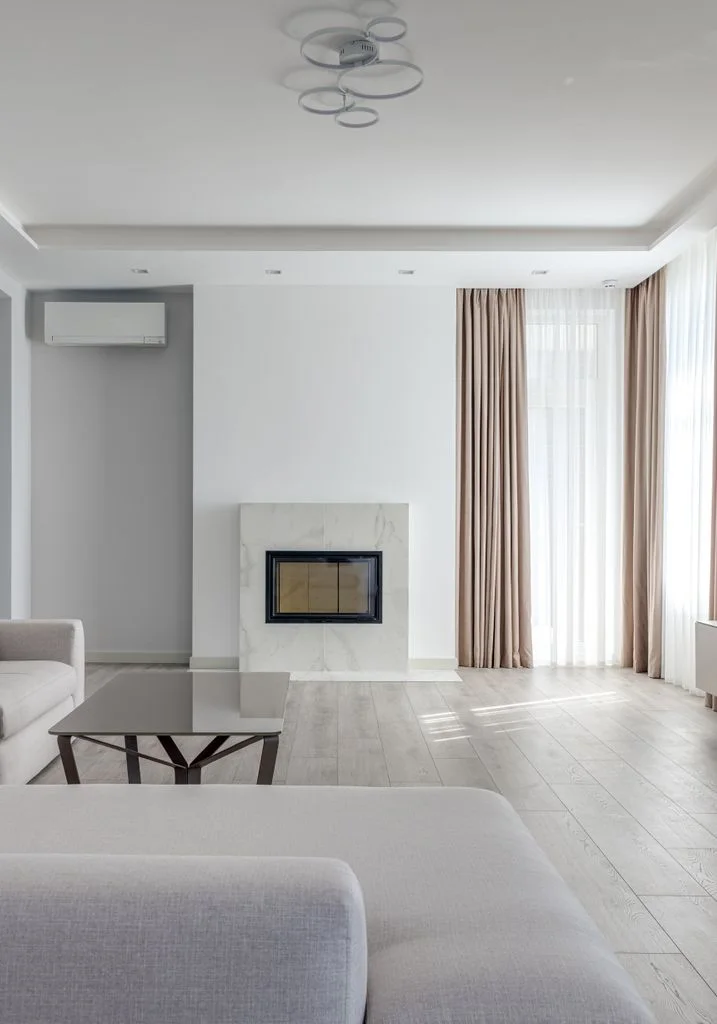
You do not need white everything, but a light base is the most reliable brightness trick there is. Aim for roughly 70 percent light neutrals across the big surfaces — sofa, rug, curtains, walls if you may paint — then 20 percent mid-tones like warm wood, camel, or sage, and 10 percent deeper accents in cushions and art. That ratio keeps the room bright without tipping into the cold, washed-out look that makes some all-white apartments feel like waiting rooms.
If your walls are a rental beige or gray you cannot change, work with their undertone. Warm beige loves cream, rust, and olive textiles; cool gray pairs better with white, pale blue, and black accents. Test with the cheapest items first — two cushion covers and a throw under $40 will tell you more than a paint swatch. For photographed apartment living rooms sorted by color and size, browsing Houzz’s living room photo gallery shows which palettes work in rooms shaped like yours.
📌 Related Articles:
4. Multi-Functional Furniture Pieces
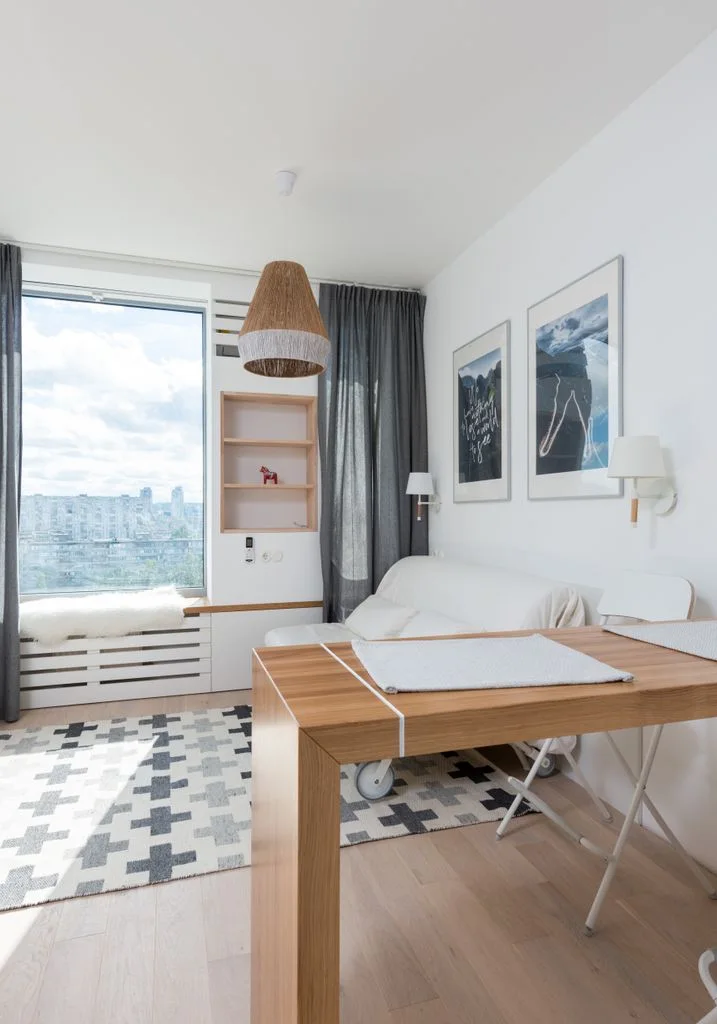
When floor space is limited, single-purpose furniture is a luxury you cannot afford. The hardest-working pieces in a small living room are a storage ottoman that holds blankets and doubles as a coffee table or extra seat ($60 to $180), a lift-top coffee table that becomes a desk and dining surface, and a narrow console behind the sofa that holds lamps and a laptop in just 10 to 12 inches of depth.
Judge every candidate by one question: does it do two jobs, or free up space somewhere else? A side table with a lower shelf replaces a separate basket; a bench with shoe storage keeps entry clutter out of the seating zone. Five multi-functional pieces at $150 each will serve you better than eight single-purpose pieces at $90 — and the room looks calmer because there is simply less furniture in it.
5. Vertical Storage and Tall Shelving
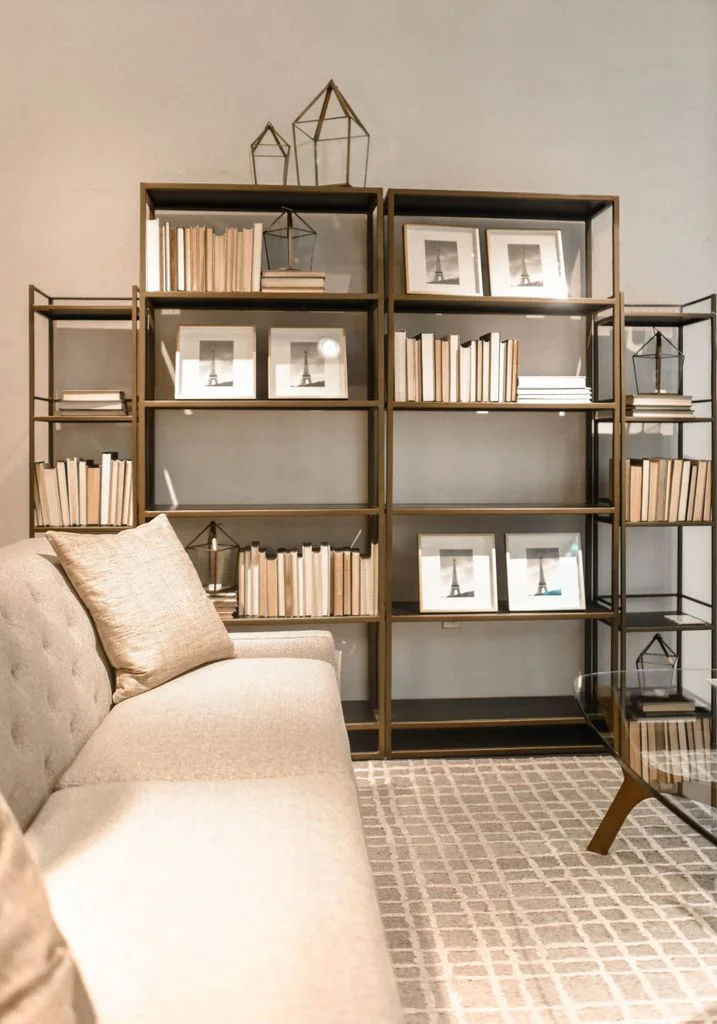
Small rooms run out of floor long before they run out of wall. A tall, narrow bookcase — 72 inches high and 24 to 30 inches wide — holds as much as a wide low dresser on half the footprint, and it draws the eye upward, making ceilings feel taller. Ladder shelves ($80 to $250) suit rentals because many need no wall fastening, though an anti-tip strap is always worth using for safety.
Style tall shelving with a stylist’s rhythm: books stacked vertically and horizontally, one plant trailing from the top shelf, objects grouped in threes with space between them. Keep heavy, everyday items between knee and shoulder height and light, rarely used things up top. Leave about a third of the shelf space empty — crowded shelves read as clutter from across the room; breathing room reads as design.
6. A Gallery Wall Without the Clutter
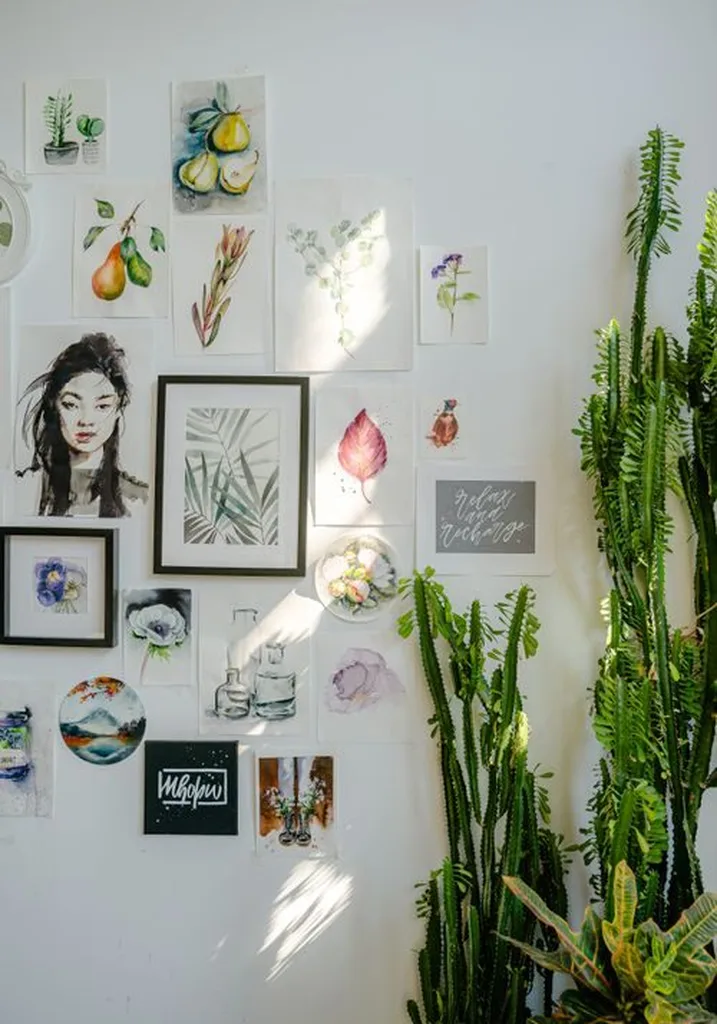
A gallery wall gives an apartment personality without using an inch of floor, but the line between gallery and clutter is planning. Lay the arrangement out on the floor or kraft paper first, keeping 2 to 3 inches between frames, and treat the collection as one single rectangle rather than scattered pieces. A grouping around 50 to 60 inches wide suits most sofa walls, hung so its center sits about 57 inches from the floor.
Unify the mix with one repeated element — all black frames, all white mats, or a shared color in the art — and combine sizes deliberately: two larger anchors (16 by 20 or bigger), a few mediums, small fillers. Renters can hang the lot with adhesive picture strips for $10 to $20 total. Add one unexpected item, like a small woven hanging, and the wall feels collected rather than copied from a catalog.
7. Mirrors That Double the Light
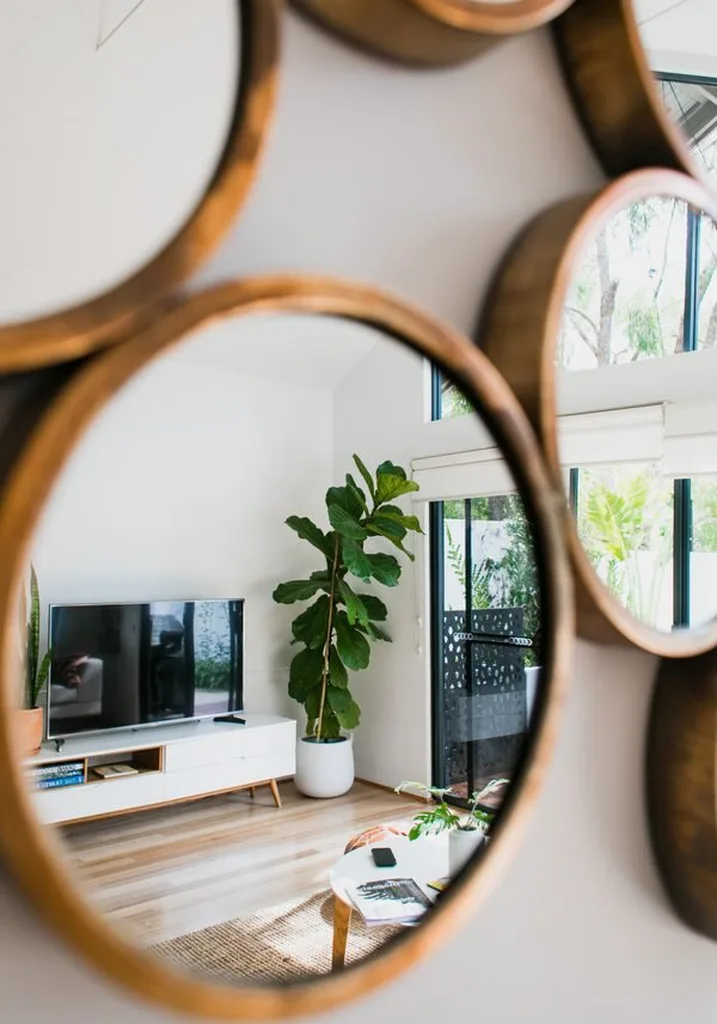
A mirror is the closest thing to a second window you can buy. Placed opposite or adjacent to your real window, it bounces daylight back into the room and visually extends the space beyond the wall. Bigger is better: at least 30 inches wide makes a real difference, and an oversized leaning floor mirror (about 24 by 65 inches, $90 to $250) needs no hanging hardware at all — perfect for rentals.
Check what the mirror reflects before committing to a spot. It should bounce back something attractive — a window, a plant, a styled shelf — not a blank ceiling or the television. Round mirrors soften rooms full of rectangular furniture; an arched shape adds the architectural detail most apartment boxes lack. On a tight budget, a grid of six smaller mirrors creates a similar light-spreading effect for under $60.
8. Cozy Textiles and Soft Layers
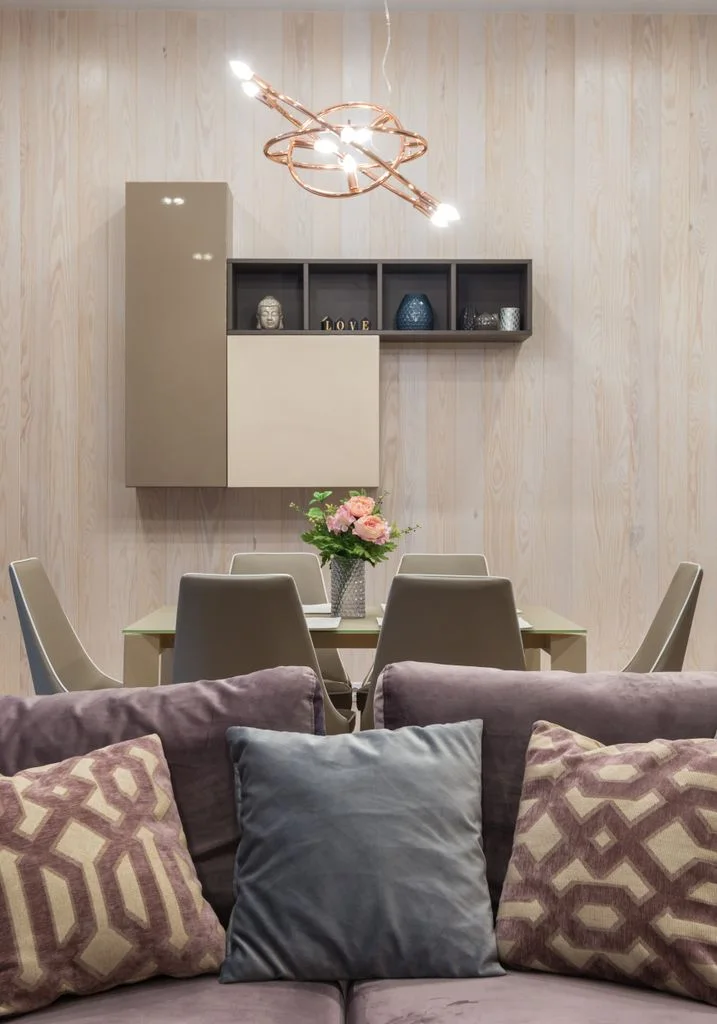
Textiles are where a bright room becomes a comfortable one. Work to a simple formula: cushions in two or three fabrics (linen, cotton, one textured weave like bouclé or knit), a throw over the sofa arm, and curtains in a natural fabric. Odd numbers photograph best — three or five cushions, 18 to 20 inches, plus one lumbar for contrast. A full refresh using covers instead of new inserts usually costs $70 to $150.
Texture does more work than color here. In a neutral room, the nubby throw, jute rug, and velvet cushion stop the space looking flat, because each surface catches light differently. Repeat one element — the same cream in the curtains and two cushions — so the layers feel related. Store the off-season set vacuum-bagged under the sofa; rotating textiles twice a year is the cheapest room makeover that exists.
9. Plants for Life and Height
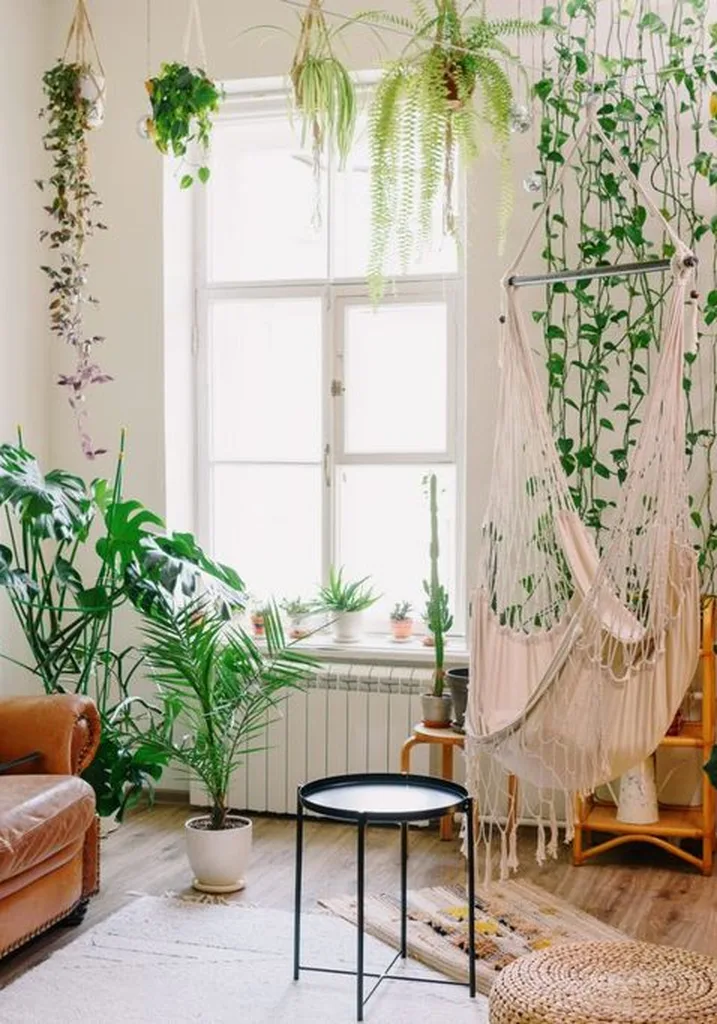
Plants add the one thing furniture cannot: irregular, living shapes that break up the straight lines of apartment architecture. Use three heights for the styled look — a tall floor plant in an empty corner (fiddle-leaf fig, olive tree, or a sturdy snake plant in a 10- to 12-inch pot, $30 to $80), a medium plant on a stand or side table, and something trailing from a high shelf, like a $12 pothos, which is nearly impossible to kill.
Match plants to your actual light, not your wish list. Shaded and north-facing apartments do best with snake plants, ZZ plants, and pothos; bright south-facing windows can support olive trees and birds of paradise. Group small plants in odd numbers on a tray so they read as one arrangement. If your track record is poor, one large quality faux tree plus two small real plants gives the look with almost no maintenance.
10. Layered Lighting at Three Levels
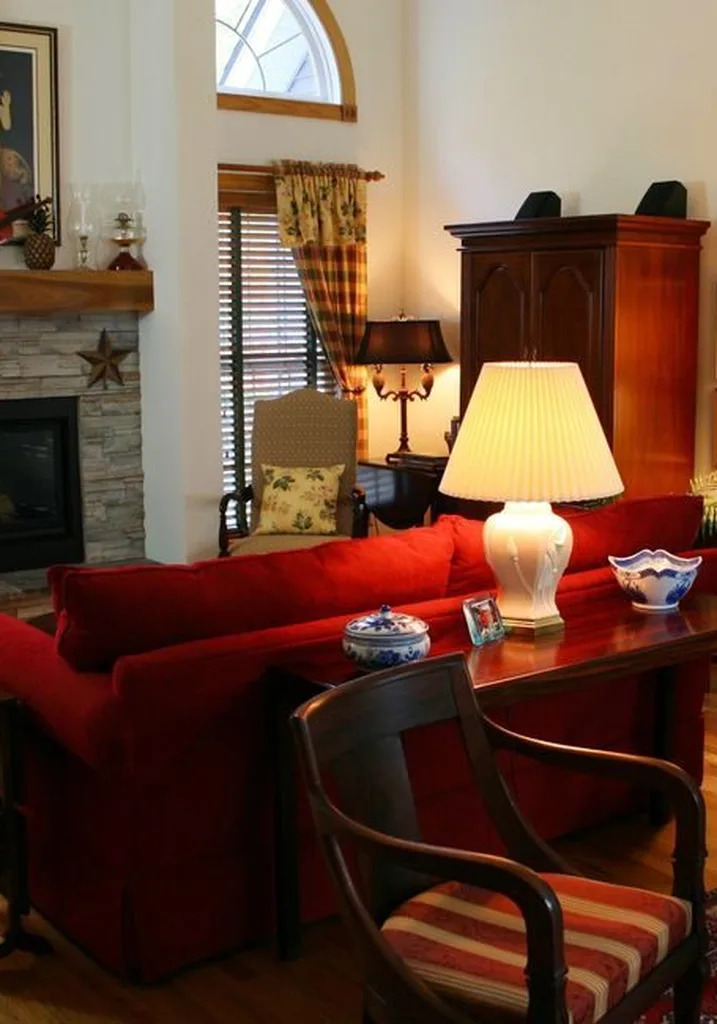
Most apartment living rooms rely on one ceiling fixture, and that flat light is why the room looks dull in every photo after 6 p.m. Layer light at three levels instead: overhead light for general brightness, mid-level light from table and floor lamps at seated eye height for faces and reading, and low accent light — a small shelf lamp, LED candles, a picture light — for warmth. Three to five sources in a small room is the standard stylists use, not excess.
Choose bulbs in the 2700K to 3000K warm range and keep every bulb the same temperature; mixing warm and cool makes a space feel unsettled. A floor lamp with an upward shade bounces light off the ceiling and makes it feel higher ($50 to $120). Renters can add plug-in wall sconces ($40 to $90 a pair) with cord covers — no electrician, no hardwiring, and everything moves with you.
11. A Compact Coffee Table Setup
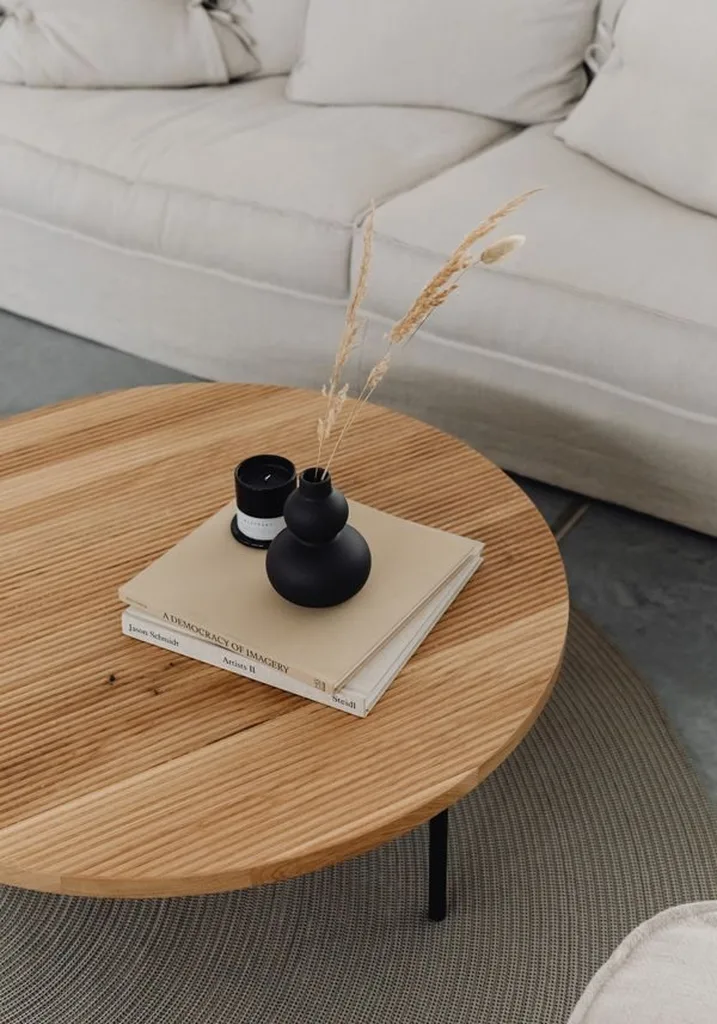
The right coffee table for an apartment is smaller than you think. Leave 14 to 18 inches between sofa edge and table — close enough for a drink, wide enough to walk past — and choose a table about two-thirds the length of your sofa. Round or oval tables (30 to 36 inches across) are small-room champions: no sharp corners, and traffic flows around them. Glass or acrylic tops keep sightlines open and the footprint feeling light.
Style the surface with three heights: something tall (a small vase or candlestick), something flat (a stack of two books or a tray), something organic (a small plant or bowl). A tray ($15 to $35) corrals remotes and coasters into one movable unit — lift it off and the table is clear for games or a laptop. Truly tight on space? Skip the table and use two small stools that separate or group as needed.
12. Curtains Hung High and Wide
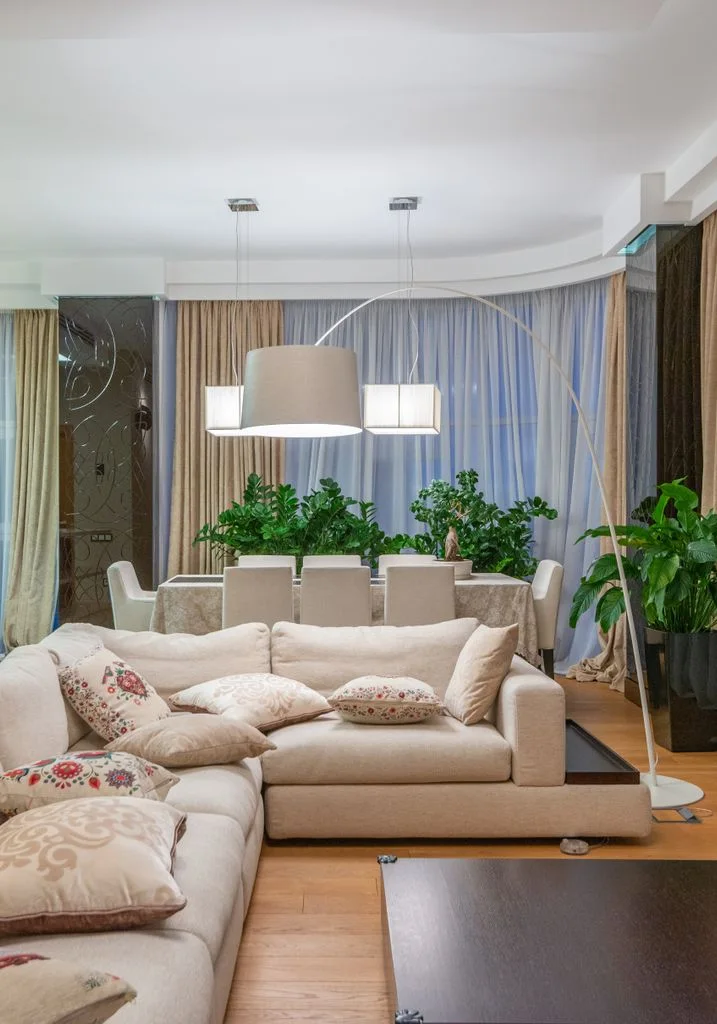
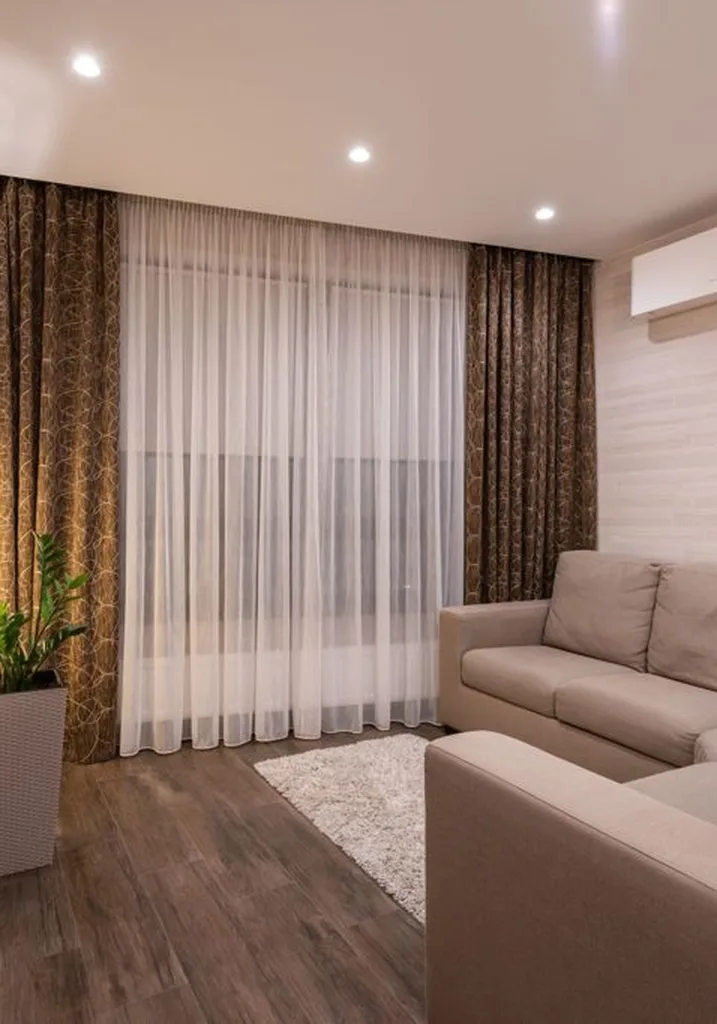
This is the highest-impact trick on the list, and it costs an hour, not a fortune. Hang the rod 4 to 6 inches above the window frame — or right at the ceiling line — and extend it 8 to 12 inches beyond the frame on each side. The window instantly looks taller and wider, the ceiling appears higher, and with the curtains open, fabric frames the wall instead of covering glass, so more daylight gets in.
Panels should just kiss the floor or puddle by half an inch; curtains stopping at the sill shrink the room visually. Light-filtering linen-look panels ($25 to $60 a pair) soften daylight while keeping privacy. Renters have three no-drill options: tension rods inside the frame, clamp brackets, and adhesive rod holders — all removable in minutes. If your lease allows two small screws, a ceiling-mounted track gives the most polished, hotel-like result.
13. An Entryway Landing Strip
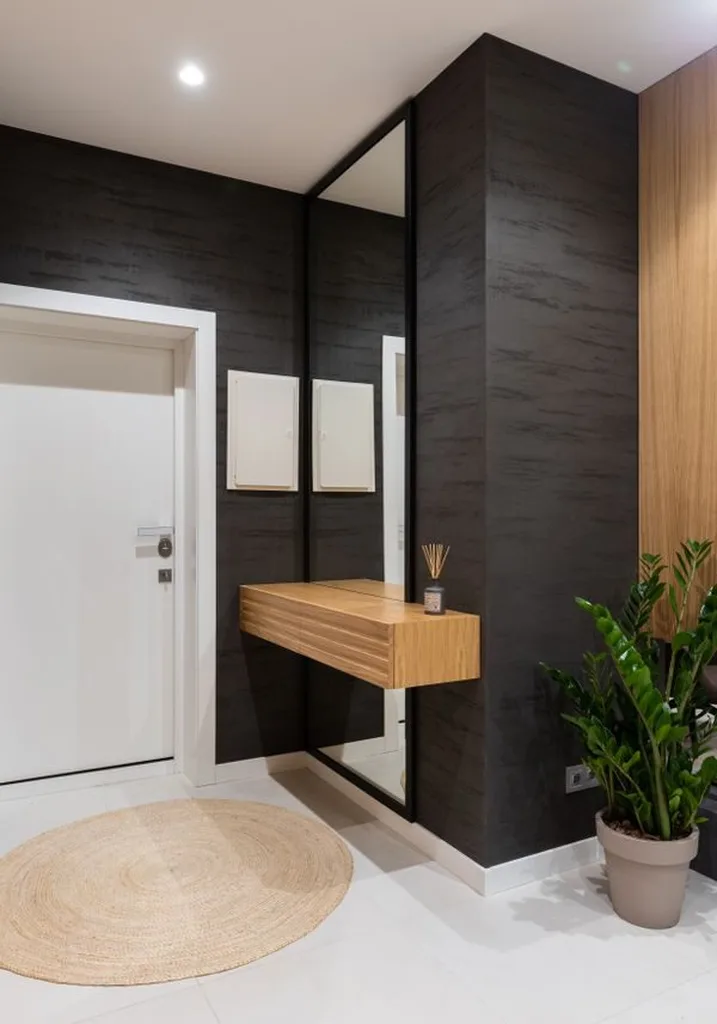
Many apartment living rooms double as the front door, and without a defined entry, coats, keys, and mail migrate across the whole room. A landing strip solves it in about 3 square feet: a narrow console or shelf (24 to 36 inches wide, under 10 inches deep), a tray for keys, two or three hooks or a slim coat rack, and a washable mat to mark the zone. Total cost is typically $80 to $200.
Position the strip on the wall the door opens against, with one mirror or framed print above the shelf so it feels intentional rather than purely practical. A lidded basket underneath swallows shoes, umbrellas, and dog leads. The effect is the real win: guests read it as an entryway, you get a place to drop everything, and the seating area beyond stays visually clean — which makes the living room feel larger.
14. A Media Wall That Looks Built-In
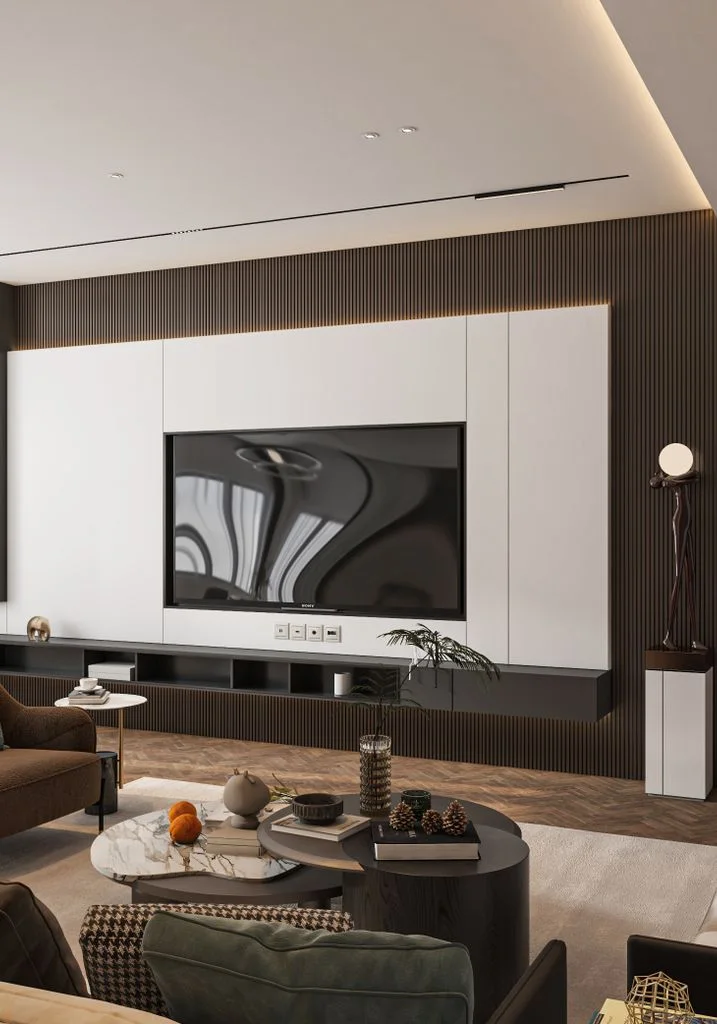
A television floating on a blank wall with cables dangling is what makes many apartment living rooms look unfinished. The built-in look comes from framing the TV with low, symmetrical furniture: a long, low media console at least 6 inches wider than the TV on each side ($150 to $450), with a tall bookcase or ladder shelf on each side in a matched finish. Hang the TV with its center about 42 inches from the floor, and route cables through a paintable cord cover — about $15 and fully removable.
If matching furniture is not in the budget, fake the architecture: a rectangle of removable wallpaper or a slightly deeper paint shade behind the TV creates a “panel” that anchors the setup. Style the console with two balanced groupings — books and a plant on one side, a lamp or framed photo on the other — and keep the middle clear. The wall then reads as designed, not accidental.
15. A Dining Corner Inside the Living Room
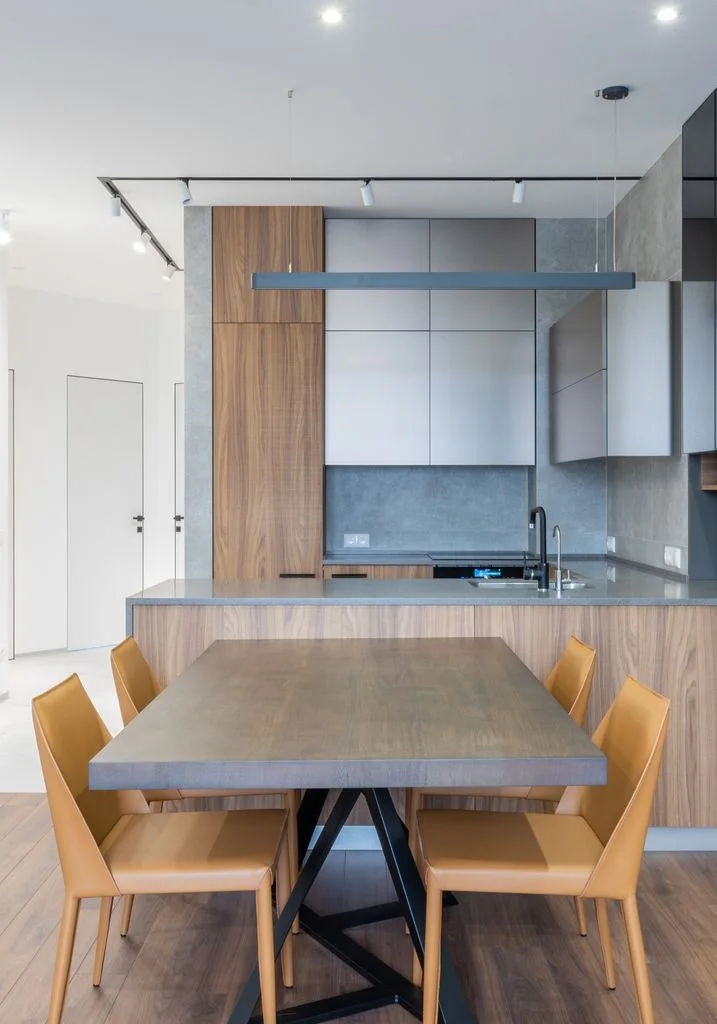
Eating every meal on the sofa gets old fast, and a small dining corner makes an apartment feel like a home with real rooms. A round table 30 to 36 inches across seats two to four and fits a corner or bay that seating furniture cannot use well. Drop-leaf and extendable tables ($120 to $350) stay compact daily and open for guests. Allow 24 inches of table space per person and at least 24 inches behind chairs to pull them out — 36 if you have it.
Define the corner as its own zone: a small flat-weave washable rug under the table, a pendant or plug-in swag lamp centered above it, and one piece of art on the adjacent wall. Chairs that tuck fully under the table, or a bench on the wall side, keep the footprint minimal. In a studio, this corner does triple duty as dining table, desk, and project space — the hardest-working 10 square feet in the apartment.
16. Warm Wood Tones for Balance
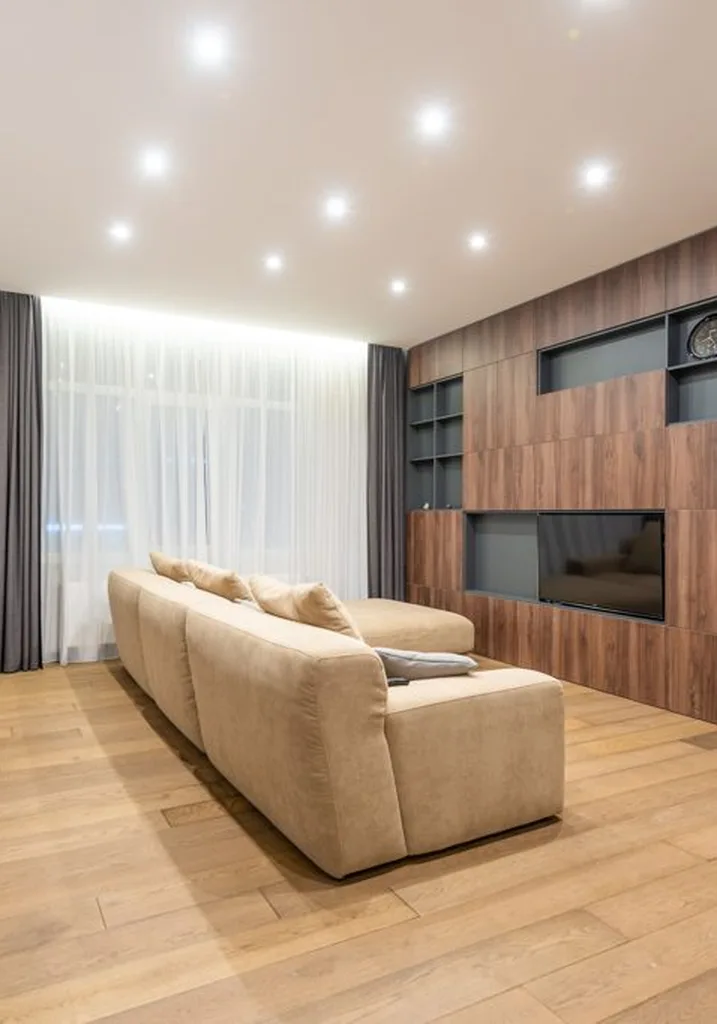
Light palettes need warmth or they drift toward sterile, and wood is the easiest way to add it. You do not need matching furniture — a room where every piece is the same tone looks like a showroom set. Aim for two or three related tones, such as white oak floors, a walnut coffee table, and a rattan accent, and repeat each tone at least twice so it looks deliberate. In most apartments the floor is already your largest wood surface, so choose pieces that sit comfortably against it.
If your furniture leans cool or gray, warm it up with small swaps before replacing anything big: a wood tray, woven baskets, a teak side stool, honey-finish frames — $15 to $60 each. Peel-and-stick wood-look panels behind the TV add the same warmth in a rental for under $100 and come down cleanly. The goal is bright, but grounded.
17. Style with Books and Personal Art
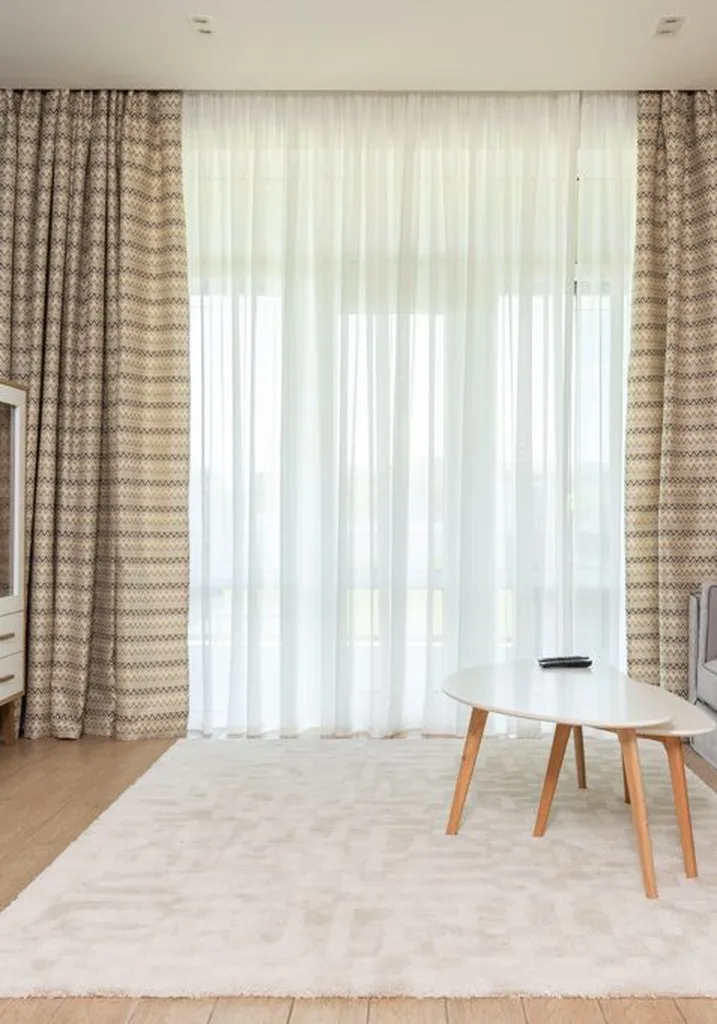
The rooms people save on Pinterest are never the anonymous ones — they are the ones with a life visible in them. Coffee table books, a framed concert poster, photos from an actual trip, a ceramic piece from a market: these turn apartment decor into your decor. Books are the cheapest styling tool there is — stack two or three, largest at the bottom, spines in a coordinated color range, topped with one small object like a candle or tiny plant.
For art on a budget, think beyond prints. Frame a beautiful scarf, a vintage book page, wallpaper samples, or your own photos enlarged — an 18 by 24 inch print costs about $15 to $25, and good thrift-store frames run $3 to $10. Keep personal pieces at eye level where you actually look: above the sofa, across from your usual seat, beside the reading chair. One wall that is unmistakably yours does more than any expensive accessory.
18. Foldable and Nesting Pieces
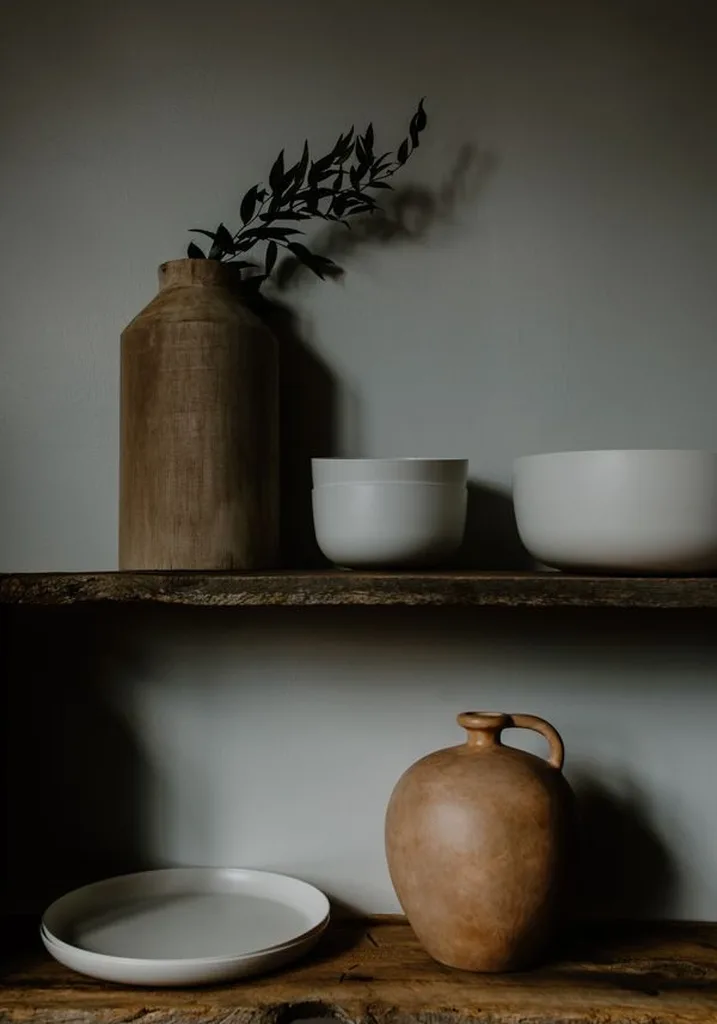
Flexible furniture is how a small living room hosts eight people one night and feels spacious the next morning. Nesting tables ($60 to $150 for a set of two or three) tuck into a 16-inch footprint daily, then spread around the room as drink tables for guests. Folding chairs have outgrown the metal card-table look — wooden and upholstered versions ($40 to $90 each) hang on a wall hook or slide behind the sofa, ready in seconds.
Also consider a drop-leaf side table that works as a plant stand most days and a laptop desk when needed, and a rolling bar cart ($50 to $130) that serves as side table, drinks station, or mobile bookshelf. The buying rule: if a piece can shrink, stack, roll, or fold, it earns its place. Check folded dimensions against a real storage spot — closet wall, gap beside the bookcase — before you buy, not after.
19. Seasonal Swaps for Small Spaces
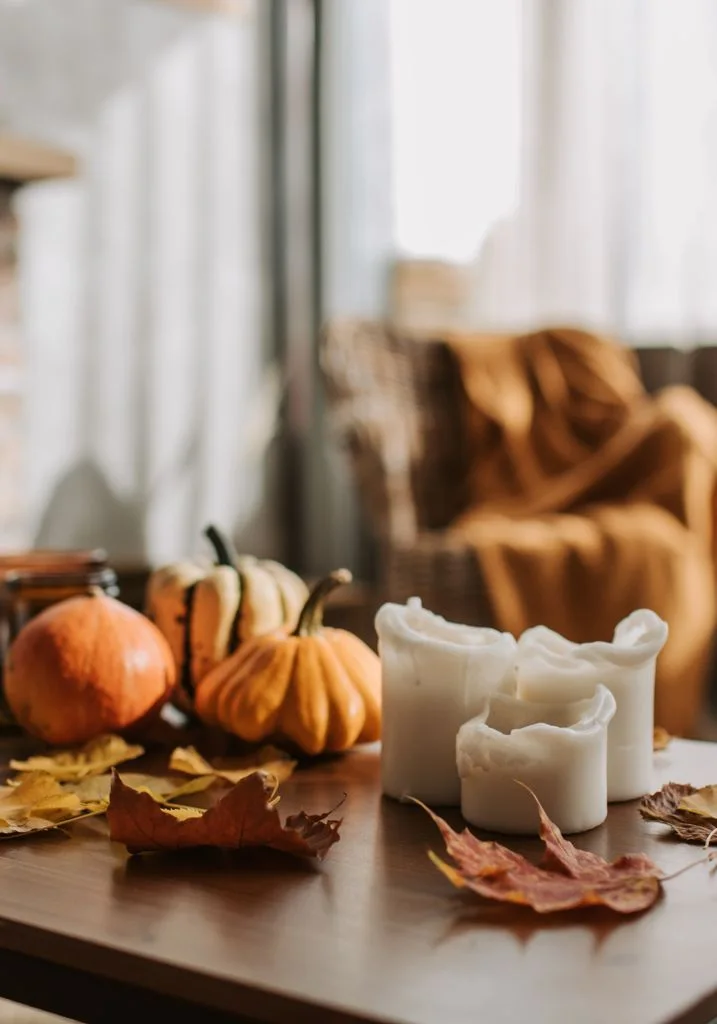
A small room cannot absorb a whole new scheme every season, but it does not need one. The stylist’s approach is a fixed neutral base — sofa, rug, curtains, furniture — with a small rotating layer on top: cushion covers, one throw, a table centerpiece, a wreath or garland. Two storage bins of seasonal pieces (spring/summer and fall/winter) are enough, at roughly $40 to $80 per season built gradually from sales and thrift finds.
Spring might mean pale linen cushion covers and a vase of branches; fall brings the same sofa back with rust and camel textiles and a bowl of pinecones. Because the base never changes, the room always feels coordinated, and each swap takes under an hour. This is also the most Pinterest-friendly habit on the list: the same room, restyled, gives you fresh photos and fresh energy four times a year — without buying furniture ever again.
How to Choose the Right Pieces for an Apartment Living Room
Start with measurements, not shopping. Write down the room’s length and width, wall lengths between doors and windows, and the delivery path — apartment hallways, elevators, and stair turns rule out more sofas than taste ever does. Sketch the room at rough scale and place the sofa first, then the rug, then everything else. Keep walkways at 30 to 36 inches, leave 14 to 18 inches between sofa and coffee table, and never block a radiator, vent, or balcony door swing.
Then buy in order of visual impact: sofa, rug, curtains, lighting, storage, and only then accessories. Each large piece narrows the choices for the next — the rug must fit the sofa; the curtains must suit both. Apply the two-job test to every piece, and favor the lightest, most movable version that does the job. If two pieces compete for the budget, choose the one you touch or look at every day.
Apartment Living Room Decor on a Budget
Under $150 — the refresh tier. Two cushion covers and a throw, one large plant, adhesive strips for a gallery wall, warm-white bulbs for every lamp, and a tray for the coffee table. This tier changes how the room feels at night and in photos, which is most of what “decorated” means. For real rental budgets and before-and-after results, the small-space makeovers on Apartment Therapy are the best free research you can do.
$150 to $600 — the foundation tier. The right-size rug, curtains hung high and wide, a proper floor lamp, and a leaning mirror. These four fix light, scale, and zone definition — the things that make a room feel bigger and brighter — and every one moves with you to the next apartment.
$600 to $1,500 — the anchor tier. An apartment-size sofa that truly fits, a low media console, and tall shelving. Buy slowly and measure twice; a sofa that fits perfectly is worth more than three trendy accessories, and spread over the years you will use it, it costs less per month than the impulse buys it replaces.
Common Mistakes to Avoid
Buying furniture before measuring. The oversized sectional is the most regretted apartment purchase. Tape outlines on the floor first, and check delivery paths, not just the room.
Pushing everything against the walls. It feels like it creates space, but it leaves a dead zone in the middle and makes the room read as a waiting area. Pull the sofa 3 to 5 inches off the wall and anchor seating on a rug instead.
Choosing a rug that is too small. A postage-stamp rug under just the coffee table visually shrinks the seating area. Front legs of all seating on the rug, minimum — size up when between two options.
Relying on one overhead light. A single ceiling fixture flattens everything and leaves corners in shadow, making the room feel smaller after dark. Add a floor lamp and a table lamp before any other accessory.
Filling every surface. Small rooms need empty space to breathe. If every shelf, table, and wall is full, nothing stands out. Edit until about a third of your shelf and table space is open.
Ignoring your lease. Painting, drilling, or swapping fixtures without permission can cost more in deposit deductions than the decor was worth. Every idea here has a removable, permission-free version — use it, and photograph the room’s original condition before you start.
📌 Also Read:
Frequently Asked Questions
What is the best sofa size for an apartment living room?
A sofa between 72 and 84 inches long and under 35 inches deep suits most apartment living rooms, seating two to three people while leaving walkways of at least 30 inches. In a studio or very small room, drop to a 60- to 70-inch loveseat and add a flexible accent chair instead of forcing a full-size couch.
How can I make my apartment living room look bigger without painting?
Use the four no-paint levers: a large light-colored rug to unify the floor, curtains hung high and wide to fake bigger windows, a big mirror opposite the light source, and layered lamps so no corner stays dark. Low-backed furniture raised on legs, pulled slightly off the walls, adds to the effect — no wall color change required.
What colors make a small living room feel brighter?
Warm whites, cream, pale greige, and soft sage reflect the most light while staying comfortable to live with. Build the room at roughly 70 percent light neutrals, 20 percent mid-tones like wood and camel, and 10 percent deeper accents. If your rental walls are beige or gray, match textiles to their undertone — warm with warm, cool with cool.
How do I decorate a living room in a studio apartment?
Treat the studio as zones, not one room. A rug defines the living zone, a low bookcase or the sofa’s back acts as divider, and a small round table creates a dining corner. Keep one consistent color palette across all zones so the space feels unified, and choose foldable, multi-functional pieces so each zone can expand when needed.
What should I buy first when decorating an apartment living room on a budget?
Start with the rug and curtains — they fix scale and light for the least money per visual impact — then add a floor lamp and a mirror. Those four, in the $150 to $600 range combined, transform the room’s bones. Accessories, art, and textiles come last: they are the easiest to find cheaply and the most fun to collect over time.
Conclusion
A bigger, brighter apartment living room is not about square footage or a landlord who allows paint — it is about decisions in the right order. A sofa that fits, a rug that defines the zone, curtains hung high, light layered at three levels, and furniture that works two jobs will change how your room feels more than any single expensive purchase. Start with the two or three ideas that fix your biggest frustration, live with them a week, then add the next layer.
If this list helped you see your space differently, save it to your apartment decor board on Pinterest so it is there when the next idea strikes — and when you restyle for the season, you will have all 19 ideas, measurements, and budgets in one place. Your apartment is not a waiting room for a future house. Decorated with intention, it is the home.