Top 17 Cotton Farmhouse Bedroom Textiles Ideas for a Cozy, Layered Look

There is a reason cotton farmhouse bedroom textiles never go out of style. Crisp white sheets, a soft washed duvet, a well-loved quilt folded at the foot of the bed — these are the layers that make a farmhouse bedroom feel calm, collected, and genuinely restful. Cotton is the thread that ties the whole look together: breathable, washable, and softer with every laundry day, it is the one fabric that looks better slightly rumpled than perfectly pressed.
In this guide you will find 17 cotton farmhouse bedroom textiles ideas you can mix, match, and layer, from classic white percale bedding to gingham dresser scarves, feed-sack pillows, and chunky knit throws. Every idea includes the fabric to look for, realistic price ranges, and the styling moves that keep the look cozy and collected instead of cluttered. You will finish knowing exactly which layers to buy first, how to combine patterns without clashing, and what to skip.
Save this list before your next bedroom refresh. Most of these ideas are simple swaps — sheets, a throw, a pillow, a curtain — and they build on each other, so start with one statement layer and let the rest follow.

Overview
Cotton farmhouse bedroom textiles are built on three things: natural fibre, soft colour, and honest texture. The palette stays close to nature — whites, creams, oatmeal, soft grey, and faded red or navy checks — while the texture does the decorating. A flat percale sheet, a nubby waffle throw, a quilted coverlet, and a knit blanket can share one bed without a single bold print, because the variety of weaves keeps the eye moving.
The farmhouse part of the look comes from the details: ruffles, ticking stripes, gingham, patchwork, tassels, and feed-sack prints. None of these is fussy on its own, and that is the point. Cotton farmhouse textiles are meant to be used every day, washed often, and lived with — a bedroom that invites you to climb in and stay a while, not a showroom you are afraid to touch. Buy 100% cotton where it touches skin, layer two or three textures at a time, and repeat one accent colour in small doses across the room.
Key Takeaways
- Start with the sheets: crisp white cotton percale or a washed cotton duvet sets the base, then layer quilts, coverlets, and throws on top.
- Mix weaves, not colours: percale, waffle, knit, and quilted cotton in one tight neutral palette looks layered and intentional.
- One pattern family per bed: pick gingham, plaid, or patchwork as your lead print and keep everything else solid or subtly textured.
- 100% cotton where it counts: sheets, pillowcases, and duvet covers should be pure cotton for breathability; blends are fine for curtains and throws.
- Ruffles and tassels in small doses: one ruffled skirt or a pair of tasselled pillows adds farmhouse charm without tipping into frilly.
- Wash before you style: a first wash softens new cotton, removes sizing, and gives it the relaxed, lived-in drape farmhouse bedding is known for.
1. Crisp White Cotton Percale Bedding
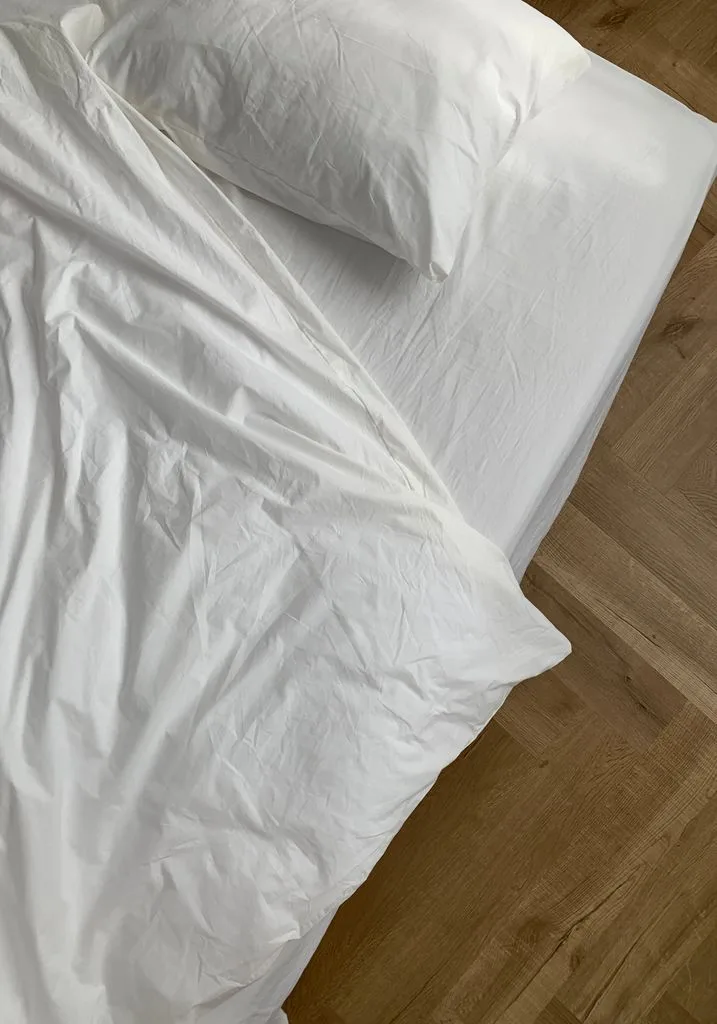
White cotton percale is the foundation of nearly every farmhouse bedroom, and for good reason. The plain one-over-one weave feels cool and crisp against the skin, breathes beautifully in warm weather, and holds a neat, hotel-like look that makes the whole room feel clean. A 200 to 400 thread count in long-staple cotton is the sweet spot — high enough to feel smooth and last for years, low enough to stay breathable and affordable.
Style white percale as the quiet base and let everything else do the talking. Pair it with a quilt or coverlet in a soft print, add two sleeping pillows and two euro shams, and finish with a folded throw at the foot of the bed. Apartment Therapy’s editors tested cotton percale sheets for weeks and found that the best sets get softer with every wash, so buy the best quality you can afford and expect it to improve with age. Expect to pay $80 to $200 for a quality queen set in 100% cotton.
2. Washed Cotton Linen-Blend Duvet Cover
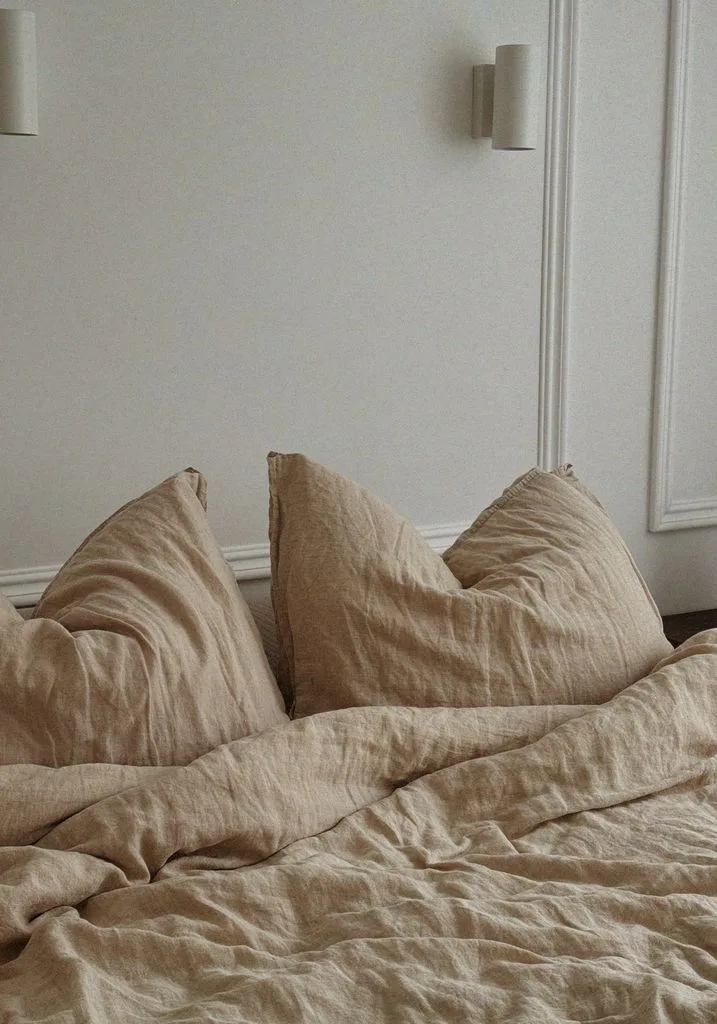
A washed cotton linen-blend duvet cover is the fastest way to give a farmhouse bedroom that relaxed, slept-in look. The cotton keeps it soft and easy to care for, while the linen adds a gentle slub and a beautiful drape that pure cotton cannot quite match. Pre-washed finishes mean it arrives soft instead of stiff, with a slightly rumpled texture that looks intentional rather than messy.
Choose undyed natural, oatmeal, or soft white for the most versatile base, then layer a quilt over the lower third and a knit throw across one corner. Button or tie closures read more farmhouse than a hidden zip, and they are easier to repair. A queen duvet cover in a cotton-linen blend typically runs $90 to $220; wash it on cold and line-dry when you can, because the linen fibres soften dramatically over the first half-dozen washes.
3. Gingham Cotton Dresser Scarf
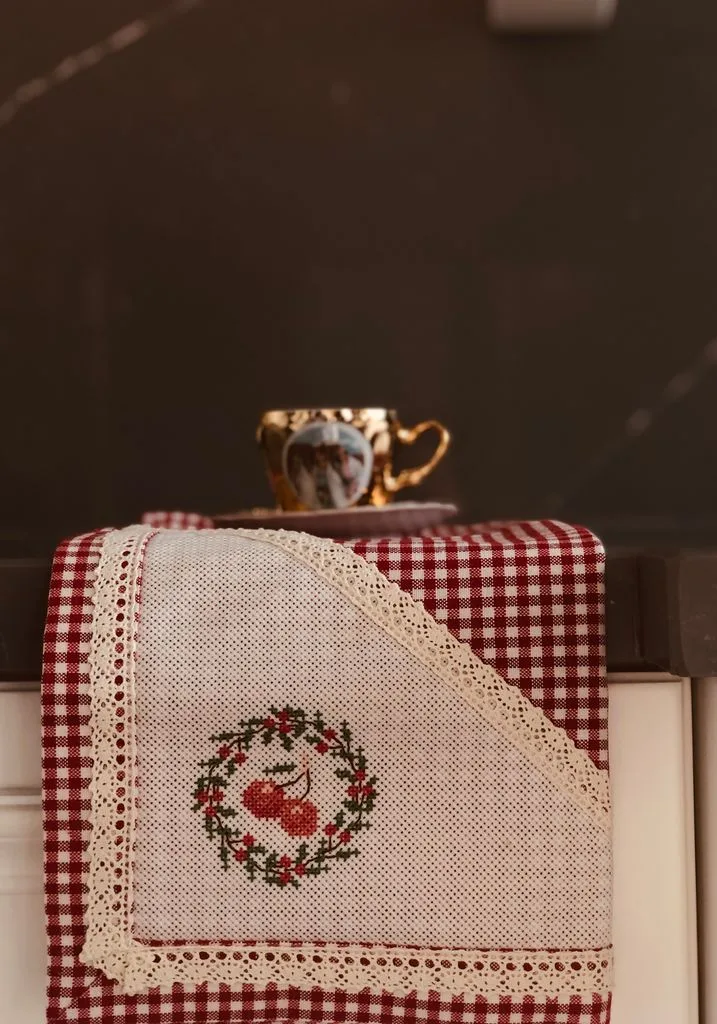
A gingham cotton dresser scarf is a small, inexpensive piece that delivers outsized farmhouse charm. Draped across the top of a wooden dresser or chest, the little red-and-white check instantly says country cottage, protects the wood from perfume bottles and jewellery boxes, and ties the bedroom’s textiles to the furniture. Look for 100% cotton with a woven — not printed — check, so the pattern stays crisp after washing.
Keep the scarf simple: a hemmed rectangle that overhangs the dresser by a few inches on each side, with no lace or fringe competing with the check. Style it with a small vase of dried stems, a stack of two books, and a candle, and leave the rest of the surface clear. A quality cotton gingham scarf costs $12 to $30, and because it is a flat piece of fabric, it is one of the easiest farmhouse textiles to sew yourself from a half-yard of gingham cotton.
📌 Related Articles:
4. Heirloom Patchwork Cotton Quilt
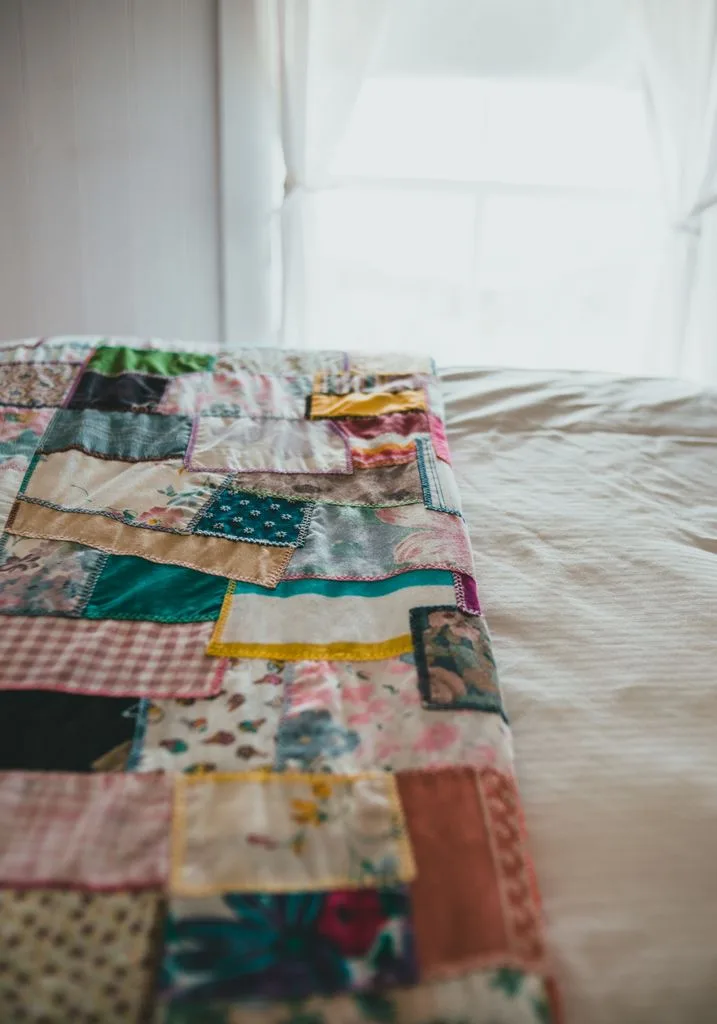
A patchwork cotton quilt is the soul of a farmhouse bedroom. Whether it is a genuine vintage find, a handmade gift, or a new quilt in reproduction feed-sack prints, the mix of small-scale florals, checks, and solids adds colour and history without overwhelming the room. Cotton batting keeps it light enough for year-round use, and the quilting stitches themselves become part of the texture.
Fold the quilt in thirds across the foot of the bed rather than spreading it flat — you get the colour and pattern as an accent band, and the bed still shows its crisp sheets and duvet above it. If you are buying new, look for 100% cotton top and backing with a visible hand-quilted or hand-tied finish, and expect $120 to $300 for a queen. Wash quilts rarely and gently, on cold with mild detergent, and air-dry flat so the batting stays even.
5. Ruffled Cotton Bed Skirt

A ruffled cotton bed skirt hides the box spring and the under-bed storage in one graceful move, and it is the detail that makes a farmhouse bed look finished. White or natural cotton with a soft gathered ruffle suits almost every farmhouse style, from modern to vintage, and it softens the hard lines of a tall bed frame. Choose a drop length that just brushes the floor — 14 to 16 inches fits most standard frames.
Fit matters more than fabric here, so measure your bed’s drop before ordering and pick a split-corner style if your bed has a footboard. Cotton skirts wash easily and press well, which matters because a wrinkled skirt ruins the effect. A good cotton bed skirt costs $30 to $70; if you sew, a gathered skirt from two yards of cotton sheeting is a satisfying weekend project, and you can match it exactly to your bedding.
6. Soft Grey Cotton Bedding for a Calm Farmhouse Look

Soft grey cotton bedding is the quiet alternative to all-white farmhouse style, and it suits bedrooms that need to feel calm rather than bright. A pale grey duvet or sheet set cools down a sunny room, pairs beautifully with natural wood and black metal accents, and hides the odd wrinkle far better than white. Keep the grey light — dove, mist, or pale stone — so the room stays airy instead of gloomy.
Layer grey bedding with white pillows and a cream throw to stop it feeling flat, and add one warm accent such as a wooden tray or a terracotta pot on the nightstand. Grey works in every season: cool and fresh in summer, cosy under a quilt in winter. A quality grey cotton set in percale or sateen runs $70 to $180 for a queen, and it is one of the easiest farmhouse looks to live with because it forgives pet hair, dust, and the odd coffee splash.
7. Buffalo Check Cotton Throw Blanket

A buffalo check cotton throw is the boldest pattern a farmhouse bedroom can carry, so use it as a single accent and let it do the work. The big black-and-white or red-and-white squares read instantly as country, and a cotton throw draped diagonally across the foot of the bed adds contrast to an otherwise neutral palette. Look for woven cotton rather than printed fleece — the woven check has a crisper edge and washes without pilling.
Keep the rest of the bed quiet when buffalo check is on it: white or cream sheets, a solid duvet, and plain pillows, so the check is the only pattern in the room. One throw is enough; a matching pillow or curtain in the same check will tip the room into theme-park territory. A woven cotton buffalo check throw in throw size costs $25 to $60, and it doubles as a picnic blanket, a sofa throw, and a lap blanket on cold evenings.
8. Waffle Weave Cotton Throw
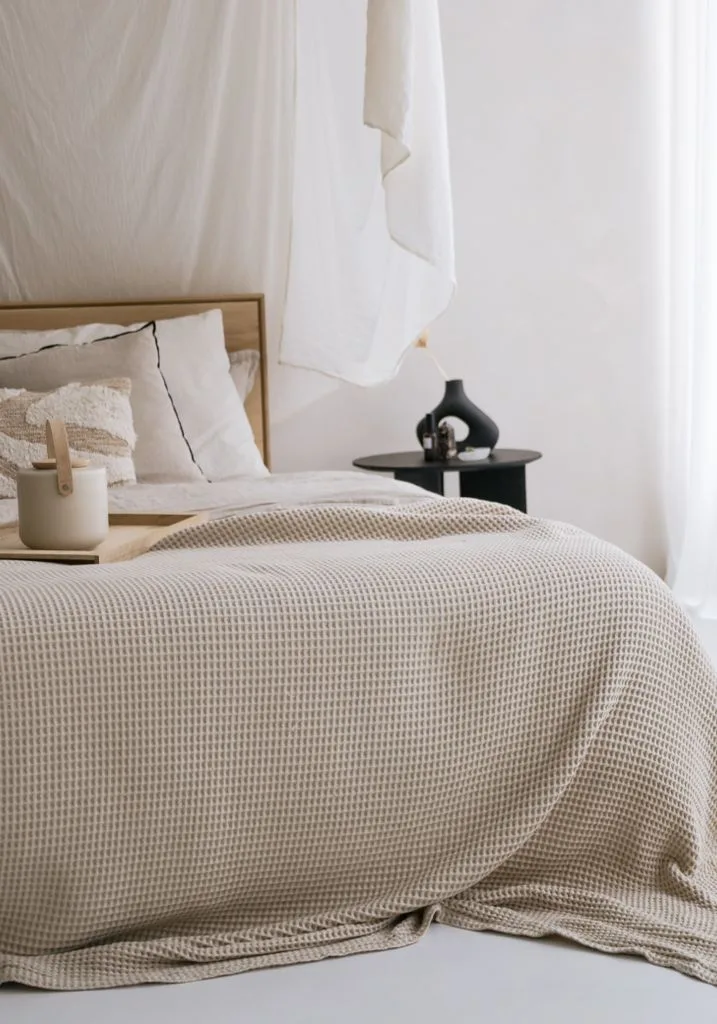
A waffle weave cotton throw adds texture you can see from across the room, which is exactly what a plain farmhouse bed needs. The little honeycomb weave traps air, so the throw feels warmer than its weight suggests, and the raised grid catches light and shadow in a way flat cotton cannot. Natural, oatmeal, or stone colours show the weave best, and the fabric gets softer — never flatter — with washing.
Drape a waffle throw loosely across the lower third of the bed with one corner folded back, or fold it in a neat rectangle at the foot for a tidier look. It layers beautifully over a quilt in summer and under a heavier blanket in winter, so it earns its place year-round. A cotton waffle throw in a generous 50 by 60 inches costs $30 to $70; buy one size larger than you think you need, because waffle weave shrinks a little on its first hot wash.
9. Cotton Canvas Curtains with Tab Tops
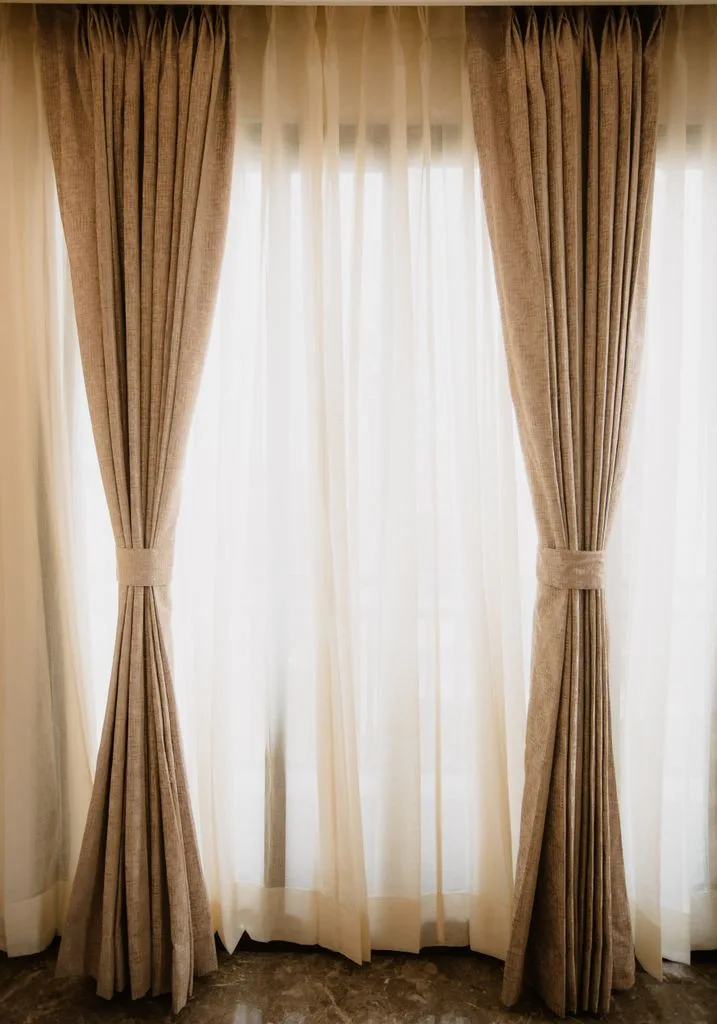
Cotton canvas curtains with tab tops bring farmhouse structure to the window without any fuss. The medium-weight canvas hangs in soft, straight folds, filters light gently, and suits the simple lines of a farmhouse bedroom far better than sheer voile or heavy velvet. Tab tops — fabric loops over the rod — are the most casual hanging style, and they suit wooden or black metal rods perfectly.
Hang the rod 4 to 6 inches above the window frame and 3 to 4 inches wider on each side, so the curtains frame the window rather than covering it. Natural, oatmeal, or white canvas works with every wall colour, and the fabric is sturdy enough to survive regular washing. Expect $40 to $100 per panel for ready-made cotton canvas curtains; unlined panels are fine for bedrooms that already have blinds, while lined panels add privacy and insulation for street-facing windows.
10. Layered Cotton Matelassé Coverlet

A cotton matelassé coverlet is the lightweight layer that makes a farmhouse bed look professionally styled. The raised woven pattern — usually a small geometric or floral design — gives the bed texture and structure without adding the weight of a quilt, and it looks just as good folded at the foot as it does spread flat. White and cream are the classic choices, and the texture reads clearly even in a single colour.
Use the coverlet as the middle layer: sheets and duvet underneath, coverlet folded across the lower half, and a knit or waffle throw on top for depth. Matelassé is 100% cotton and fully machine washable, which makes it practical for everyday beds, not just guest rooms. A queen matelassé coverlet costs $60 to $150; look for a cotton fill or no fill at all if you sleep warm, since a filled coverlet can trap heat under a duvet.
11. Embroidered Cotton Pillowcases

Embroidered cotton pillowcases are the small handmade detail that makes a farmhouse bed feel personal. A simple floral sprig, a scalloped edge, or a monogram stitched along the hem turns an ordinary white pillowcase into something worth noticing, and because the embroidery sits at the edge, it never interferes with sleep. Cotton percale or sateen takes embroidery best, holding the stitches neatly through dozens of washes.
Use embroidered pillowcases on the sleeping pillows at the front of the stack, so the stitching shows when the bed is made. One pair is enough — embroidery on every pillow in the room becomes busy. Vintage embroidered pillowcases turn up often at thrift shops and flea markets for a few dollars, while new hand-embroidered pairs run $25 to $60. If you embroider yourself, a simple running stitch in a contrasting thread is all you need to start.
12. Cotton Voile Sheer Curtains
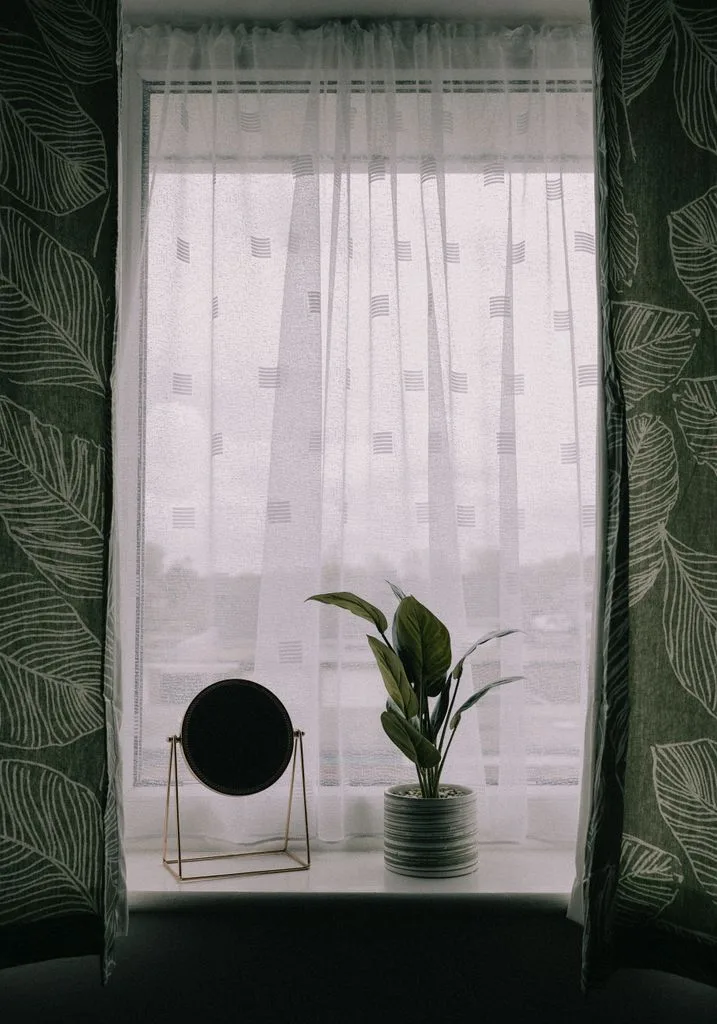
Cotton voile sheer curtains soften a farmhouse bedroom window the way nothing else can. The fine, almost transparent weave diffuses harsh daylight into a gentle glow, adds movement when a breeze passes through, and gives the room a romantic, cottage feel without blocking the view. Pure cotton voile drapes better than polyester sheers and never carries that plasticky shine.
Layer voile sheers behind heavier cotton canvas panels for the best of both worlds: privacy and light control from the canvas, softness and glow from the voile. Hang the sheers on their own slim rod just inside the window frame, and let them puddle an inch or two on the floor for a relaxed look. A pair of cotton voile panels costs $20 to $50; wash them on gentle and hang them damp, and they will dry smooth without ironing.
13. Chunky Cotton Knit Throw
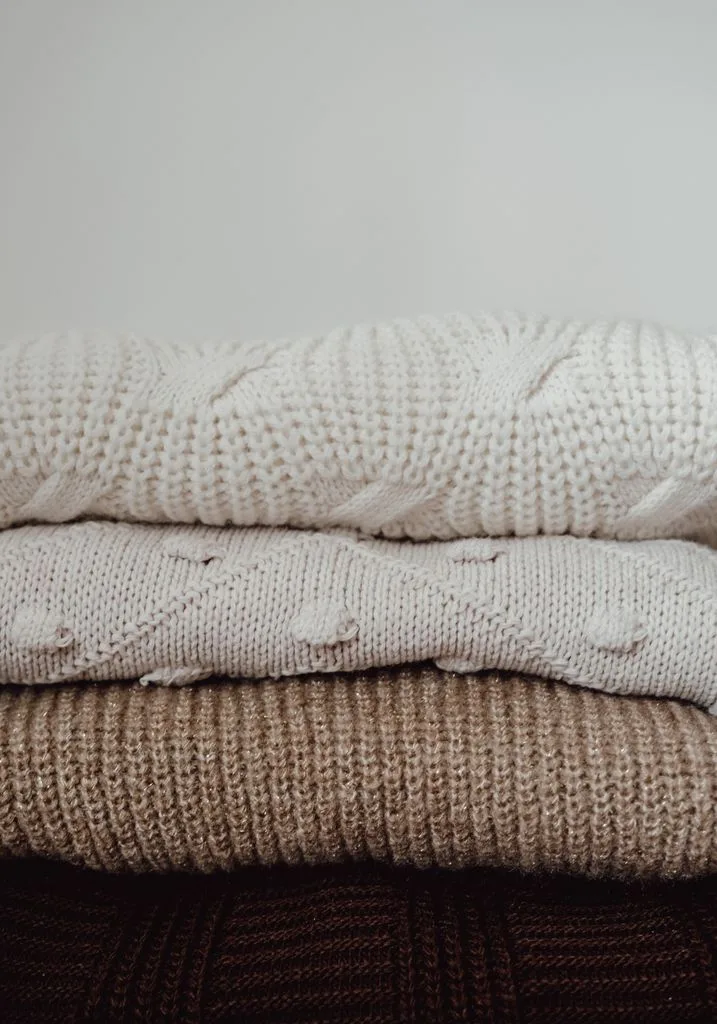
A chunky cotton knit throw is the cosiest layer a farmhouse bed can hold, and the oversized stitches make it a feature in itself. Unlike wool, cotton knit is machine washable, allergy-friendly, and comfortable in warm weather, so it works in every season. Cream, oatmeal, and soft sage show off the knit texture best, and the throw’s weight gives the bed a sense of substance.
Fold a chunky knit throw in half lengthwise and drape it across one corner of the bed, or roll it loosely and place it at the foot for a relaxed, lived-in look. Avoid draping it over the pillows, where the bulk can look messy. A hand-knit or machine-knit cotton throw in throw size costs $40 to $110; check that it is 100% cotton or a cotton blend with no more than 20% acrylic, so it stays breathable and washes well.
14. Cotton Lumbar Pillow with Tassels

A cotton lumbar pillow with tassels is the finishing piece that pulls a farmhouse bed together. The long, low shape breaks up a row of square pillows, the tassels add movement and a handcrafted feel, and a printed or woven cotton cover can introduce the room’s one accent colour. Place it front and centre, leaning against the sleeping pillows, and it becomes the focal point of the whole bed.
Choose a lumbar in a natural cotton canvas or a soft printed cotton, with tassels in a matching or slightly darker tone. Keep the print simple — a small stripe, a faded landscape, or a botanical motif — and avoid anything too bright or modern, which fights the farmhouse mood. A 14 by 36 inch cotton lumbar pillow with a removable cover costs $25 to $60; removable covers matter, because tassels tangle in the wash and a zip-off cover is far easier to clean.
15. Plaid Cotton Flannel Sheet Set
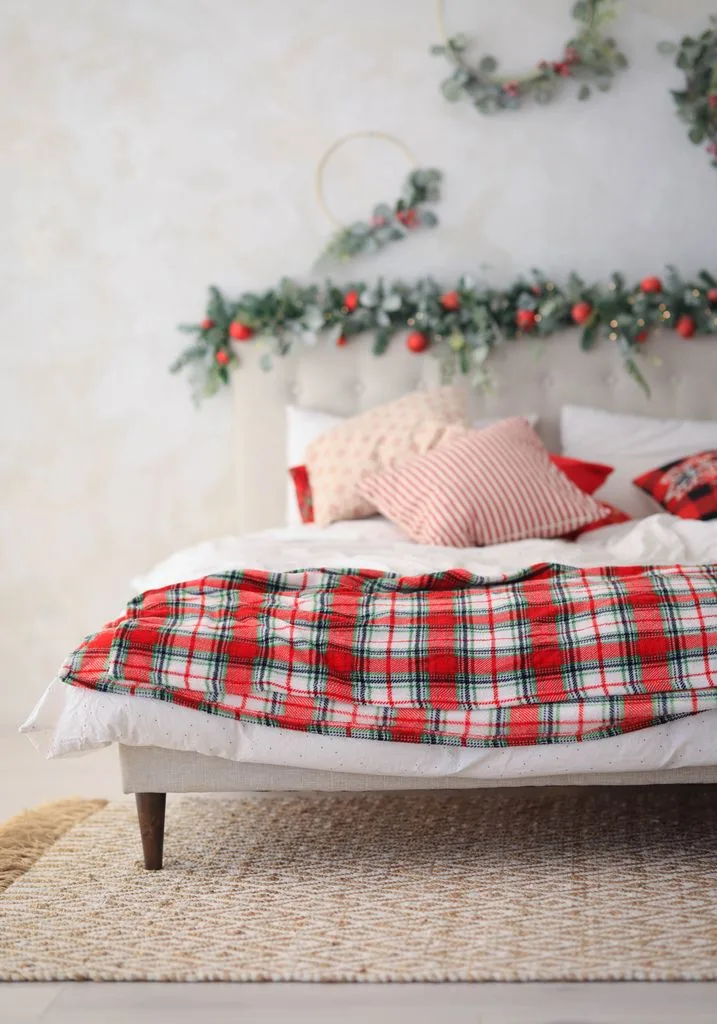
Plaid cotton flannel sheets are the winter layer every farmhouse bedroom deserves. The brushed cotton surface feels warm the moment you climb in, the plaid pattern brings instant country charm, and the fabric only gets softer with each wash. Red, navy, or green plaid on a cream ground is the classic farmhouse choice, and it pairs naturally with quilts, knit throws, and wooden furniture.
Use flannel sheets from late autumn through early spring, then swap back to percale when the weather warms — flannel traps heat, which is wonderful in January and miserable in July. Buy 100% cotton flannel that is double-brushed, and check the weight: a good flannel sheet feels substantial but not stiff. A queen plaid flannel set costs $50 to $120; wash it inside out on cold to keep the plaid crisp and the brushing intact.
16. Cotton Bed Runner at the Foot of the Bed
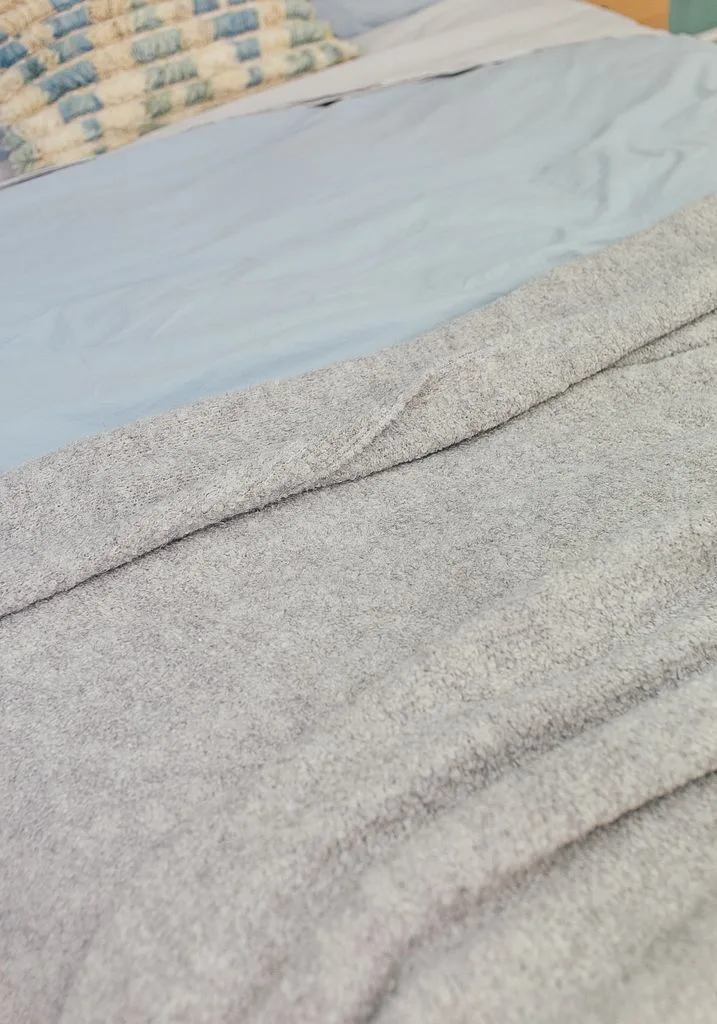
A cotton bed runner is the tailored alternative to a casually thrown blanket, and it gives a farmhouse bed a finished, hotel-like look. The narrow band of fabric across the foot of the bed adds a stripe of colour or pattern, protects the duvet from shoes and pets, and anchors the whole arrangement visually. Choose a runner in a solid colour, a subtle stripe, or a small check that echoes another textile in the room.
Size the runner to hang 8 to 12 inches over each side of the bed, and keep it shorter than the bed’s width so it does not drag on the floor. A runner works best over a plain duvet or coverlet, where its pattern can stand out; over a busy quilt it simply disappears. Cotton bed runners cost $20 to $55, and a simple one is easy to sew from a yard of cotton fabric with a matching backing — a good first project if you are learning to sew for the home.
17. Vintage-Inspired Cotton Feed-Sack Pillows
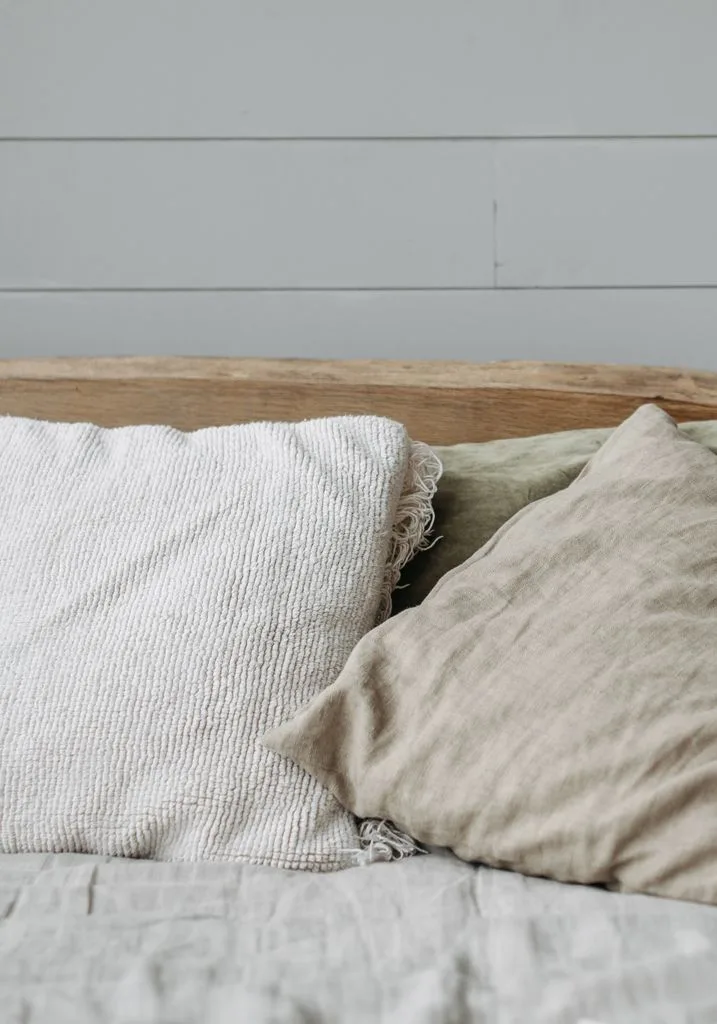
Vintage-inspired cotton feed-sack pillows bring authentic farmhouse history to the bed without a single antique to hunt down. The look comes from old grain sacks — natural cotton with faded stripes, stencilled lettering, and the occasional patch — and modern reproductions capture it in soft, washable cotton. The neutral palette of cream, tan, and faded blue fits any farmhouse bedroom, and the worn-in look means they never show a wrinkle.
Use one or two feed-sack pillows as accents among plain linen and cotton pillows, so the print reads as a found treasure rather than a matching set. Mix a striped feed-sack pillow with a solid lumbar and a small gingham cushion for a collected-over-time feel. Reproduction feed-sack pillow covers cost $15 to $40 each; look for cotton canvas with a printed or woven stripe, a hidden zip, and a feather or down-alternative insert for a soft, sink-in shape.
How to Choose the Right Cotton Farmhouse Textiles for Your Bedroom
Start with the fibre. For anything that touches your skin — sheets, pillowcases, duvet covers — choose 100% cotton, and check the label rather than trusting the product name. “Cotton-rich” and “cotton-feel” usually mean a polyester blend, which sleeps hotter and pills faster. For curtains, throws, and decorative pillows, a cotton blend is fine and often drapes better than pure cotton. If you sleep hot, percale is your weave; if you sleep cold or love a silky hand, sateen suits you better. Apartment Therapy’s guide to the best cotton percale sheets explains the difference between weaves and thread counts in plain language, and it is worth reading before you spend money on a full set.
Next, fix your palette before you buy anything. Pick three colours: a main neutral (white, cream, or soft grey), a wood tone from your furniture, and one accent (faded red, navy, sage, or dusty blue). Every textile you buy should contain at least one of those three colours, which is how a room full of different patterns still looks calm. Finally, buy the big pieces first — sheets, duvet, quilt — and add the small accents last, because it is far easier to match a $20 pillow to a duvet than the other way around. For a feel of what the finished look can be, browse Hunker’s farmhouse bedding ideas to see how quilts, plaids, and linen layers work together in real bedrooms.
Cotton Farmhouse Bedroom Textiles on a Budget
A full farmhouse textile refresh does not need a big budget if you buy in the right order. Start with the sheets, because they touch your skin every night: a quality white percale set costs $80 to $200 and transforms the bed on its own. Next, add one layer — a quilt, a coverlet, or a throw — for $30 to $120, then two accent pillows for $25 to $60 each. Curtains and a bed skirt can wait until the bed itself is right, since the bed is the room’s focal point.
Save money by shopping cotton at the right time and in the right places. White January sales, end-of-season clearances, and outlet stores routinely cut quality cotton bedding by 30 to 50 percent, and a plain white duvet cover is far cheaper than a patterned one — add pattern with a $25 throw instead. Thrift shops and flea markets are excellent for quilts, embroidered pillowcases, and feed-sack pillows, which look better with a little age. A complete layered look — sheets, duvet, quilt, two throws, and four pillows — can be built for $250 to $450 with smart shopping, versus $600 or more buying everything new at full price.
Common Mistakes to Avoid
The most common mistake is mixing too many patterns. Gingham, buffalo check, plaid, and patchwork are all farmhouse classics, but two of them on one bed is plenty — three or more and the room looks like a fabric shop. Pick one lead pattern, keep the rest solid or subtly textured, and let the weaves provide the variety. A second mistake is buying polyester bedding labelled as farmhouse style. It may look right in the photo, but it sleeps hot, holds odours, and pills within months, while real cotton only gets better.
Other mistakes are easier to fix. Skipping the wash before first use leaves new cotton stiff and sized, so always launder new textiles once before styling. Hanging curtains too short or too narrow makes the window look smaller — panels should reach the floor and cover the frame plus a few inches on each side. Finally, do not forget scale: a chunky knit throw and a ruffled skirt suit a queen or king bed, but on a twin they overwhelm the room. Match the weight of your textiles to the size of your bed, and leave some breathing room on the nightstands.
📌 Also Read:
Frequently Asked Questions
What is the best cotton for farmhouse bedroom bedding?
Long-staple 100% cotton in a percale weave is the best all-round choice: crisp, breathable, durable, and easy to wash. For a softer, more relaxed look, choose a washed cotton or cotton-linen blend duvet cover. Sateen suits cold sleepers who like a silky feel, while cotton flannel is the warmest option for winter. Whatever you choose, check the label for 100% cotton and a thread count between 200 and 500.
How do I layer farmhouse bedding without it looking messy?
Work in three layers and one pattern. Start with crisp sheets and a plain duvet, add a quilt or coverlet folded across the lower half, and finish with a single throw at the foot. Keep one pattern — gingham, plaid, or patchwork — and make everything else solid or textured. Fold and smooth each layer as you add it, and leave the top third of the bed simple so the eye has somewhere to rest.
Can I mix gingham, plaid, and patchwork in one farmhouse bedroom?
Yes, but only one at a time on the bed. Use gingham on the dresser scarf, plaid on the throw, and patchwork on the quilt, and keep them in the same colour family — for example, all in faded red and cream. If two patterns share the bed, make one of them very small-scale, like a ticking stripe or a mini check, so they read as texture rather than competing prints.
How often should I wash cotton farmhouse bedding?
Wash sheets and pillowcases weekly in warm water with mild detergent, and wash duvet covers, quilts, and throws every two to four weeks depending on use. Cotton tolerates regular washing and gets softer over time, but avoid hot water and high heat drying, which shrink natural fibres and fade colours. Line-dry when you can, and pull cotton out of the dryer slightly damp to reduce wrinkles.
Is cotton or linen better for a farmhouse bedroom?
Cotton is better for most farmhouse bedrooms because it is softer on first use, easier to wash and iron, more affordable, and available in the checks, plaids, and prints that define the style. Linen has a beautiful relaxed drape and lasts longer, but it wrinkles heavily and costs more. A cotton-linen blend gives you the best of both — cotton’s softness and easy care with linen’s texture and drape — and it is the ideal choice for a duvet cover.
Conclusion
Cotton farmhouse bedroom textiles work because they are honest: natural fibre, soft colour, and texture you can feel. Start with crisp white percale sheets, add a washed duvet and one good quilt, then layer in the details — a gingham scarf, a ruffled skirt, a knit throw, a pair of feed-sack pillows — until the bed looks collected rather than decorated. Buy 100% cotton where it touches skin, keep one pattern in charge, and wash everything once before you style it.
Pin this guide to your farmhouse bedroom board before you shop, so you have the full list — all 17 ideas, the fabric notes, and the budget ranges — in one place when you are choosing sheets and throws. Your future self, climbing into a soft, layered, cotton-dressed bed on a cold night, will be glad you saved it.